
Cooking Lamb
Rather than pretend I’m a chef, I’m going to let you learn from the pros on how to cook lamb.
How to Cook Lamb
Rather than pretend to be a chef, I’m going to let you learn from the pros and give you the resource I use in my own cooking adventures with lamb. The American Lamb Board has great resources and recipes available on their website.
If you love to cook lamb and have recipes you’d like to share, I’d love to highlight them here!
*** When you purchase lamb from Homestead we include a recipe guide and a temperature guide for your kitchen produced by the American Lamb Board. I am so grateful for the materials they provide us, producers, to help us best advise you on how to get the most flavor and nutrition out of your lamb.

New Year, New Relationships
Each New Year I focus my energy to a single task in my business. As a multi-service entrepreneur, it is easy to put too many to-dos on my plate, so instead, I try to focus on one over-arching task each season

New Year, New Relationships
Each New Year I focus my energy to a single task in my business. As a multi-service entrepreneur, it is easy to put too many to-dos on my plate, so instead, I try to focus on one over-arching task each season.
Last year it was ‘learn how to raise cattle in 18 months versus 24 months’ and ‘grow my online portfolio’ in weddings.
At the end of last year, I’d completed both of these tasks but I felt more alone than ever. Now, I’m an introvert through and through, but this sense of being alone was deep, deeper than I ever thought and ever let myself recognize.
So, per usual I sat down at the end of the year, reconciled my books, looked through the data I’d collected on both the farm and weddings I’d designed for and said, ‘what’s next’. (ps. I love these ‘mundane’ tasks and usually find myself caught up in them). This year it wasn’t a black and white task that came to the forefront of my mind. It was this ‘feeling’ (which I’m not always good at recognizing) in place of a ‘learn this’ or ‘achieve this’ task.
It was the desire to form meaningful relationships.
Sure, it is easy to preach ‘know your farmer’ but I started to question what steps I’d actually taken to know people in my community. What steps had I taken to know the people who trust and buy from me? What did my stance on ‘know your farmer’ actually means to me, this introverted farmer who loves animals and gets anxious in crowds? I have fear, I lack confidence and ultimately it’s been what’s kept me from truly living what I so desperately wanted for my customers. For them to know me, their farmer.
The same became so drastically apparent in my wedding design as well. I’ve met vendors, had coffee with vendors and made some friends in the industry. I’ve serviced my brides, openly communicated with them and had a very happy experience with each of them over the course of the year. But, these people that I’ve met, had coffee with and serviced always seemed to be an arms distance away. Not because I’ve purposefully decided to keep a distance, but instead I chose to lean into what comes naturally to me as an introvert. But, ultimately as a person, I need relationships with more meaning.
I now see how vital relationships are for every person. Every introvert, every extrovert, every entrepreneur, every mother, father, sibling, and the list goes on. We all crave more meaningful relationships in our lives. I think it has become more apparent to me as an entrepreneur because so much of ‘marketing’ and ‘running a business’ seems to be done on the other side of a screen.
And while all that ‘screen time’ is necessary it’s time to practice what I preach and form relationships with you, with my readers, with my customers and clients and those who receive my weekly emails.
So, that is what 2020 is going to look like for me and this business. I’m focused on getting out of my comfort zone, getting to know all the special people that surround me and welcoming you into the pretty and not so pretty parts of running a farm and floral business. I hope to get to know you better and share more of myself with you this decade.
I’d love to meet you, and I’d like to formally welcome you to join me at an event this season. Let’s get to know each other better.

Farm | Our first season of grazing our EQUIP pasture
Our first day of grazing was June 2nd.
Reflecting on our first season of grazing our EQUIP-funded pasture

June 2nd, 2019
Our first day of grazing was June 2nd. I fell significantly behind this spring because I was heavily exhausted in my first trimester of pregnancy and I still had a water line to finish before I could get cattle moved. So, by June 2nd the alfalfa and grasses were significantly over-grown so most of our first grazing in each paddock was trampled vs. eaten.
Our rotation schedule
When I met with my mentor and EQUIP partner this spring she mentioned I would likely move cattle each day, to which I thought, ya I’m sure with how I’m feeling I’ll move them everyday… BUT sure enough I moved cattle each day until July 13th. We had LOADS of grass to be eaten with such a cool and wet start to our grazing season. The cattle trampled and ate and I moved them every day. July 13th things changed with a heat wave and I moved them every two days to keep my work lighter during this time. Of course with that decision I instead made my paddocks larger, which left more to be trampled in the process. But, we got through a few days of a heat index over 100 degrees and we went back to daily moves.
Our first ‘rest’ period was just shy of 30 days for our first rotation, due again to the cool and wet weather we had the grass was growing well. I had planned on continuing with a regulated rotation, however, when an adviser visited the farm he suggested I get my beef back on the best grass instead of being so rigid with my rotation and paddock one was at it’s prime; so I moved them back to that paddock shy of 30 days.
The rest of the summer I maintained a Paddock 1 - 30+ rotation. During the heat of the summer I moved every one to two days depending on my paddock size. I had a few paddocks that were weaker in vegetation so I moved through those quicker than areas with good vegetative stands. I’m dealing with some significantly sandy areas that didn’t seed well so they are thin, leaving very little to eat.
Once fall approached I continued to move every one to two days depending on the quality and quantity of my vegetation.
Thanks to a smaller herd we grazed until November 16th this year!
I made things as easy as possible
I decided before we moved cattle down to this field that with how I was feeling I was going to need to make this first season as easy as possible. So, in the spring I ordered a couple hundred step-in posts and three reels. I set up my entire field with the step-in posts so that with each rotation I was only moving wire. I have to say this was a life-saver for me, especially this season, the less walking laps the better.
Later in the summer my mother purchased a JD Gator for me to use, and that was an incredible help as my energy level diminished with my growing belly.
we made hay
We only grazed 13 head this summer, our capacity is about 30, so this early grazing season we decided to take first and second crop hay from one side of the acreage and the area we cut totaled about 8 acres. Since we had such a great growing season we felt that it would simply age-out if we didn’t cut it since we had very few mouths to feed.
We only cut the areas that were heavy alfalfa which happened to be a big swathe down the middle of our field, so it made some pretty great hay and bounced back for our third rotation of grazing quite nicely.
We ended up in the end taking first and second crop hay and stock piling to extend our grazing season as well as the additional mouths we added in the fall.
things i learned
The biggest thing I learned this season was to be flexible. I thought each paddock should be evenly spaced, that my rotation should go in a certain pattern, and that I should graze my entire field in the same manner. The fact is however, that our 20 acres are very different. Some areas have abundant alfalfa, some clover, some grass and some with heavy weeds which all graze differently and need different periods of rest. I also learned to be patient (aren’t I always learning this in farming). I started the grazing season frustrated with the ‘unevenness’ of growth, diversity and size of my paddocks. I like things even, similar and predictable, again when will I learn farming is NOT predictable.
Overall, I am thrilled with what the pastures produced this year, calves got fat and nothing was over-grazed. I look forward to continuing to see changes and developments with future years of grazing and management. We’ve come so far but there is still so much room to grow!

Our field after the east side was grazed and the west side was cropped.
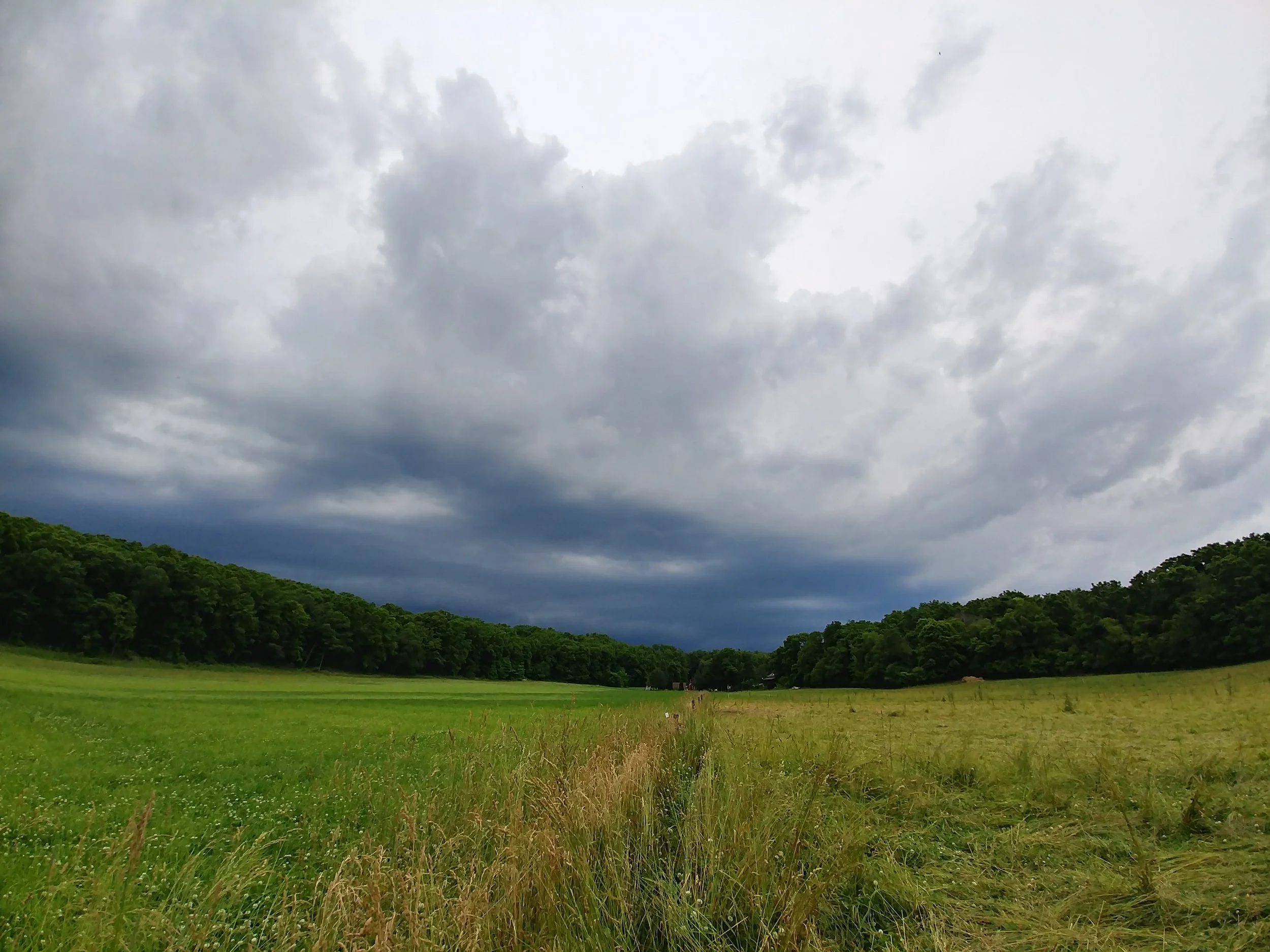
East side after first rotation, west side after first cropping, view from south

View of our cattle grazing the east side, two day moves, view from south.

Rotation #3, view from South


Events | My Farm-to-Table Baby Shower
Planning parties is something I just love to do, so when I found out we’d be welcoming a baby I almost immediately started planning my baby shower.
My Farm-to-Table Baby Shower
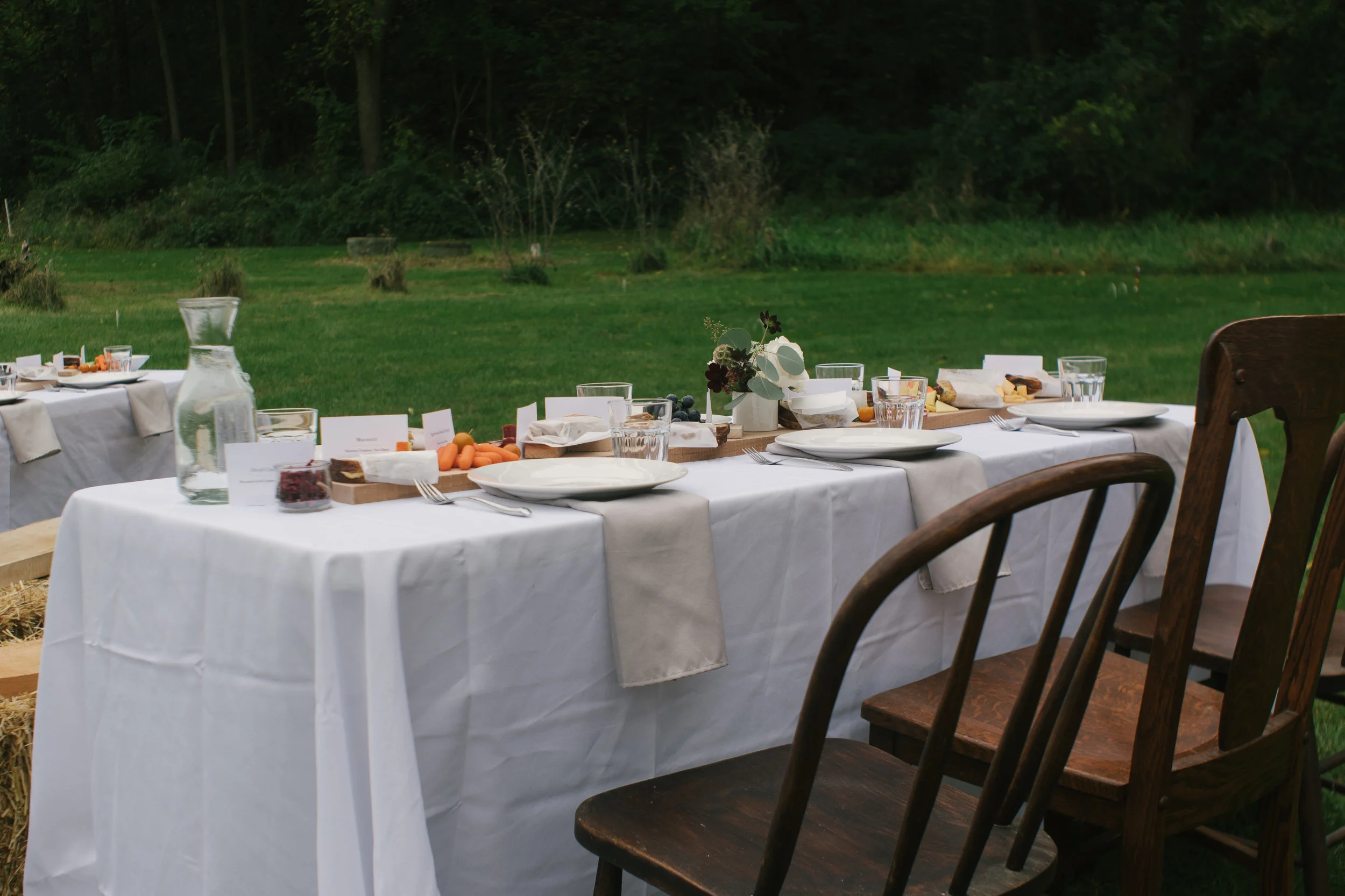
Planning parties is something I just love to do, so when I found out we’d be welcoming a baby I almost immediately started planning my baby shower. Now, my mother, friends and family would have LOVED to take care of all the planning for me, but I can’t help myself. Party planning is just too fun to give away!
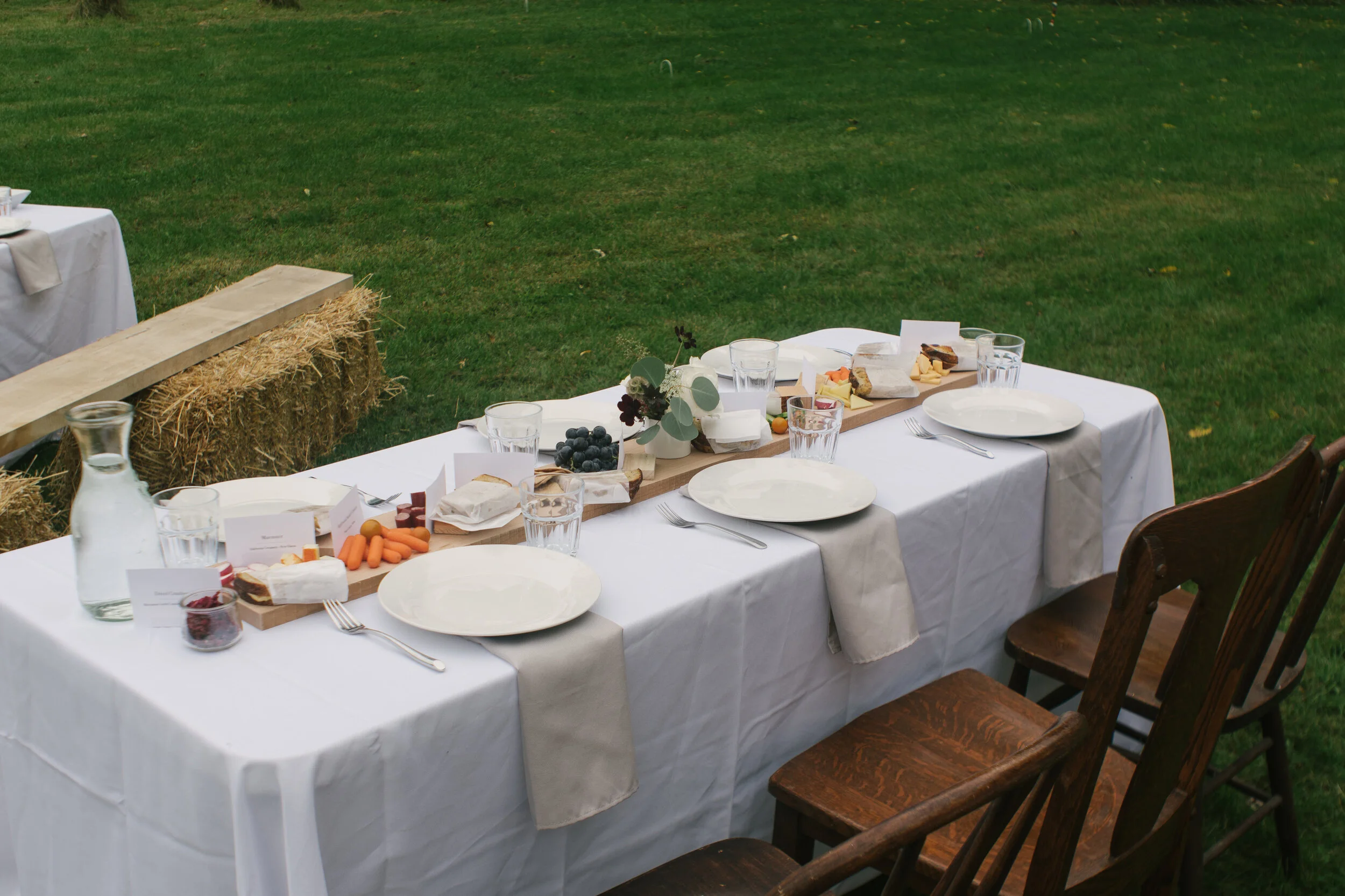
As a farmer I wanted to plan a farm-to-table style party. Fresh, local foods from some of my favorite farmers and local vendors was the foundation of the shower. Traditional, of course not, reflective of my personality, absolutely.
I am so grateful for my family and friends for pulling all my ‘plans’ together into a beautiful afternoon celebrating baby McCoy. I have an incredible group of ladies who showed up to make me feel so special and to send me off into this new adventure in such a fun way.




Featured Farms & Producers
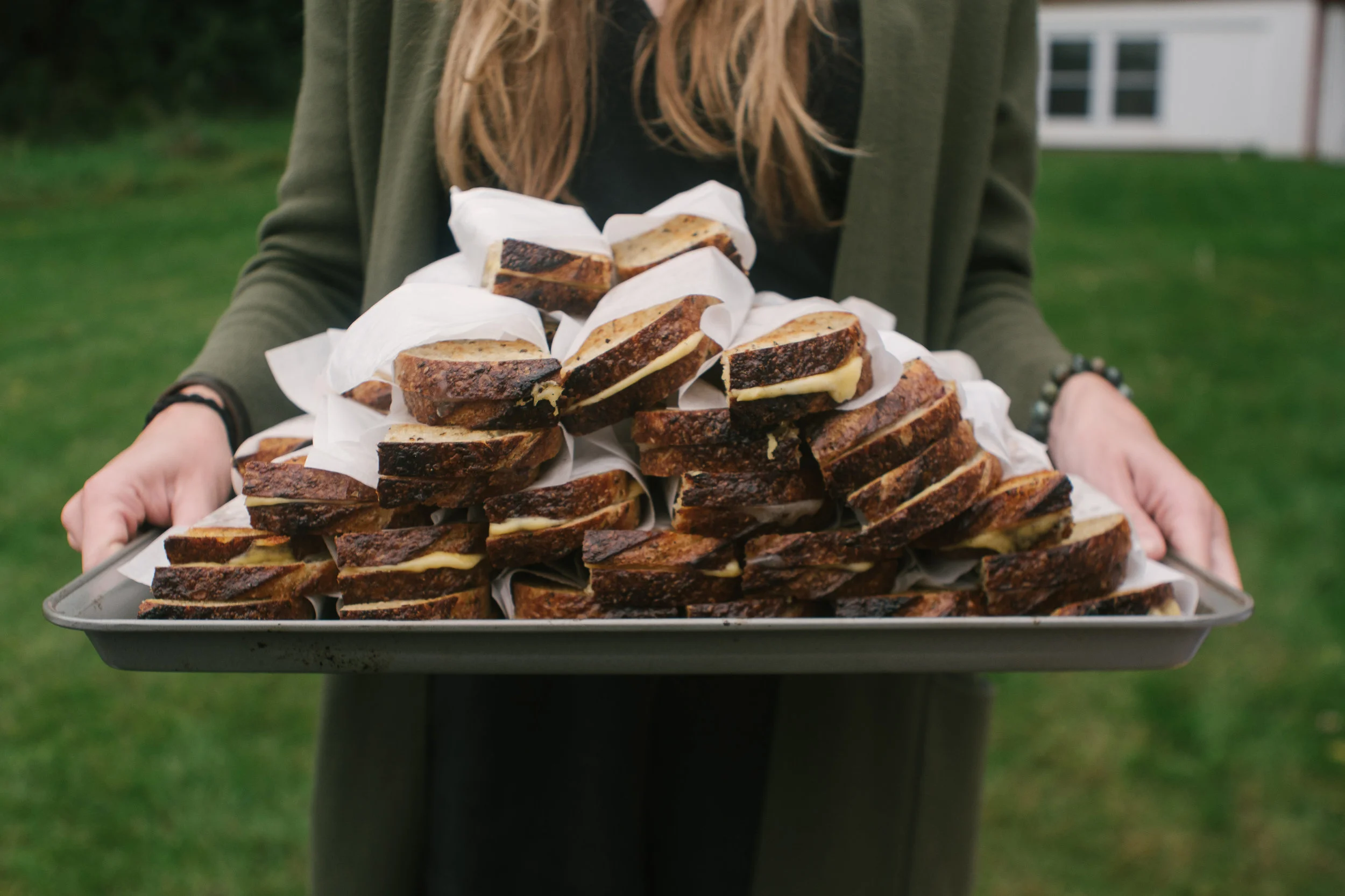
Homestead Meats, LLC | Summer Sausage and Sausage Sticks
Meadowlark Organics | Flour for pastries
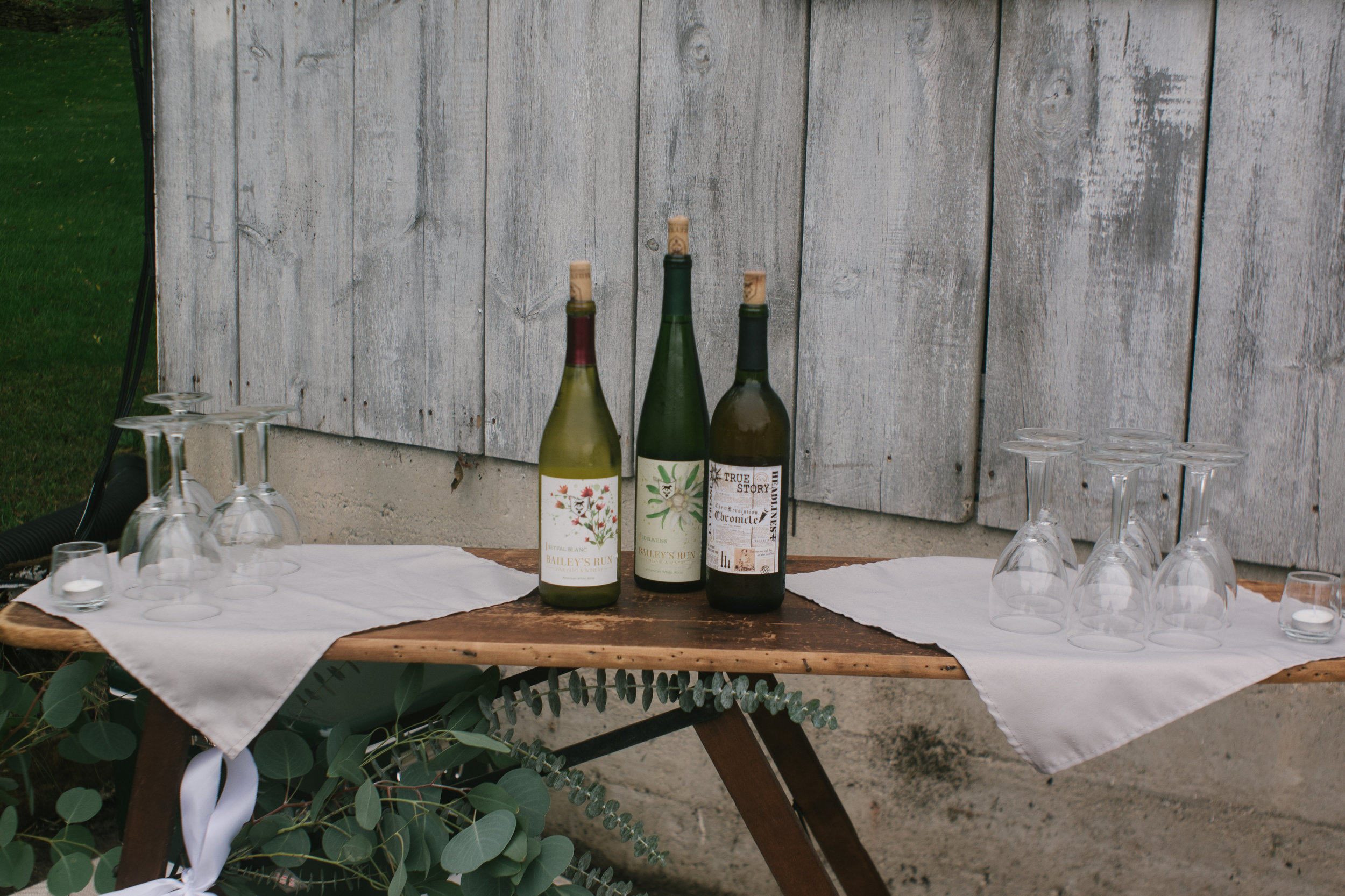
Bailey’s Run Winery and Vineyard | Wine
Munchkey Apples | Apples
Winterfell Acres | Veggies
Landmark Creamery | Cheese
Edelweiss Creamery | Cheese
Potter’s Cracker’s | Crackers
Madison Sourdough | Bread
Carandale Fruit Farm | Grapes
Floral
Stationary
Photography
Wood For Charcuterie Boards & Benches

Farm | What Their Last Day Looks Like
This has always been a hard topic for me, the last day. Even-though I believe that cattle and sheep were created for us to eat, there is something very sad about that lingering date on my calendar, the date a life ends to give us health and well-being.

What their last day looks like
This has always been a hard topic for me, the last day. Even-though I believe that cattle and sheep were created for us to eat, there is something very sad about that lingering date on my calendar, the date a life ends to give us health and well-being. While it’s an extremely graphic topic, I know there are those of you like me that while it hurts to know, we have to know. I think it’s the most important part of being a responsible meat consumer and thank you for caring enough to learn the whole process of what it takes to get your favorite meat on the table.
So, if you’re with me, I’ll wipe away the tears that fall when I write this and share what the last day looks like for our livestock.
it starts like every other day
Thanks to a MSU (mobile slaughter unit) we’re able to harvest our animals here on the farm. Which means that their day starts out just like any other. If they’re on pasture, they’re grazing when the sun comes up and if their harvested during the winter in our dry lot they wake up to bales of hay being thrown in the feeder.
This is what’s so special to me. That their morning doesn’t start off with a trailer backing up, a small holding pen. It doesn’t start with them being forced to load into a trailer and leaving home for an unknown destination.
when the truck pulls in
They get curious. Any visitor to the farm does not go un-noticed. Our butcher, steps out, says hello and gets to work prepping for the harvest. He loads his gun, he starts up the generator to keep his truck cool, he puts on his boots and smock and then he asks ‘who’s going today’. THAT’S the hardest question to answer, not because I don’t know, but because I’m finally acknowledging the end. If it’s a steer I point them out and give him tag numbers so there is no guessing. If it’s lambs I have them corralled in the barn and again give him the tag numbers.
The inspector put’s on her (usually her) or his white gown and boots and is ready when he’s ready.
then it’s time
I whisper a little goodbye as I hand over those tag numbers and I shed a few tears. If it’s a steer (our male cattle) I walk the butcher and the inspector out to the field. Then we pause, because it really makes us all sad. The gun is loaded and then I look away and wait, for that one shot. The shot comes, a single shot that takes the animal down, it’s gone. There is a heavy sigh from all of us and our butcher cuts the throat to let the blood run out.
If it’s a lamb (fully mature) it happens a little differently. They are corralled in the barn. The butcher instead uses high-voltage to kill the animal. The lamb lies down quickly from the voltage, it’s gone. Again, the harvest is never without a sigh and the butcher cuts the throat to let the blood run out.
To be honest, I don’t watch my animals go down, I haven’t mustered the strength to watch. I just wait for that shot and walk them back to the gate, the lambs I watched once to understand the process and now I walk out of the barn.
It’s really, really hard for all of us. BUT, it’s fast and in their home, just like harvesting a deer in the wild and that’s what brings me some comfort.
the processing
After the steer or lamb is gone, it’s brought to the truck via a skid-steer or wheel barrow, and the butcher skins it, guts it and if it’s a steer quarters it all with the inspector there to watch. After the animal is clean he closes the door, takes off his smock, thanks the inspector and waves a tense goodbye.
The final carcass is brought to their processing facility where it is aged, cut and packaged for pickup
it isn’t easy for any of us
I’ve received some very harsh words when I share my heart on this subject. I’ve been called ‘psychotic’, ‘sick’ and I know there are those who will always feel that way. What they don’t know is how much each and every person involved in harvesting our animals DOES care. The butcher, the inspector and the I, the farmer, all want what’s best for these animals. We want it done humanely, without pain and quickly. No suffering is what we all care about. None of us are in this industry because it’s easy and none of us are immune to the sadness. That inspector has to watch hundreds of these a week and that butcher has to perform hundreds a week and they both admit it has a high emotional toll. As the farmer it’s hard to pick a date where you’ll be forced to say goodbye to something you’ve cared for for so long, something you’ve watched born and bottle fed as it’s mama.
We do it because we believe these animals deserve the best and you deserve meat that was actually cared for, meat that came with tears. So, never believe that the last day was met without a trio of heavy hearts. It isn’t easy and none of us feel to should EVER be easy.
Thanks for reading, for wanting to learn and for supporting those who care.

Farm | Renovating Sheep Pastures
How we’re renovating our sheep pastures - from overgrown to lush and nutritious
Renovating Our Sheep Pastures
This is a lengthy post… about nerdy stuff like grass and soil. I love documenting and this post is certainly a compilation of lots of documentation. So, if you like soil, grass and learning about how other farmer’s make decisions, this post might just be your cup of tea.
what we started with
Our sheep pasture consists of seven acres, three of which are significantly sloped and heavily wooded. Two acres was an existing alfalfa and orchardgrass field with two acres that is mostly brome grass.
using web soil survey
I looked at what we have for soil and slopes in our pasture. You can find your soil map HERE
72% of our pasture is | Newglarus-Dunbarton silt loams, 12 to 20 percent slopes, moderately eroded
17% of our pasture is | Elkmound-Northfield complex, 30 to 60 percent slopes, very rocky
11% of our pasture is | Eleva sandy loam, 12 to 20 percent slopes, eroded
What we did in 2018
In spring 2018 we cleared about 2 acres of brush which included prickly ash, grey dogwood, sumac, plum, boxelder and mulberry. I over-seeded the ‘thicket’ areas with a mix of grasses and legumes, of which 30% was legume. Over the summer months I focused on keeping the woody species from coming back in, using mowing and herbicides. In the fall I heavily grazed a 1/2 acre area of brome grass and over-seeded with the following over-the-counter mix:
50% Gulf Annual Ryegrass
27% Intermediate Ryegrass
19% Orchardgrass
3% White Clover
1% Medium Red Clover
In October I took our cattle through a two acre area that was primarily brome grass and had them beat it up to expose soil.
what we did in spring 2019
In spring 2019 we worked on clearing additional brush in the most heavily sloped areas. These areas have significant timber including walnut, catalpa and cherry. We removed mulberry, elm, cedar, boxelder along with honeysuckle, grey dogwood and plum (plum is poisonous to sheep). This area still has significant cover and will need additional clearing, maybe next year.
In the late winter spring months I developed my knowledge on sheep pasture mixes, mixes that maximize gains, and our options for our drought-prone slopes. With my research I developed the following pasture mix.
Our pasture mix
Chicory - 40%
Ladino Clover - 15%
Alice White Clover - 15%
Alfalfa - 5%
Orchardgrass - 10%
Festolium - 15%
My research lead me to develop a mix with a high chicory content. Chicory is non-bloating, and local farm research showed significant gains on chicory based pastures. I also realized during my research that sheep prefer legumes over grasses, so I made sure to develop a mix that put more focus on the legumes than the grasses. Chicory, alfalfa and the grasses show better drought tolerance than the clovers; however, I wanted to try and get some clovers established on the less sloped areas that will get more water. I’m curious to see what my results are after this growing season.
our alfalfa and brome areas
The bromegrass areas I over-seeded with a Ladino and Alice White Clover mix. Over the coming years I anticipate continuing to replace alfalfa with clover, chicory and other legumes, and diversify the brome acerage with additional legumes and chicory.
Planting on slopes
Since three acres of our sheep pasture are in-accessible with a tractor, I broadcast seed by hand and put sheep hooves on it for a day, right before a good rainfall. This three acre pasture was broadcast with the chicory blend.
how i’ll manage grazing this year
I will be managing weeds and woody plants this season by rotationally grazing both the sheep pasture and the brome area. Sheep are fantastic gardeners and I can’t wait to see the progress made by using them for management this season.
What we did in 2021
This spring we finally hired a company to come and finish removing invasive species including Mulberry, Boxelder, Grey dogwood, Sumac and others. These removals exposed additional acreage and opened up the canopy allowing light to infiltrate. I seeded the newly open areas with a mix of meadow fescue and orchardgrass. I also fertilized most of the average after putting a heavy coat of manure over the land last fall. This season we will lightly graze it to allow for it to establish, control weeds and allow the land to come to life.
video documentation - 2018 fall pasture walks
Video has already been a great resource for me as I develop the grazing systems at our farm. It provides a really great reference to what was happening the following season, challenges and what I was looking at doing in the coming year. It is insightful to what I thought my plan was last season, to what I actually implemented this season. Video has proven to be a quick and effective way to manage our grazing here at the farm.
I look forward to documenting our pasture progress again this fall.
video documentation - June 2019 update

Farm | Sheep Pasture Renovation Update
Here’s an update on how our sheep pasture renovation is coming along!
how our pasture renovation is coming along
This spring we did a lot of brush clearing and some frost seeding of desirable grazing grasses and legumes. Now in early June I’m happy with our results so far. Now I’m going to be using sheep to keep the weeds and brush managed over the course of the grazing season, they are great little mowers.
Check out how it looks in the video below.

Farm | Spring on the Farm + Lambs!
Hello GREEN! Wow, I didn’t realize how much I needed to see green this year, I’m sure you can relate.

Spring on the Farm
Hello GREEN! Wow, I didn’t realize how much I needed to see green this year, I’m sure you can relate.
Spring on the farm is always filled with projects, some larger than others but all necessary. This spring we decided to focus as much as possible and keep as few irons in the fire as we’re able. Since buying this farm a year and a half ago Matt and I have realized that while there is an endless list of projects, we can’t maintain our past pace. We miss out on a lot of important pieces of life if we’re constantly working on farm projects.
Building our hay and equipment barn
This spring our biggest project is the hay and equipment barn. The barn is well underway and the roof should be on by first crop in late May or early June. Last season we were storing hay in every nook and cranny and outdoors making feeding a challenge. I’m so excited to have a dry place designed to make storing and feeding hay easier next winter.
I will be sure to share a more complete picture of the barn as we make more progress towards the finish line.

clearing and seeding
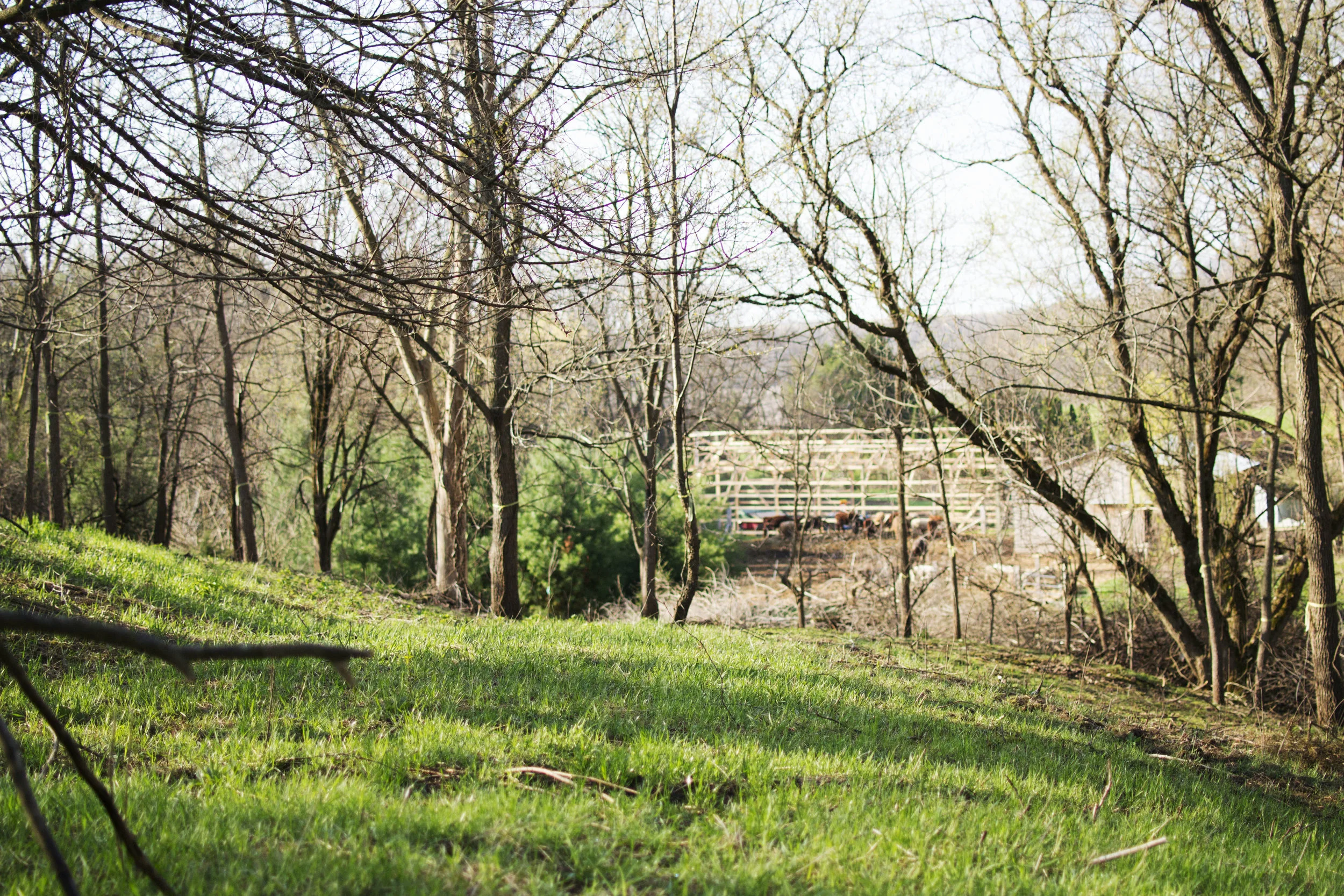
Just like last spring we’ve put more time into clearing and seeding areas of over-grown pastures. While Matt’s attention has been on the barn build, I was able to focus on the clearing projects for a couple weeks this spring. I brushed out a good portion of the sheep pasture and got some seed on the ground. There is still a lot of work to get this back into shape but I’m thrilled to have made a little more progress.


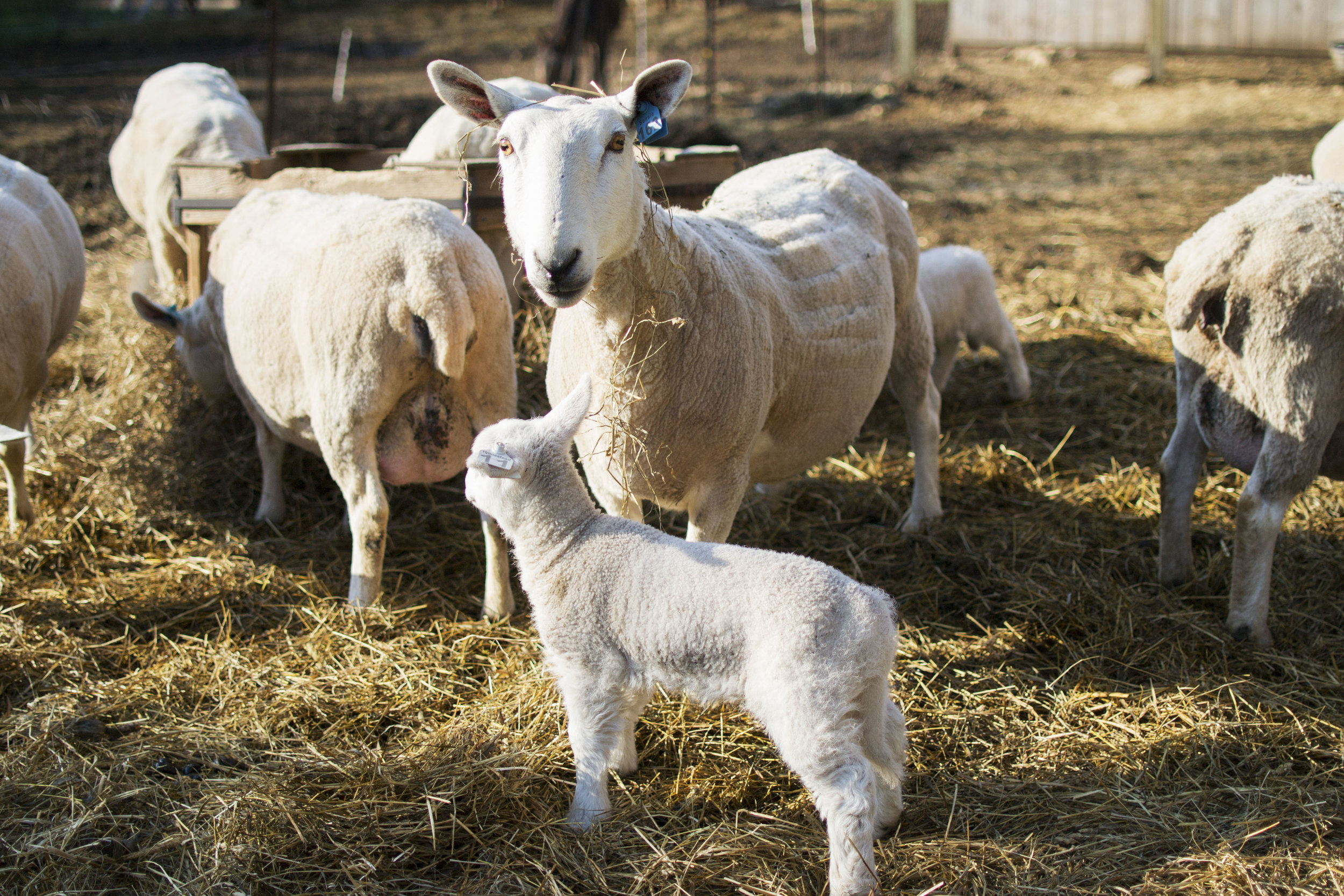
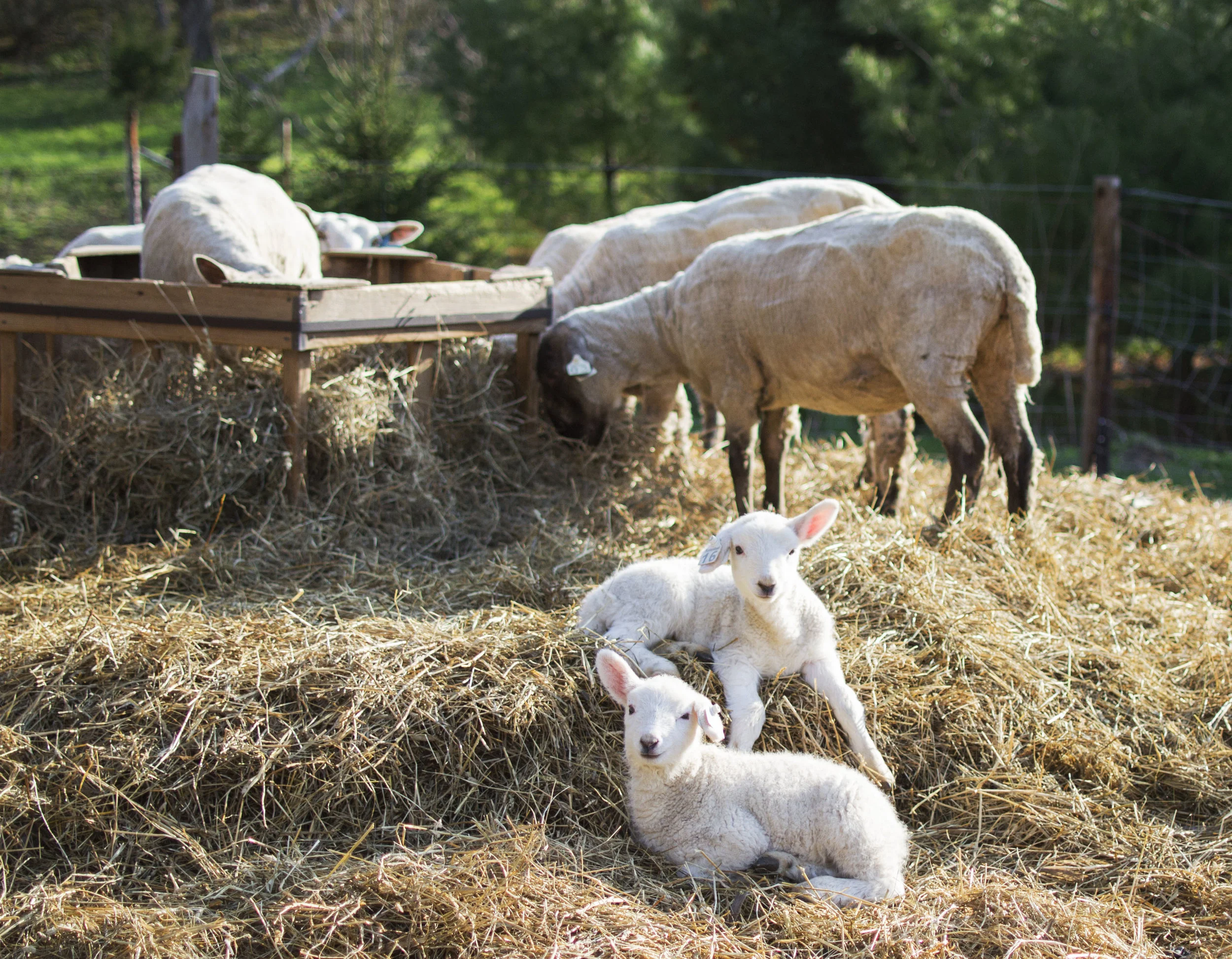
we welcomed lambs
This was our second lambing season and I can’t say things went smoothly. While I was far less stressed than last year when it came to worrying about our ewes delivering without my help the last couple ewes brought bottle babies and vet visits.
We ended up with twelve little Cheviot lambs, all spunky and with a desire to live. Our first four ewes delivered with ease, their babies nursed with ease and all was right in my world. Then ewe number five delivered triplets. Like I had read she did indeed reject one of the triplets, a little girl I named Annie. She became my first bottle baby and my mom had to help me teach her to nurse. She quickly figured it out and is doing very well on her own. Ewe number six gave birth to two little boys. However, I quickly realized one couldn’t walk and the other wasn’t figuring out how to nurse. So, I took the little one who couldn’t walk into the vet. They splinted his front two legs because the tendons needed strengthening. He was up running in 24 hours and is full of love. I was feeding his little brother with a bottle but he has learned to nurse and I’m hoping to wean him off the bottle in the near future.
I certainly learned why people say bottle babies are work. Boy have I been absolutely exhausted since we welcomed those three. It takes a lot of my mental capacity to worry and flex my schedule to accommodate them in such a busy season. I’m so thankful that I have family to help.
With that said our final count for 2019 is 7 girls and 5 boys. I’m so thrilled everyone is doing well and I’m hoping for less bottle babies next season.


Farm | When Cheaper Isn't Better
What’s really on those grocery store shelves?

cheaper isn’t always better
If you’re like me you’re always after the best deal available for most items on the market. However, I’d venture to guess you’re also like me in the fact that you’ll spend your hard earned money on something you find valuable. It might not be diamond rings, it might not be ethical clothing, and it might not even be food.
But, you probably value something so highly the price wouldn’t matter a whole lot to you and you’d even go out of your way to get it.
My passion is to share with you more background on a topic that is very close to my heart. That is the $3 head of lettuce and the $3 beef at the grocery store.
Cheap food isn’t better, cheap food is killing us.
Disease
Did you know that 1 in 4 Americans have diabetes? Or that roughly 40% of Americans struggle with obesity, which can lead to heart disease, diabetes and some cancers?
The industrial food system has allowed food to get cheaper but only at the expense of our health, animal health and the health of the people that work to put food on our tables.
Much like the fashion industry, the food industry in America has been driven by lower costs. The only way to make things cheap is by cutting every corner possible, which in turn, has made American’s sick and those who work to keep food on our dinner table even sicker.
Food - Borne Illness
The CDC estimates that ‘48 million people get sick, 128,000 are hospitalized and 3,000 die each year from food borne illness in America’. Recalls on beef alone in 2018 totaled 31 independent recalls - totaling 13,185,563 pounds of beef. The numbers of people that died due to food borne illness is disastrous, our food shouldn’t be killing us. AND on the other end, which also breaks my heart as a farmer, these recalled pounds of beef are animals that are dying to feed us. We should be harvesting animals that make it to dinner plates to give us a nutritious meal, not meat that get’s pulled off grocery shelves because it could kill us.
To give you an idea of how many animals were harvested and pulled from grocery shelves in 2018, in just beef alone, I’m counting upwards of 33,000 animals. When I harvest a steer on my farm, I get back roughly 400 pounds of beef. If we divide 13,185,563 pounds of beef that was recalled last year alone, that is a total of nearly 33,000 animals that were thrown away for no purpose other than the desire to make beef cheap enough to sell a $1 hamburger at McDonalds. We’re not only looking at a in-excusable number of human lives lost, but of animals lives lost all in the name of cheap food.
And that’s just food borne illness.
The farmer’s share
I was baffled when I saw this chart for the first time, and I would guess you are too. No wonder we have a food problem. Have you ever driven through Nebraska or Wyoming and seen the miles and miles of feed lot beef? That’s what you get when you have to meet such a low cost demand. You can’t make a living on $1.95 per pound for beef, the economics just don’t work.

https://www.wisconsinfarmersunion.com/
Slavery in america
Do a little looking into the industrial food system and you’ll quickly realize that slavery is not truly gone in the agriculture industry. Meat packing workers, field workers and even farmer’s themselves have become slaves to the system.
For example, a single industrial food system chicken house costs upwards of $500,000 dollars, which the large companies ‘finance’ to their farmers. In order to be a competitive chicken farmer for large buyers a farmer would likely have several of these buildings. It’s been stated that even with multiple chicken houses a farmer is only likely to pull $20,000 annually in profits. Again, the price we pay for the chicken on the grocery shelf, is not what the farmer is getting paid when we buy from large suppliers. Working in such unsanitary chicken houses for $20,000 dollars, with a mountain of debt to the companies, is exactly the type of ‘slavery’ that these farmer’s face. There is no way out for many of them.
Meat packaging and field workers suffer from little pay, high-risk of injury jobs, unhealthy working conditions and abuse. Just imagine for a second being brought to this country with a promise of a ‘good job’ only to be abused and endure incredible suffering instead.
All in the name of cheap food.
Change is in your hands
We’ve all been consumers of cheap food. We’ve all been looking for the best deal at the grocery store. We’ve all looked at a head of lettuce, a package of ground beef, and our Thanksgiving turkey without questioning how it was raised, who processed it and how it got to our local grocery store. Most of us have looked at it through dollar signs.
I honestly understand that it’s a hard habit to break. I love a good deal and I love convenience, but when I looked at the industrial food system of America my heart broke, I was angry and I needed to change my thinking. I hope you feel the same.
Perhaps you’ve made steps to knowing your food better, if you have you’re already making a difference. If you are still a deal shopper at the local grocery I know where you’re at. But change needs to happen. We need to spend our dollars in a way that makes change happen. The industrial food system came out of our very own desires for cheaper food and if we desire something better - it will come. If you feel powerless, like the food problem is bigger than you, I want to firmly tell you it isn’t.
You can choose to ask questions, to get to know your local farmers and to know your food.
I Know it costs more
Going back to my very first argument, I GET IT. I understand the desire to consume a deal, to stop in at my local grocery for that $3 per pound hamburger BUT eating cheaper isn’t valuing my health and the health of all the people connected to the food chain. It is going to cost more now but it’s going to change our future for the better.
Practical Steps
One thing that has changed for us since eating more locally and knowing our food better (though we have much room for improvement yet) is that we eat differently. Meat is no longer making it onto our nightly dinner menu, we actually eat far less meat since we began farming than before we farmed. Meat raised and harvested right costs more than meat raised in manure lots that are stuffed to the gills with cattle; that are then processed in an assembly line that is bound to break every once in a while (contaminating that meat). We buy our own meat and since it comes at a higher cost we eat less of it, honestly we eat meat about 3 times a week.
Start with something small. Unhappy with inhumane treatment and harvest of animals, start by buying meat from a farmer you trust. Unhappy with slave labor in California wine making, buy local wine made from local grapes. Unhappy with eating Romaine lettuce that makes you sick right before the holidays, partner with a CSA.
Do the research. Information is at our finger tips, but we need to be willing to look and we need to be willing to be confronted with hard realities. Start by watching Food Inc. (available on Netflix) and research your questions from there.
If you have a family history of a particular disease, check to see if it’s linked to a food you’re eating. For example, a customer of mine buys grass-fed meats because a grain diet can be linked to Alzieimer’s, and her mother just passed from that.
Find a local farmer. If you’re in Wisconsin finding a farmer has never been easier. You can find a list of local farms on the Farm Fresh Atlas.
Perhaps a change in how you spend your dollar means a change in how you eat. BUT in exchange you’ll be part of a valuable movement to say no to unhealthy food, to big corporations and to change the way America eats for the better.
For a deeper look you can watch food inc. for free on netflix

Farm | No, Lamb Meat is Not From Baby Lambs
I get this question a lot actually, and I can’t believe I didn’t think to answer this question here on the blog before…

No, Lamb Meat is Not From Baby Lambs
I get this question a lot actually, and I can’t believe I didn’t think to answer this question here on the blog before…
So, I’m catching up and answering this question today
‘is lamb meat baby lambs?!’
Heavens no, that would be a sad world if we harvested baby lambs. They are so stinkin’ cute!
So what is ‘lamb’ meat?
Lamb meat is simply meat harvested before a year of age. Our wethers (ram lambs that have been castrated) are mature at 8-12 months. This season they were harvested at 10 months of age if they were singles, and 12 months of age if they were twins. Lambs at this size are fully mature (they grow like weeds) and would get less tender at an older age.
Then there is mutton
Mutton is the official term for lamb harvested after a year of age. Most often this meat is harvested from old breeding stock that is no longer in their prime breeding age. These animals are harvested and we’ll use the meat to make a tasty mutton grind, we don’t believe in letting any life go to waste.
Eat with confidence
I’m sorry it took me this long to ‘clear the air’ on this one. If you have any additional questions on your lamb be sure to ask!

Homestead | Goodbye Winter
I don’t think I’ve ever been more ready for the hustle, mud and lack of sleep that spring brings more than I am this year. I’m sure you can agree.

Winter 2018-2019 You’ve Been Real
I don’t think I’ve ever been more ready for the hustle, mud and lack of sleep that spring brings more than I am this year. I’m sure you can agree.
This winter was a tough one for many reasons. We started the winter three month short on hay due to the incredibly wet summer which meant I needed to buy hay in from other local farms to keep everyone fat and happy. The ice storm in January kept our driveway so slick that getting additional hay in meant either sleds or some sort of miracle. We got our miracle in the form of pot-ash (salt) from our local farm store after everyone sold out of every bag of ice-melt available the Midwest. Two hundred pounds of pot-ash made our driveway somewhat pass-able for the Bobcat. So, as I fed my very last bale of home-grown hay our delivery of additional hay came. Matt drove it down the driveway two by two, literally the very same day.
Due to the poor weather for cropping last summer hay was at a premium. So instead of small bales that are easy for me to hand-feed, we had to buy in large square bales. So, needless to say I’m not going to miss hand-feeding large squares flake by flake and I’m making plans to upgrade our small square baler instead of buying a large square baler when the time comes.
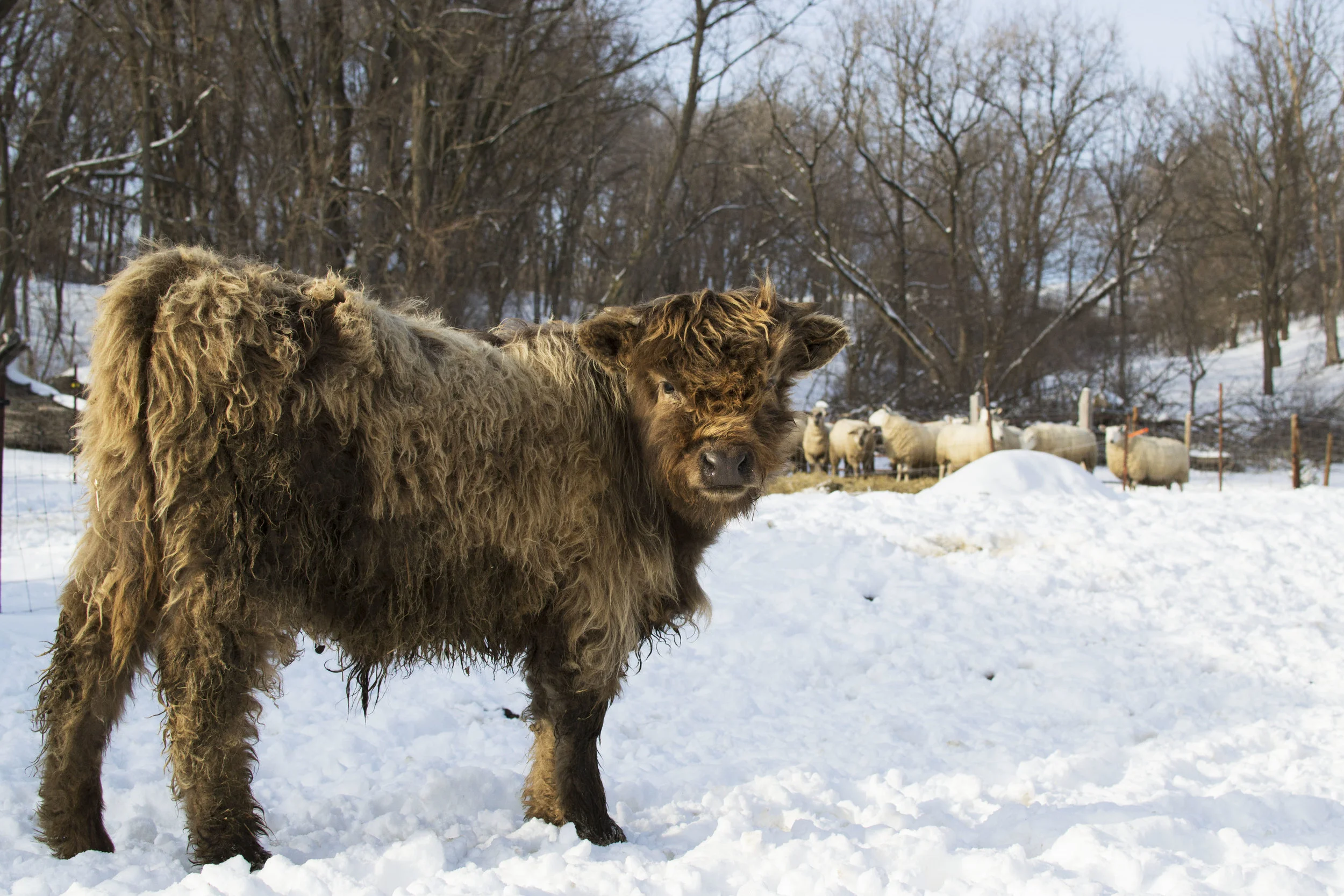
On top of the hay crisis we dealt with some extreme cold. Temperatures that dipped into -55 degrees with the wind-chill. The animals were tucked and fared well even on the coldest nights. We were blessed to be protected from such extreme wind chills here in the valley, and I’d guess we sat somewhere in the -40’s. When we bought our farm I never thought about the benefits of being ‘tucked in’, but I’m thankful we were. It sure made those cold days more bare-able.
The driveway being iced for over a month meant hauling feed, groceries and fuel for our furnace down the driveway. I used tarps to haul salt and feed when we couldn’t get a car out or down the driveway. We’ve decided to never buy a two wheel drive vehicle again.
Spring 2019, thank you for being here
So, bring on the spring. Bring on the crazy hustle. Bring on the mud. I’ve never been so ready.




Renovation | Our Farm Plans for 2019
Better late than never, right?
Our farm plans for 2019
Better late than never, right?
As the queen of taking on too much in a year, it’s taken me some time to develop our plans in a ‘realistic’ and light-deadline kind of way.
BUT, I did want to share a few of the things we’ve decided made our priority list this year.
our hay and equipment barn
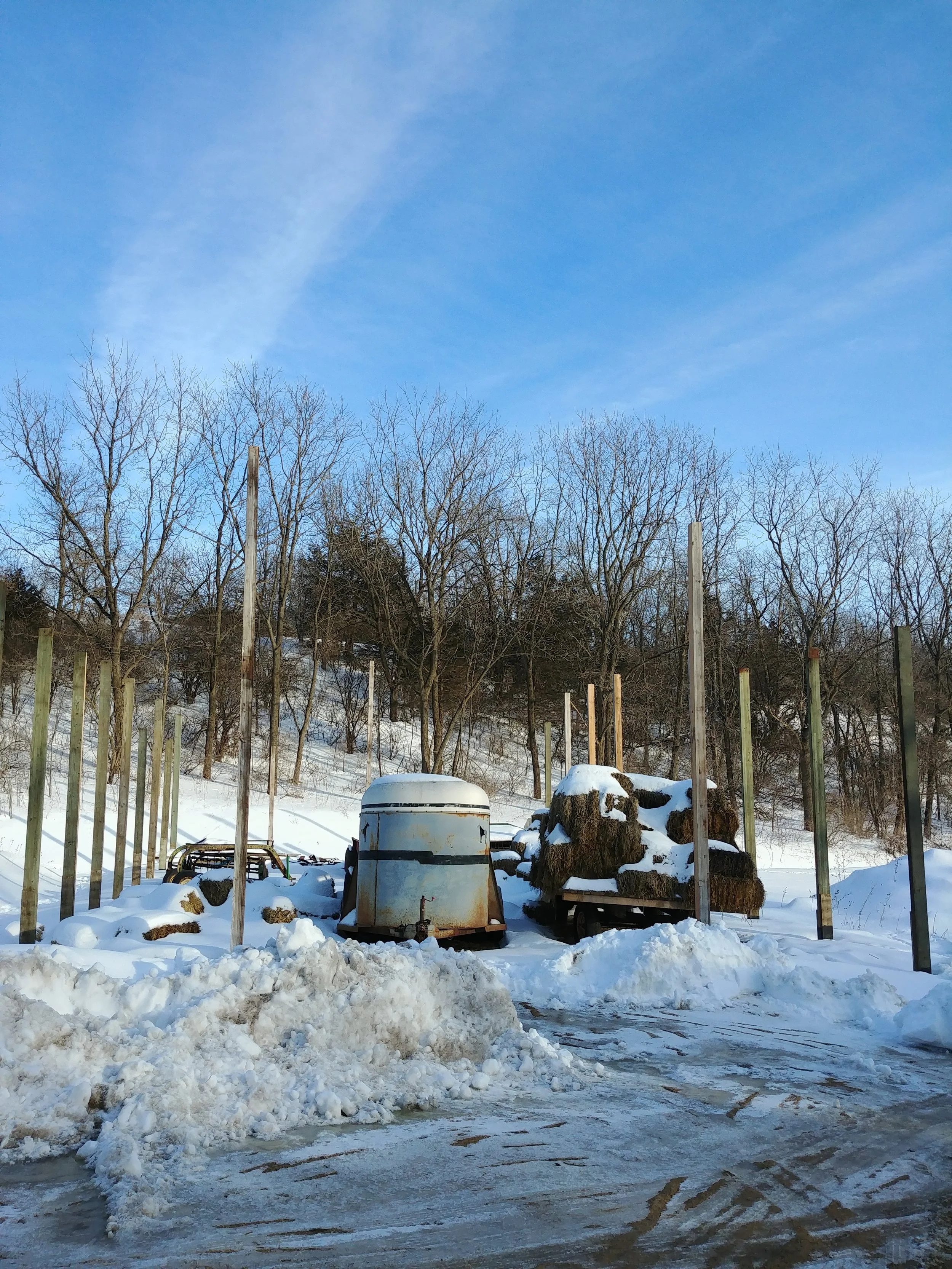
Last fall we installed all the posts for our new hay and equipment barn. I’m so excited to get started on this project. This winter we had hay tucked into every nook and cranny here and at a friend’s farm, so I’m excited that next season we will have all our hay stored here. Our equipment spent all last summer in the weather so it will be nice to have a place for that as well.
Livestock Barn Extension
I’ve already out-grown my original livestock barn. So we’ll be adding another bay for our sheep this year.
Water Line
Last season we set up our 18 acre pasture and this will be our first year grazing it! So we will be installing an above ground water line in order to adequately water our cattle while they graze.
Dry Lot
Our dry lot was thrown up two years ago, because we had to move our four steers to the farm ASAP. It needed grading last season and once that was complete we had too many things going on to finish the fencing. This season we’re hoping to finish the fencing and corrals in our dry lot to make handling and winter shelter easier on us and our livestock.
We are also hoping that we will be able to add a bunk feeder for our cattle and permanent feeders for the sheep. We will see how far we get with this. It is definitely lower on the list of must-do’s.
Clearing
This is the job that never ends, or so it sometimes seems. We still have quite a bit of clearing to do in our upper pastures before we can finish some interior fencing projects and seeding. While I already believe this is unlikely to happen, it always remains on the list.
Farm Store
We’re also be roughing in our farm store. It won’t be complete this year but we’re excited to get things more organized for you to visit us!
it’s going to be another busy year
We’re (or actually I’m) trying to set more realistic goals this year so that we can reduce the stress that often comes with such a hefty to-do list. We never expected fixing up this farm would be easy, but renovating the farm has sure been quite the project. While the annual changes have been huge and rewarding, it can sometimes feel like an over-whelming, never-ending project. We’ll get there in time and I’m trying to push myself to be patient.
I will of course be posting our progress and projects here throughout the season, so stay tuned!

Farm | Why Grass-fed?
This is a really simple question for us to answer.

Why raise grass-fed?
This is a really simple question for us to answer.
Cattle and sheep were created to graze.
It really is that simple for us. Grass-fed beef and lamb are healthy for you because the animals were raised on a diet that reflects nature.
Our philosophy from day one was: why feed a ruminant grain substitutes when they are so perfectly designed for grazing?

Recipe | 30 Minute Dinner - Lemon Garlic Lamb Chops

Lemon Garlic Lamb Chops & Roasted Vegetables
Lamb chops are such an easy, delicous and quick way to serve dinner.
This recipe is designed to get dinner on the table in 30 minutes. So the next time you're looking for something quick that your family will love, be sure to try this recipe.
***Recipe is for 2 people. double as necessary.
Roasted Potatoes
4 thinly sliced red potatoes
1/2 head of broccoli sliced
4 tablespoons olive oil
1 tablespoon garlic salt (or more to taste)
How to Cook
Heat your oven to 350 degrees
Chop potatoes and broccoli and place on a baking sheet
Drizzle olive oil and add garlic salt
With your hands lightly mix to coat the vegetables with olive oil and garlic salt
Put in the oven for 30 minutes.
While your vegetables are roasting get the lamb chops ready, start them 15 minutes after putting vegetables in the oven.
Lamb Chops
4 Homestead lamb chops, serve 2 per person
2 tbsp olive oil
juice of 1 lemon, approximately 3-4 tablespoons
2-3 tsp dried oregano
1 tsp red pepper flakes
2 tsp thyme leaves
4 garlic cloves crushed
1 tsp salt
pepper to taste
How to Cook
Pre-heat a cast-iron/stainless steel pan over high heat.
Drizzle the lamb chops with the olive oil and lemon juice, generously season with the herbs and spices on both sides.
Place the lamb chops in the hot pan then sear for 2 minutes per side, do not cook longer or your chops will be over-cooked.
Flip the lamb chops onto the fat side and allow to sear for 1 minute, until the fat has started to render and caramelized.
Remove from the pan and allow to rest for five minutes before serving.
Remove your roasted vegetables when they can be easily pierced with a fork. Serve lamb chops with roasted vegetables and a lemon wedge. Enjoy!

Farm | Two Months Until Lambing!
We’re two months away from our second lambing season, and I can’t wait!
We are two months from our second lambing season
and I can’t wait! Little lambs have been deemed a farm favorite, there really can’t be anything cuter. I look forward to sharing our second season with you on video.

Farm | What Life Looks Like for a Small-Scale Grass-fed Farmer
One of my strengths as a person is being honest, one of my weaknesses as a person is being too honest. I’m not one to sugar-coat the reality.
What Life Looks Like for A Small-scale Grass-fed Farmer
One of my strengths as a person is being honest, one of my weaknesses as a person is being too honest. I’m not one to sugar-coat the reality. I quickly evaluate risk and reward and look at the realities of things rather than the best-case-scenario.
So, I’d like to preface this post to say I never want to discourage someone from becoming a farmer, this life I live is beautiful, but I don’t think it’s for everyone AND I certainly don’t think it’s as romantic as Pinterest would have you believe. Farming comes with an incredible amount of sacrifice and there is beauty in it but it certainly isn’t a fit for everyone’s vision of living their ‘best life’.
In fact only 2% of the population are farm families (make a living on their farm), just think about that. It’s crazy isn’t it?
My farm background
Before I get into what it looks like to be a grass-fed farmer I want you to know some facts about my position coming into farming, because your position may make this all look a little different than it does for me.
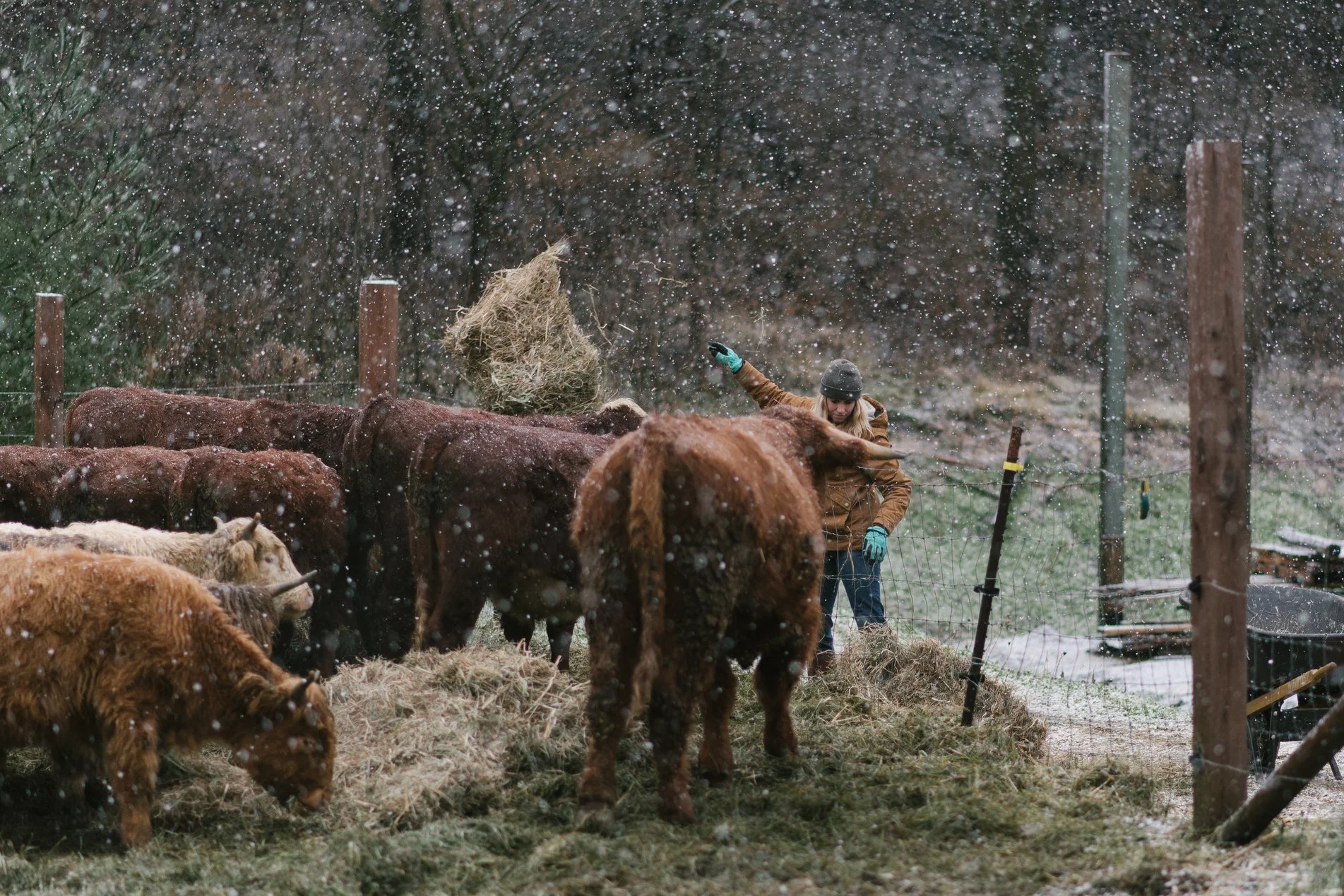
I didn’t grow up on a farm. I quit my 9-5 design job four years ago. I’m a beginning farmer, meaning I’ve been farming less than ten years, as I write this I’ve officially been farming just short of four years. I’m in the process of scaling my farm to be a viable income and a partial career (floral design is my second career). I graze 26 acres and my current farm capacity is 30 steers and 100 sheep. So, I’m not by any means a large farm in fact I’m a very small-scale farm. I’m 27 and have been self-employed part-time and employed part-time off the farm for the past four years. I HATE loans, but I’ve had to learn to appreciate their use in balancing my cash flow.
So what does a year look like on the farm?
You’re going to be working 365 days a year
If you’re in a 9-5 and dying to get out like I was, just consider this for a second. There’s no PTO, no holidays and no sick days if you’re a farmer. This definitely shouldn’t stop you because ‘if you’re doing what you love you truly won’t work a day on the farm’ (see how I twisted that saying?) but it is something I didn’t fully grasp until I actually quit my 9-5.
However, if you’re lucky like I am, your birthday falls in the summer. Which means you can get your grazing rotation scheduled so as not to land on your birthday. If you’re really lucky you have automatic watering systems and you could take the day OFF but that isn’t always reality.
The thing about livestock is they LOVE to eat, funny I’m the same way. They need something from you on a daily basis even in some of the most well-designed systems. They don’t care if it’s snowing, raining, if it’s your birthday or it’s Christmas day, they still want you to be diligent in caring for them.
If this sounds like fun, or at least not the worst thing in the world, you may thrive as a farmer.
so if you'r still interested after knowing you’re giving your days off a wave goodbye
Let’s look at what the seasons look like for a small-scale grass-fed farmer.
the growing season on the grass-fed farm
Summer is one of the ‘easy’ times on my farm. I choose to rotate every one to three days, depending on how the grass is growing. It’s manageable for me at this point in my farm journey when I have other irons in the fire. Some grazers rotate multiple times per day, it’s just not workable in my current state of life.
So, my summer chore list looks something like this
Daily
Water livestock
Move and water cattle
Move sheep and set up tomorrow’s grazing strip
Every Three Days
Document rotations to track seasonal changes
Scrub stock tanks
Check and fill mineral supplies
Weekly
Set up new grazing rotation for cattle - I set this up a week at a time
Monthly
Check and clear perimeter fences - this is especially important for a new farm when things have been neglected. I often have to spot spray noxious weeds (honeysuckle, boxelder and grape vine) along my perimeters to keep the fences hot and the cattle on the right side of that fence. If you’re going organic this will look different for you.
Memorial Day, July 4th, August and if I’m lucky September
Harvest hay | hay crops tend to be ready for harvest about these dates here in southern Wisconsin. So for four days, four times a year, my time is spent on a tractor cutting, tedding, raking and baling hay
Take and submit hay samples
Seasonally
Manage meat inventory
Market and sell meat
Take and submit soil samples
Seed (this may not be every season depending on your farm)
Fertilize as needed
winter on the grass-fed farm
Daily
Feed hay
Fill stock tanks with fresh water
Weekly
Check and fill mineral supplies
Scrub water tanks
Monthly
Replace bedding (can be more if weather is poor)
what holidays and family time look like
Let’s be honest, nobody is going to do your chores on Christmas so that you can stay and play games all night with your family. Wouldn’t’ that be nice though? Matt and I drive separate cars to some Christmas gatherings so he can stay and enjoy a full day and I can get home to do chores. I’m hoping to move towards self-fed hay to give me a little more time to ‘play’ but those stock tanks will always need filling, and it’s likely something needs tending when I get home.
Hinging on my point above family time looks a little different for me now than my pre-farm life. While I do my best to go to all the gatherings throughout the year, I’m always the one leaving early. Water tanks must still be filled and if the grass isn’t growing the livestock are going to be calling for delivery service by 4pm. That’s just the reality of it.
vacation and little luxuries
This is going to look different for everyone. Perhaps your’s will look a lot like mine, or perhaps it’s quite different. I quit my 9-5 at the same time we brought home our first two steers. I started a landscape and floral design business and was working towards scaling the farm to be a profitable business all at the same time. Matt has worked his passionate 9-5 since we’ve been married but with my income, brand new business + a part-time position, things have been tight for us. So after prefacing our situation…
That vacation you had ‘planned’ this year, well you might need to replace the haybine instead. That cute pair of Ariat boots, that kitchen remodel… those may not be in the cards for you this year either because you only harvested two hay crops instead of four and you’re buying a lot of hay to feed livestock this winter.
If you’re strategic this is only a season (though I’d kind of doubt it), but if you’re looking to be a farmer and you’re starting from scratch it may look like this for a while.
which leads me to this, you might be ‘broke’ for a while
Things may look different for you if you have a full-time off-farm job, and it’s likely you’re going to have to carry some part-time work off the farm while you’re getting started.
This farm has been a big part of my 'weekly work hours’ and annual income, since we started. So while I’ve been making income (on farm, off farm, and through other businesses), starting a farm from scratch eats a lot of those pennies away. There is seed to buy, fences to install, hay to purchase, equipment to buy, barns to build and the list goes on… unless you’re lucky enough to get a farm that’s ready to rock-and-roll this may be what it looks like for you too.
Knowing your numbers is essential to mentally surviving this ‘stage’. Actually keeping the profits I make from the farm (and not reinvesting it back into the farm to scale) starts in year five, another year from now. If you’ve received your Bachelor’s degree just think for a moment about that timeline. Matt and I were in school for five years, it seemed like eternity then and waiting five years for a viable paycheck seems like an eternity now.
However, I did myself a favor and made projections before we started and by year five I projected good profits, profits that will make up a good portion of my desired income. It has helped me mentally through this stage… while your friends are advancing in their salaries you may be ‘getting by’ because grass-fed cattle don’t grow overnight.
it may look different for you
I understand that everyone comes into farming at different stages in life with different expectations. However, if there is one thing that stays the same no matter what stage you’re in is the commitment to working 365 days a year. This lifestyle is a beautiful one if you consciously decide it’s right for you. Get into farming because the beauty of the life out-ways the sacrifices you’ll certainly have to make.
pin it!


Farm | Food Inc.
Most would argue that I was born a farmer, and they would be mostly right. But my passion to farm was given purpose because of one class during my final year of college.
Food Inc.
THE VIDEO THAT CHANGED THE WAY I EAT
Most would argue that I was born a farmer, and they would be mostly right. But my passion to farm was given purpose because of one class during my final year of college.
I was sitting in one of the classes that I would have initially written off as ‘a waste of time’, it was a non-degree filler course and I definitely looked at it that way.
However, one day, I sat down in that class unprepared for what I was about to be confronted with. The title ‘Food Inc.’ splashed up on the big screen and my curiosity sparked for the first time. Then, as the film began rolling I became incredibly uneasy. What was flashing before my eyes was the incredibly inhumane treatment of livestock in the ‘modernized’ food system.
It was down right horrifying to watch cattle being drug off trucks with skid steers, ALIVE, because their legs had broken in transit. To watch female pigs give birth and not to have room to even lay down comfortably, and to watch chickens being de-beaked and living in their own waste.
What was as equally horrifying is the unhealthy levels of antibiotics in our food, the tasteless, fattening substitutes that have been made in the effort to keep things ‘cheap and quick’.
It changed me and it dramatically changed the way I looked at the meat on my table.
WATCH THE TRAILER FOR FOOD INC.
I HAD TO BE PART OF THE CHANGE
The only way I could see myself continuing to eat meat, was if I could be certain that it was harvested from livestock who live natural and comfortable lives. Which quickly lead me to the conclusion, I had to be a farmer that helps others make a change at their own dinner tables.
I had to make my ‘dream farm’ a farm that brought people in who had also been confronted with the horrors of our modern livestock systems. People that want healthier, tastier meat that was raised the right way, with the animal’s welfare at the forefront.
YOU CAN be part of the change
You can choose what your food dollar supports and I believe there is great power for change in your choice. You can choose to eat your meat with the confidence of knowing how it was raised and harvested. You can buy from local farmers so that you can get all your questions answered.
You have a choice and you have the power to change the way you and your family eat. I’m here to help you make that change.

Farm | 10 Fast Facts From Your Farmer
Fast facts about our farm practices, direct from your farmer.

10 Fast Facts from your farmer
Our livestock are on all-grass diets, we do not feed any grain.
Our livestock spend their spring, summer and fall on pastures.
Cattle and sheep were ‘created to graze’ as ruminants.
‘Grass’ on our farm consists of a diverse mix of clover, alfalfa, grass and chicory which offers our livestock the most delicious buffet throughout the changing seasons. Our pastures are crafted for optimal nutrition so that our cattle can grow naturally without grain.
We employ antibiotics sparingly and only when absolutely necessary to the health and well-being of our livestock. We do not treat our livestock ‘across the board’ but instead treat individual animals.
We practice regenerative grazing to reduce the amount of chemicals we bring on to the farm, any chemicals used on the farm do not come into contact with our livestock.
We have an ‘open door policy’, if you want to stop by to see the farm we’d love to welcome you. Contact us below to schedule a time to visit.
We harvest our animals on the farm to ensure the most humane harvest possible.
Brit is the head farmer and does the daily livestock handling, livestock feeding, customer communication, order processing and delivery.
Matt and Brit’s parents are helpful hands for hay harvest and building projects.