
Why We Don't Ship Meat
We get asked this question a lot, it’s time to answer it.
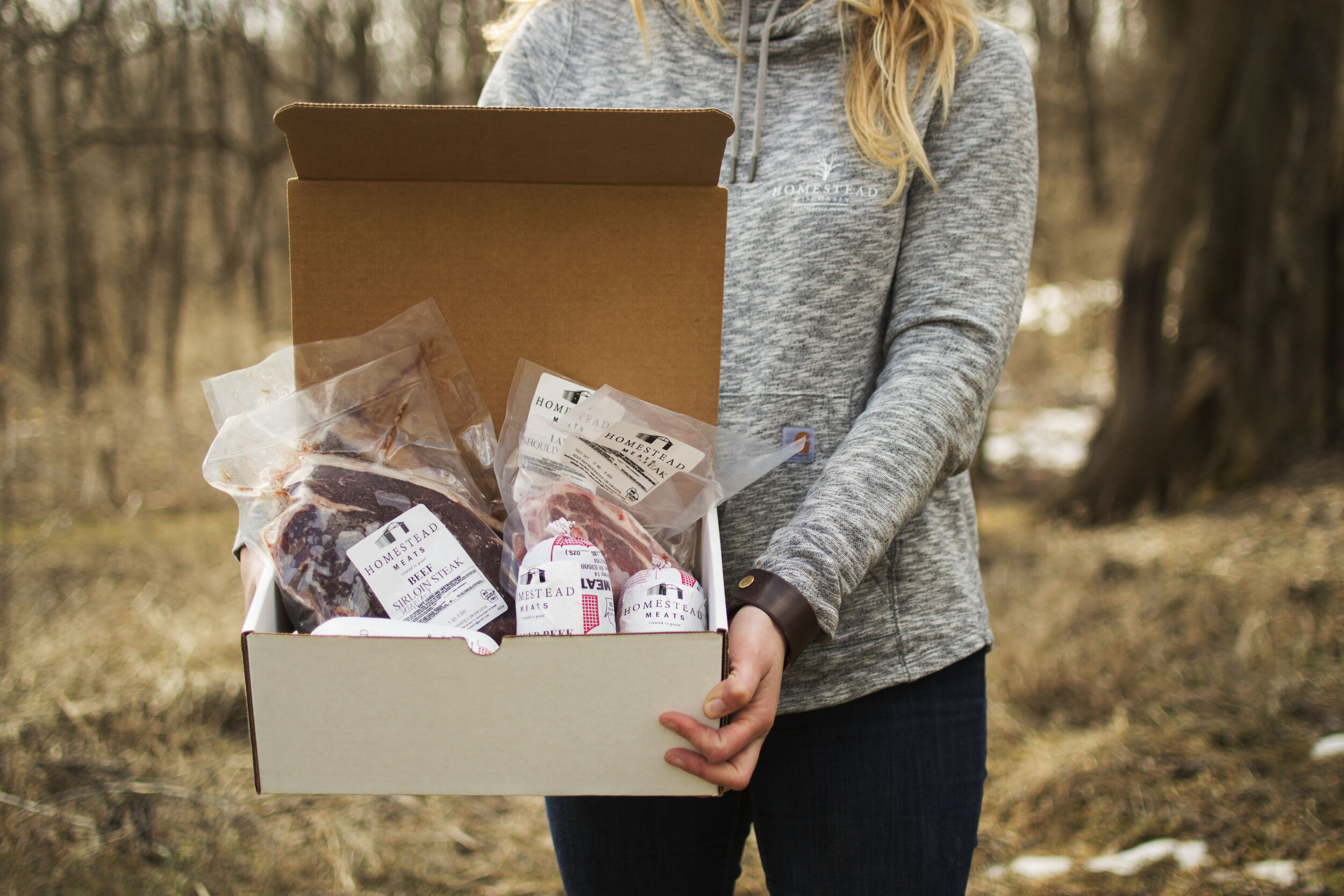
Why We Don't Ship Meat
We understand that more and more you’re wanting to get things delivered directly to your doorstep, especially during our current national and worldly crisis.
It’s why since the very beginning we’ve been selling our meat online and delivering it to your doorstep. We’re like you, we are busy, we could use one less errand and when we need something we go directly to Google to find it.
So, we totally understand why we get the question ‘do you ship your meat’ quite often. However, instead of answering why we’ve decided not to ship our meat via postal services behind the scenes, I feel it is time to put it out there.
This is why we don’t ship meat
It goes against our own desire to source our food from our local farm community.
Especially in Wisconsin we have an abundance of beautiful, tasty local food right out our back door. Obviously, this isn’t the case around the nation and we understand that. For us however, we believe that food grown by our ‘neighbors’ is worth preserving. If we start shopping elsewhere the farmers here may not be able to sustain themselves. We strongly believe that food is grown by neighbors for neighbors. The concept of ‘shop local’ is such a big part of who we are, so it is our goal to be part of our community in a way that our community can support us and we in turn provide them with quality meats and neighborly service.
Shipping meat across the state/nation steals from your local community
Now, I want to preface this statement, we do not want to shame other farms that have chosen to ship their products statewide or nationally. They might have very good reasons to do so. Each farm has to make decisions that make their model sustainable, and sometimes shipping is the means to that result.
However, I believe there is an abundance of great farmers, great local farms, especially in the Midwest. So, my dear friends in Minneapolis may buy from me when they visit, however, I know there are incredible local farms in their area that would love to serve them. So, I believe that they should find them and support them. Food has a beautiful way of connecting us to each other and if you can source the food you want near you I believe you’ll get far more than food on your table.
You could also think about it this way. If you’re a local real estate agent (or any other business person reliant directly on community support), wouldn’t you want your local farmer to buy land using your services? Obviously you would! In order for that farmer to purchase land, get their hair cut, eat at the local restaurant or buy any product or service locally they have to BE IN BUSINESS. If you’re shipping in your family’s food from another state when your farmer down the road has what you need (and also, provides a great service and has a quality product) WHY would you not want to support them? That money you spend comes back around within YOUR community.
We do not process our meat at a USDA facility
Currently, there is only one local butcher that provides on-farm harvest, and on-farm harvest is extremely important to us. We believe in providing the best end possible to our livestock. To harvest them in their natural environment and that by reducing stress on them we provide exceptionally tasty meat for our community. Our butcher is state-licensed which means we can only sell our meat within Wisconsin. So, shipping out of state isn’t even a legal option for us.
Our farm can be fully sustained by our local community if they chose to source their meat from local farms.
I think we’d be answering this question quite differently if our community wasn’t supportive of our farm. However, as we’ve slowly grown and slowly started to sink into our community, the community has been there for us. For us, if we show up and are a part of our community we can sustain our farm within a 20 mile radius. We are blessed to have found a farm so close to a large city center that is filled with people who love and appreciate local agriculture. For that reason, it is unnecessary for us to ship our meat.
Our encouragement in these times
Obviously the COVID-19 crisis is dramatically changing the way we buy food. We go out less and get more delivered to us. Now is the perfect time to start sourcing our food from our neighborhood farmers.
I know for us this crisis has formed a very strong sense of community. We are proud to offer a safe meal to those in the Madison area. We are proud to be dropping our meats on the doorsteps of our neighbors. We’ve been here for them all along, but it is times like these when we feel that we can support each other in the simplest of ways. For us, that simple meat delivery sustains our family, feeds our neighbors and that is exactly why we’ve decided not to ship our meats.
from us to you, thank you for supporting your local farms

Farm | What Their Last Day Looks Like
This has always been a hard topic for me, the last day. Even-though I believe that cattle and sheep were created for us to eat, there is something very sad about that lingering date on my calendar, the date a life ends to give us health and well-being.

What their last day looks like
This has always been a hard topic for me, the last day. Even-though I believe that cattle and sheep were created for us to eat, there is something very sad about that lingering date on my calendar, the date a life ends to give us health and well-being. While it’s an extremely graphic topic, I know there are those of you like me that while it hurts to know, we have to know. I think it’s the most important part of being a responsible meat consumer and thank you for caring enough to learn the whole process of what it takes to get your favorite meat on the table.
So, if you’re with me, I’ll wipe away the tears that fall when I write this and share what the last day looks like for our livestock.
it starts like every other day
Thanks to a MSU (mobile slaughter unit) we’re able to harvest our animals here on the farm. Which means that their day starts out just like any other. If they’re on pasture, they’re grazing when the sun comes up and if their harvested during the winter in our dry lot they wake up to bales of hay being thrown in the feeder.
This is what’s so special to me. That their morning doesn’t start off with a trailer backing up, a small holding pen. It doesn’t start with them being forced to load into a trailer and leaving home for an unknown destination.
when the truck pulls in
They get curious. Any visitor to the farm does not go un-noticed. Our butcher, steps out, says hello and gets to work prepping for the harvest. He loads his gun, he starts up the generator to keep his truck cool, he puts on his boots and smock and then he asks ‘who’s going today’. THAT’S the hardest question to answer, not because I don’t know, but because I’m finally acknowledging the end. If it’s a steer I point them out and give him tag numbers so there is no guessing. If it’s lambs I have them corralled in the barn and again give him the tag numbers.
The inspector put’s on her (usually her) or his white gown and boots and is ready when he’s ready.
then it’s time
I whisper a little goodbye as I hand over those tag numbers and I shed a few tears. If it’s a steer (our male cattle) I walk the butcher and the inspector out to the field. Then we pause, because it really makes us all sad. The gun is loaded and then I look away and wait, for that one shot. The shot comes, a single shot that takes the animal down, it’s gone. There is a heavy sigh from all of us and our butcher cuts the throat to let the blood run out.
If it’s a lamb (fully mature) it happens a little differently. They are corralled in the barn. The butcher instead uses high-voltage to kill the animal. The lamb lies down quickly from the voltage, it’s gone. Again, the harvest is never without a sigh and the butcher cuts the throat to let the blood run out.
To be honest, I don’t watch my animals go down, I haven’t mustered the strength to watch. I just wait for that shot and walk them back to the gate, the lambs I watched once to understand the process and now I walk out of the barn.
It’s really, really hard for all of us. BUT, it’s fast and in their home, just like harvesting a deer in the wild and that’s what brings me some comfort.
the processing
After the steer or lamb is gone, it’s brought to the truck via a skid-steer or wheel barrow, and the butcher skins it, guts it and if it’s a steer quarters it all with the inspector there to watch. After the animal is clean he closes the door, takes off his smock, thanks the inspector and waves a tense goodbye.
The final carcass is brought to their processing facility where it is aged, cut and packaged for pickup
it isn’t easy for any of us
I’ve received some very harsh words when I share my heart on this subject. I’ve been called ‘psychotic’, ‘sick’ and I know there are those who will always feel that way. What they don’t know is how much each and every person involved in harvesting our animals DOES care. The butcher, the inspector and the I, the farmer, all want what’s best for these animals. We want it done humanely, without pain and quickly. No suffering is what we all care about. None of us are in this industry because it’s easy and none of us are immune to the sadness. That inspector has to watch hundreds of these a week and that butcher has to perform hundreds a week and they both admit it has a high emotional toll. As the farmer it’s hard to pick a date where you’ll be forced to say goodbye to something you’ve cared for for so long, something you’ve watched born and bottle fed as it’s mama.
We do it because we believe these animals deserve the best and you deserve meat that was actually cared for, meat that came with tears. So, never believe that the last day was met without a trio of heavy hearts. It isn’t easy and none of us feel to should EVER be easy.
Thanks for reading, for wanting to learn and for supporting those who care.

Farm | When Cheaper Isn't Better
What’s really on those grocery store shelves?

cheaper isn’t always better
If you’re like me you’re always after the best deal available for most items on the market. However, I’d venture to guess you’re also like me in the fact that you’ll spend your hard earned money on something you find valuable. It might not be diamond rings, it might not be ethical clothing, and it might not even be food.
But, you probably value something so highly the price wouldn’t matter a whole lot to you and you’d even go out of your way to get it.
My passion is to share with you more background on a topic that is very close to my heart. That is the $3 head of lettuce and the $3 beef at the grocery store.
Cheap food isn’t better, cheap food is killing us.
Disease
Did you know that 1 in 4 Americans have diabetes? Or that roughly 40% of Americans struggle with obesity, which can lead to heart disease, diabetes and some cancers?
The industrial food system has allowed food to get cheaper but only at the expense of our health, animal health and the health of the people that work to put food on our tables.
Much like the fashion industry, the food industry in America has been driven by lower costs. The only way to make things cheap is by cutting every corner possible, which in turn, has made American’s sick and those who work to keep food on our dinner table even sicker.
Food - Borne Illness
The CDC estimates that ‘48 million people get sick, 128,000 are hospitalized and 3,000 die each year from food borne illness in America’. Recalls on beef alone in 2018 totaled 31 independent recalls - totaling 13,185,563 pounds of beef. The numbers of people that died due to food borne illness is disastrous, our food shouldn’t be killing us. AND on the other end, which also breaks my heart as a farmer, these recalled pounds of beef are animals that are dying to feed us. We should be harvesting animals that make it to dinner plates to give us a nutritious meal, not meat that get’s pulled off grocery shelves because it could kill us.
To give you an idea of how many animals were harvested and pulled from grocery shelves in 2018, in just beef alone, I’m counting upwards of 33,000 animals. When I harvest a steer on my farm, I get back roughly 400 pounds of beef. If we divide 13,185,563 pounds of beef that was recalled last year alone, that is a total of nearly 33,000 animals that were thrown away for no purpose other than the desire to make beef cheap enough to sell a $1 hamburger at McDonalds. We’re not only looking at a in-excusable number of human lives lost, but of animals lives lost all in the name of cheap food.
And that’s just food borne illness.
The farmer’s share
I was baffled when I saw this chart for the first time, and I would guess you are too. No wonder we have a food problem. Have you ever driven through Nebraska or Wyoming and seen the miles and miles of feed lot beef? That’s what you get when you have to meet such a low cost demand. You can’t make a living on $1.95 per pound for beef, the economics just don’t work.

https://www.wisconsinfarmersunion.com/
Slavery in america
Do a little looking into the industrial food system and you’ll quickly realize that slavery is not truly gone in the agriculture industry. Meat packing workers, field workers and even farmer’s themselves have become slaves to the system.
For example, a single industrial food system chicken house costs upwards of $500,000 dollars, which the large companies ‘finance’ to their farmers. In order to be a competitive chicken farmer for large buyers a farmer would likely have several of these buildings. It’s been stated that even with multiple chicken houses a farmer is only likely to pull $20,000 annually in profits. Again, the price we pay for the chicken on the grocery shelf, is not what the farmer is getting paid when we buy from large suppliers. Working in such unsanitary chicken houses for $20,000 dollars, with a mountain of debt to the companies, is exactly the type of ‘slavery’ that these farmer’s face. There is no way out for many of them.
Meat packaging and field workers suffer from little pay, high-risk of injury jobs, unhealthy working conditions and abuse. Just imagine for a second being brought to this country with a promise of a ‘good job’ only to be abused and endure incredible suffering instead.
All in the name of cheap food.
Change is in your hands
We’ve all been consumers of cheap food. We’ve all been looking for the best deal at the grocery store. We’ve all looked at a head of lettuce, a package of ground beef, and our Thanksgiving turkey without questioning how it was raised, who processed it and how it got to our local grocery store. Most of us have looked at it through dollar signs.
I honestly understand that it’s a hard habit to break. I love a good deal and I love convenience, but when I looked at the industrial food system of America my heart broke, I was angry and I needed to change my thinking. I hope you feel the same.
Perhaps you’ve made steps to knowing your food better, if you have you’re already making a difference. If you are still a deal shopper at the local grocery I know where you’re at. But change needs to happen. We need to spend our dollars in a way that makes change happen. The industrial food system came out of our very own desires for cheaper food and if we desire something better - it will come. If you feel powerless, like the food problem is bigger than you, I want to firmly tell you it isn’t.
You can choose to ask questions, to get to know your local farmers and to know your food.
I Know it costs more
Going back to my very first argument, I GET IT. I understand the desire to consume a deal, to stop in at my local grocery for that $3 per pound hamburger BUT eating cheaper isn’t valuing my health and the health of all the people connected to the food chain. It is going to cost more now but it’s going to change our future for the better.
Practical Steps
One thing that has changed for us since eating more locally and knowing our food better (though we have much room for improvement yet) is that we eat differently. Meat is no longer making it onto our nightly dinner menu, we actually eat far less meat since we began farming than before we farmed. Meat raised and harvested right costs more than meat raised in manure lots that are stuffed to the gills with cattle; that are then processed in an assembly line that is bound to break every once in a while (contaminating that meat). We buy our own meat and since it comes at a higher cost we eat less of it, honestly we eat meat about 3 times a week.
Start with something small. Unhappy with inhumane treatment and harvest of animals, start by buying meat from a farmer you trust. Unhappy with slave labor in California wine making, buy local wine made from local grapes. Unhappy with eating Romaine lettuce that makes you sick right before the holidays, partner with a CSA.
Do the research. Information is at our finger tips, but we need to be willing to look and we need to be willing to be confronted with hard realities. Start by watching Food Inc. (available on Netflix) and research your questions from there.
If you have a family history of a particular disease, check to see if it’s linked to a food you’re eating. For example, a customer of mine buys grass-fed meats because a grain diet can be linked to Alzieimer’s, and her mother just passed from that.
Find a local farmer. If you’re in Wisconsin finding a farmer has never been easier. You can find a list of local farms on the Farm Fresh Atlas.
Perhaps a change in how you spend your dollar means a change in how you eat. BUT in exchange you’ll be part of a valuable movement to say no to unhealthy food, to big corporations and to change the way America eats for the better.
For a deeper look you can watch food inc. for free on netflix

Farm | No, Lamb Meat is Not From Baby Lambs
I get this question a lot actually, and I can’t believe I didn’t think to answer this question here on the blog before…

No, Lamb Meat is Not From Baby Lambs
I get this question a lot actually, and I can’t believe I didn’t think to answer this question here on the blog before…
So, I’m catching up and answering this question today
‘is lamb meat baby lambs?!’
Heavens no, that would be a sad world if we harvested baby lambs. They are so stinkin’ cute!
So what is ‘lamb’ meat?
Lamb meat is simply meat harvested before a year of age. Our wethers (ram lambs that have been castrated) are mature at 8-12 months. This season they were harvested at 10 months of age if they were singles, and 12 months of age if they were twins. Lambs at this size are fully mature (they grow like weeds) and would get less tender at an older age.
Then there is mutton
Mutton is the official term for lamb harvested after a year of age. Most often this meat is harvested from old breeding stock that is no longer in their prime breeding age. These animals are harvested and we’ll use the meat to make a tasty mutton grind, we don’t believe in letting any life go to waste.
Eat with confidence
I’m sorry it took me this long to ‘clear the air’ on this one. If you have any additional questions on your lamb be sure to ask!

Farm | Why Grass-fed?
This is a really simple question for us to answer.

Why raise grass-fed?
This is a really simple question for us to answer.
Cattle and sheep were created to graze.
It really is that simple for us. Grass-fed beef and lamb are healthy for you because the animals were raised on a diet that reflects nature.
Our philosophy from day one was: why feed a ruminant grain substitutes when they are so perfectly designed for grazing?

Farm | Food Inc.
Most would argue that I was born a farmer, and they would be mostly right. But my passion to farm was given purpose because of one class during my final year of college.
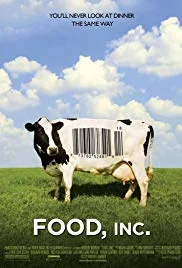
Food Inc.
THE VIDEO THAT CHANGED THE WAY I EAT
Most would argue that I was born a farmer, and they would be mostly right. But my passion to farm was given purpose because of one class during my final year of college.
I was sitting in one of the classes that I would have initially written off as ‘a waste of time’, it was a non-degree filler course and I definitely looked at it that way.
However, one day, I sat down in that class unprepared for what I was about to be confronted with. The title ‘Food Inc.’ splashed up on the big screen and my curiosity sparked for the first time. Then, as the film began rolling I became incredibly uneasy. What was flashing before my eyes was the incredibly inhumane treatment of livestock in the ‘modernized’ food system.
It was down right horrifying to watch cattle being drug off trucks with skid steers, ALIVE, because their legs had broken in transit. To watch female pigs give birth and not to have room to even lay down comfortably, and to watch chickens being de-beaked and living in their own waste.
What was as equally horrifying is the unhealthy levels of antibiotics in our food, the tasteless, fattening substitutes that have been made in the effort to keep things ‘cheap and quick’.
It changed me and it dramatically changed the way I looked at the meat on my table.
WATCH THE TRAILER FOR FOOD INC.
I HAD TO BE PART OF THE CHANGE
The only way I could see myself continuing to eat meat, was if I could be certain that it was harvested from livestock who live natural and comfortable lives. Which quickly lead me to the conclusion, I had to be a farmer that helps others make a change at their own dinner tables.
I had to make my ‘dream farm’ a farm that brought people in who had also been confronted with the horrors of our modern livestock systems. People that want healthier, tastier meat that was raised the right way, with the animal’s welfare at the forefront.
YOU CAN be part of the change
You can choose what your food dollar supports and I believe there is great power for change in your choice. You can choose to eat your meat with the confidence of knowing how it was raised and harvested. You can buy from local farmers so that you can get all your questions answered.
You have a choice and you have the power to change the way you and your family eat. I’m here to help you make that change.

Farm | 10 Fast Facts From Your Farmer
Fast facts about our farm practices, direct from your farmer.

10 Fast Facts from your farmer
Our livestock are on all-grass diets, we do not feed any grain.
Our livestock spend their spring, summer and fall on pastures.
Cattle and sheep were ‘created to graze’ as ruminants.
‘Grass’ on our farm consists of a diverse mix of clover, alfalfa, grass and chicory which offers our livestock the most delicious buffet throughout the changing seasons. Our pastures are crafted for optimal nutrition so that our cattle can grow naturally without grain.
We employ antibiotics sparingly and only when absolutely necessary to the health and well-being of our livestock. We do not treat our livestock ‘across the board’ but instead treat individual animals.
We practice regenerative grazing to reduce the amount of chemicals we bring on to the farm, any chemicals used on the farm do not come into contact with our livestock.
We have an ‘open door policy’, if you want to stop by to see the farm we’d love to welcome you. Contact us below to schedule a time to visit.
We harvest our animals on the farm to ensure the most humane harvest possible.
Brit is the head farmer and does the daily livestock handling, livestock feeding, customer communication, order processing and delivery.
Matt and Brit’s parents are helpful hands for hay harvest and building projects.

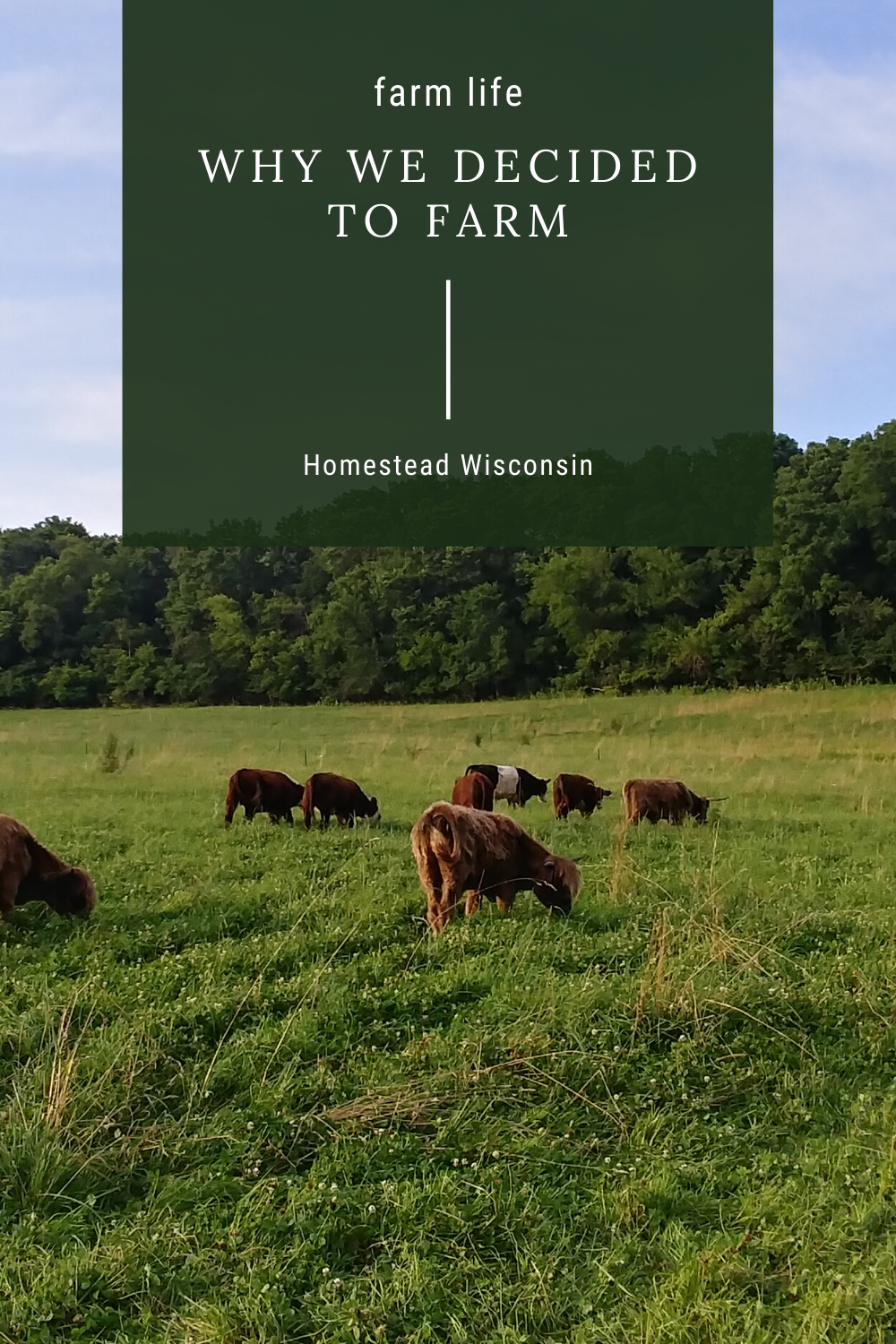
Farm | Why We Decided to Farm
During our final semester of college farmer Brit was exposed to the documentary Food Inc., which is quite frankly horrific. Food Inc. documents some of the practices in the modern food industry, particularly the meat industry in America.
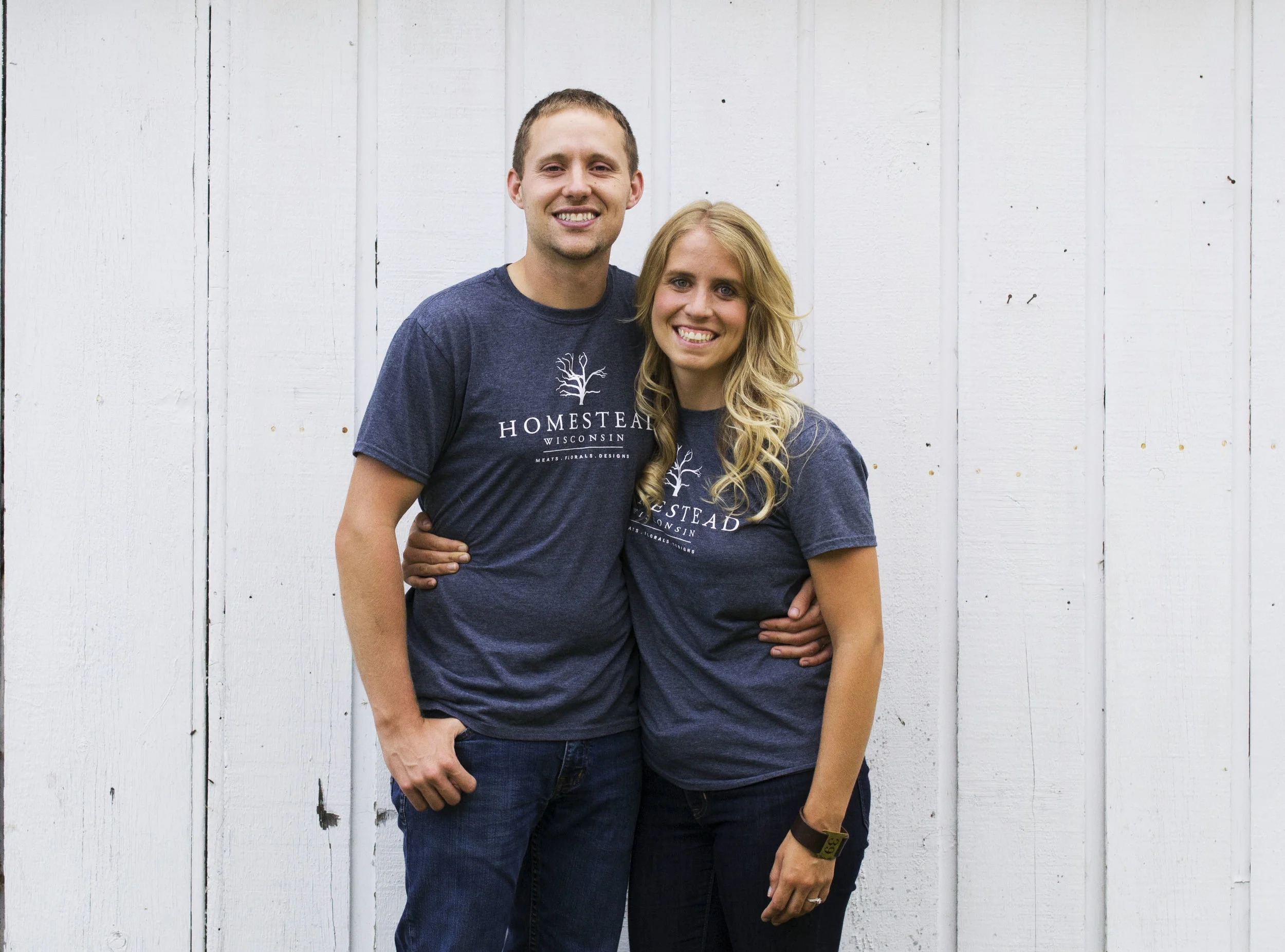
Why we farm
we wanted to know how our meat was raised
During our final semester of college farmer Brit was exposed to the documentary Food Inc., which is quite frankly horrific. Food Inc. documents some of the practices in the modern food industry, particularly the meat industry in America. After being confronted in such a dramatic way we had to face the harsh reality that we didn’t know where the pork on our table was raised, how our chicken was fed, or how our burger was processed. The scariest part for us was that we had not even questioned it before.
Flash-forward to our post-college life and we knew we wanted to make a change in our eating and purchasing - of meat products in particular. So we started raising our own cattle, just for us, and put our dollar to work in our local community with our purchases from local farmers. But, our own necessity for knowing how our meat was raised grew into a burning passion to make a bigger impact.
we’re passionate about connecting you with your food
Which leads us to today. We’re raising beef and lamb for dozens of families in our community and keep an open door policy. Our passion is sharing our farm, our livestock and all aspects of of raising beef and lamb with you. From babies we bring home or birth right here on the farm, to their ‘one bad day’, to how we actually feel about the meat industry, we’re open to sharing it all with you. We believe that what you eat shouldn’t be a secret and your farmer shouldn’t be a corporation.
Our promise is to do our best to answer all your questions so you can dine with the confidence that your meat was raised in the manner you expect.

Farm | Grass-fed vs. Grass-Finished vs. Pasture-Raised What the Label Really Means
I think most people would agree knowledge is power. However, our food system has done a really good job of disguising itself and today I want to take some time to give you a little more insight into what the beef and lamb labels really mean.
Grass-fed vs. Grass-Finished vs. Pasture-Raised
What the Label Really Means
I think most people would agree knowledge is power. Our food system has done a really good job of disguising itself and today I want to take some time to give you a little more insight into what popular beef and lamb labels actually mean, it might surprise you how little information they actually give.
Grass-Fed
Grass-fed is probably the most over-used and deceiving label in the beef and lamb industry. This label essentially means that the beef or lamb you’re eating was fed grass or hay during SOME point of it’s life, often the beginning. This does not mean the animal was fed 100% grass and/or hay for it’s entire life. This label also doesn’t mean it spent any time eating pasture grasses. It could simply be ‘feed-lot’ beef that were raised on hay and later ‘finished’ on grain.
Grass-Finished
This label is your best confirmation that your beef was raised on 100% grass. This label can only be used when the beef or lamb was raised on grass and then ‘finished’ (brought up to final weight) on grass and/or hay. Grass-finished, like grass-fed, does not mean the animal spent time grazing pastures but at least you can be certain it was raised on grass alone. If you’re interested in the health benefits of grass-fed beef you’ll want to look for a label that says grass-fed and grass-finished beef, or ask your farmer.
Pasture-Raised
This label means that the beef or lamb you’re eating was raised on grass fields. It again does not mean it spent it’s whole life grazing lush fields (many pasture raised animals are still supplemented with grain) and it also doesn’t mean it was only fed grass and/or hay for it’s entire life. It simply means it spent some of it’s life on ‘pastures’ which is defined rather loosely. ‘Pastures’ can be overgrown fields or over-grazed fields so buying pasture-raised doesn’t mean that the animal got it’s nutrition from them, but it didn’t live it’s life in confinement so that’s a plus if you’re looking for a more humane burger.
Free-Range
Very few livestock are truly ‘free range’, meaning they can wander wherever there heart’s desire, at least that’s what you’d assume by this label right? This label is probably most common in the chicken or egg industry but I’ve been asked in the past if my cattle are ‘free range’ as well.
Let me assure you that the chicken or eggs on your grocery shelf didn’t come from chickens who were running around and laying eggs anywhere they please or pecking around an old farmhouse for grubs. It simply means (in most cases) that they had larger cages and were able to ‘move’ instead of spending their life confined to a cage the size of their bodies. So I guess the label is an upgrade but it’s likely not what you first assumed.
In my opinion it is not ‘best practice’ to let animals ‘free range’ due to predators and other hazards found on commercial or small scale farms. And this label in my opinion is as vague as the term ‘grass-fed’ or ‘sustainable’.
What Are You Actually Buying?
What’s the best way to know what you’re actually buying? Knowing your farmer of course, do I preach that enough?. If 100% grass-fed and finished is important to you, ask. If a humane life growing on green pastures is what’s important to you, ask. If knowing the animal was harvested in a humane manner is important to you, ask. The beauty of getting to know your farmer is that you’ll be confident that the product you feed yourself and your family fits the criteria you’re searching for.
Our cattle and sheep are raised on grass alone
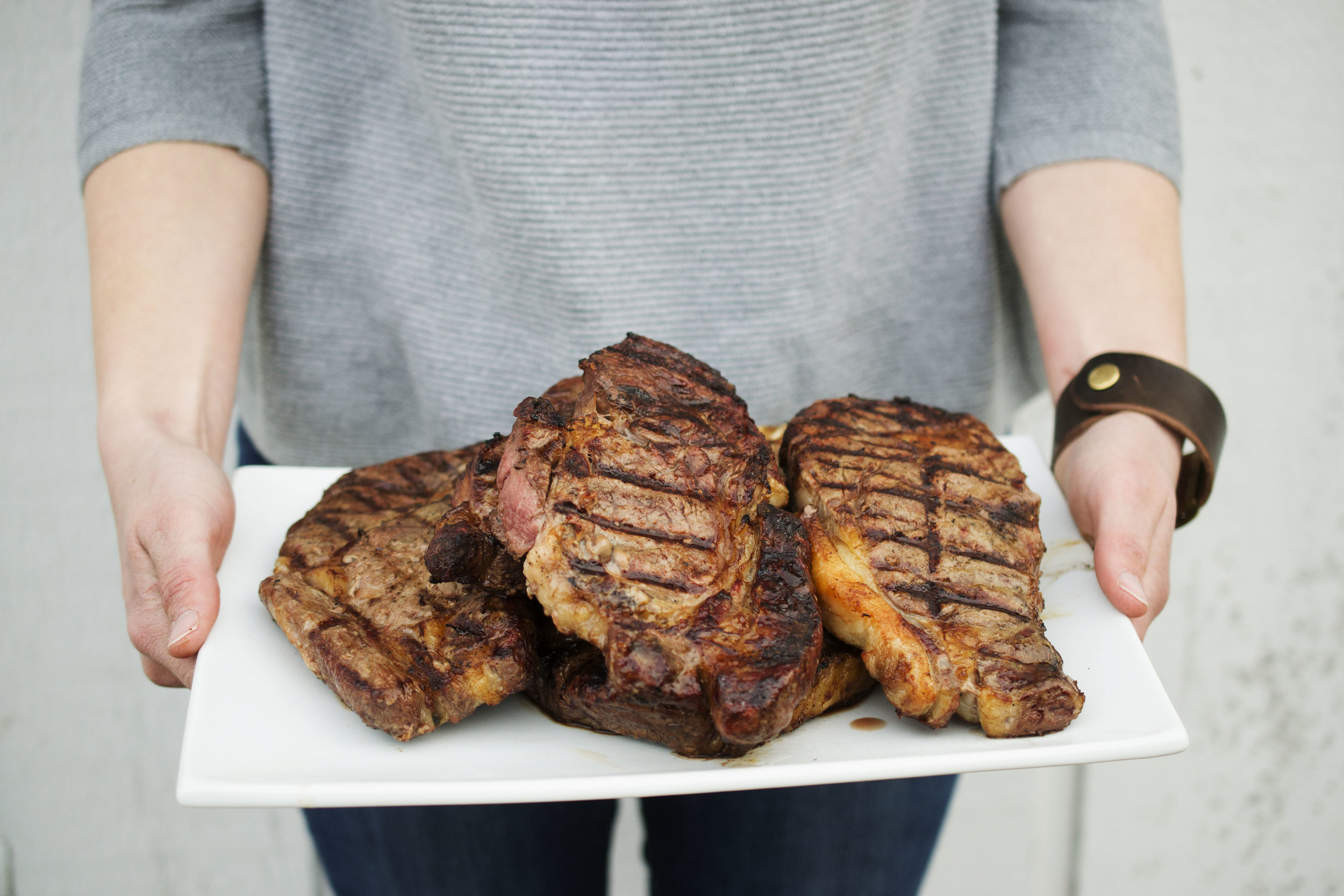
Here at Homestead we raised grass-fed, grass-finished, pasture-raised beef. We harvest our animals on these pastures and my promise to you is to always be open to any questions about our practices.
pin it!


Farm | Meat Delivered
I'm just like you, everything I can order online I do and free shipping is always better. This is exactly why I've chosen to focus my farm on providing quality meats that can be conveniently ordered online and delivered for FREE to LOCAL doorsteps.
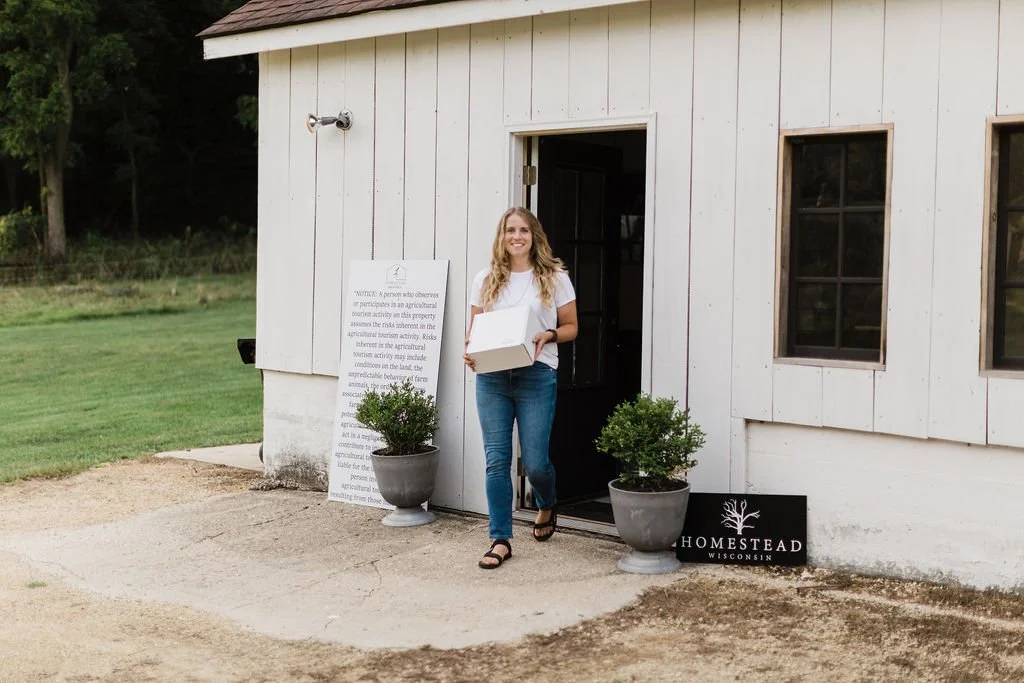
What's better than locally raised grass-fed meat?
Local grass-fed meat delivered to your door.
What started with meal kit services has now stemmed into meat bundles delivered to your door on a weekly or monthly basis. If I'm honest I love this concept, what an easy way to shop for meat! However, I believe most of the options out there have missed the most crucial aspect of ordering grass-fed meats. Knowing the farmer that raised it.
Why knowing your farmer matters.
As you've heard me preach time and time again knowing your farmer is the MOST important aspect of knowing the food that makes it to your dinner table is ACTUALLY what you think it is. Grass-fed beef at the local grocery may not actually be grass-fed the way you envision. It was likely raised in a feedlot like many other commercial cattle operations, not on pasture. Yes, grass-fed meats could be raised without ever having cattle on pastures, instead, they may be fed hay and forage out of feed bunks. Even some family farms may still opt to raise grass-fed beef in feedlots, not on pasture. The other misleading factor of beef is that beef that is labeled grass-fed may not be 100% grass-fed. Yes, you can label your meat as grass-fed and finish on grain.
So don't let those beautiful labels fool you, while some may be what they preach you can't trust it unless you know it. That is why I stress that knowing your food only comes when you know the farmer.
So now off my soapbox...
Homestead’s meat delivered to your door.
I'm just like you, everything I can order online I do and free shipping is always better. This is exactly why I've chosen to focus my farm on providing quality meats that can be conveniently ordered online and delivered for FREE to LOCAL doorsteps. You shouldn't have to choose between meat you know and the convenience of your grocery.
Only local doorsteps?
One thing that will never change is my focus on serving my local community. Sure there are ways to ship meat across the country, but that model isn't a good fit for me. I desire to serve my local community with the local, quality raised meats, where you could actually visit the farm where they are raised.
I personally deliver each and every package to keep your farmer part of your family. Personally delivering each package also keeps me connect to my customers who are the driving force behind why I farm.
Do you actually deliver for free?
Free delivery qualifies on orders over $75 for addresses within a 20 mile radius of the farm.
Here is where I get transparent. As the only full-time farmer here at Homestead it would be suicide to my farm to deliver every small order for free. Each online order is pulled, boxed, wrapped, labeled and hand delivered. While I LOVE delivering boxes I still need to focus my time on raising the meat in the boxes. So even if your order doesn't qualify for free shipping you can get your beef delivered to your door for only $10. This small fee helps pay for the time it takes to process your order and get it to your doorstep.

Know Your Farmer | How Do I Do It?
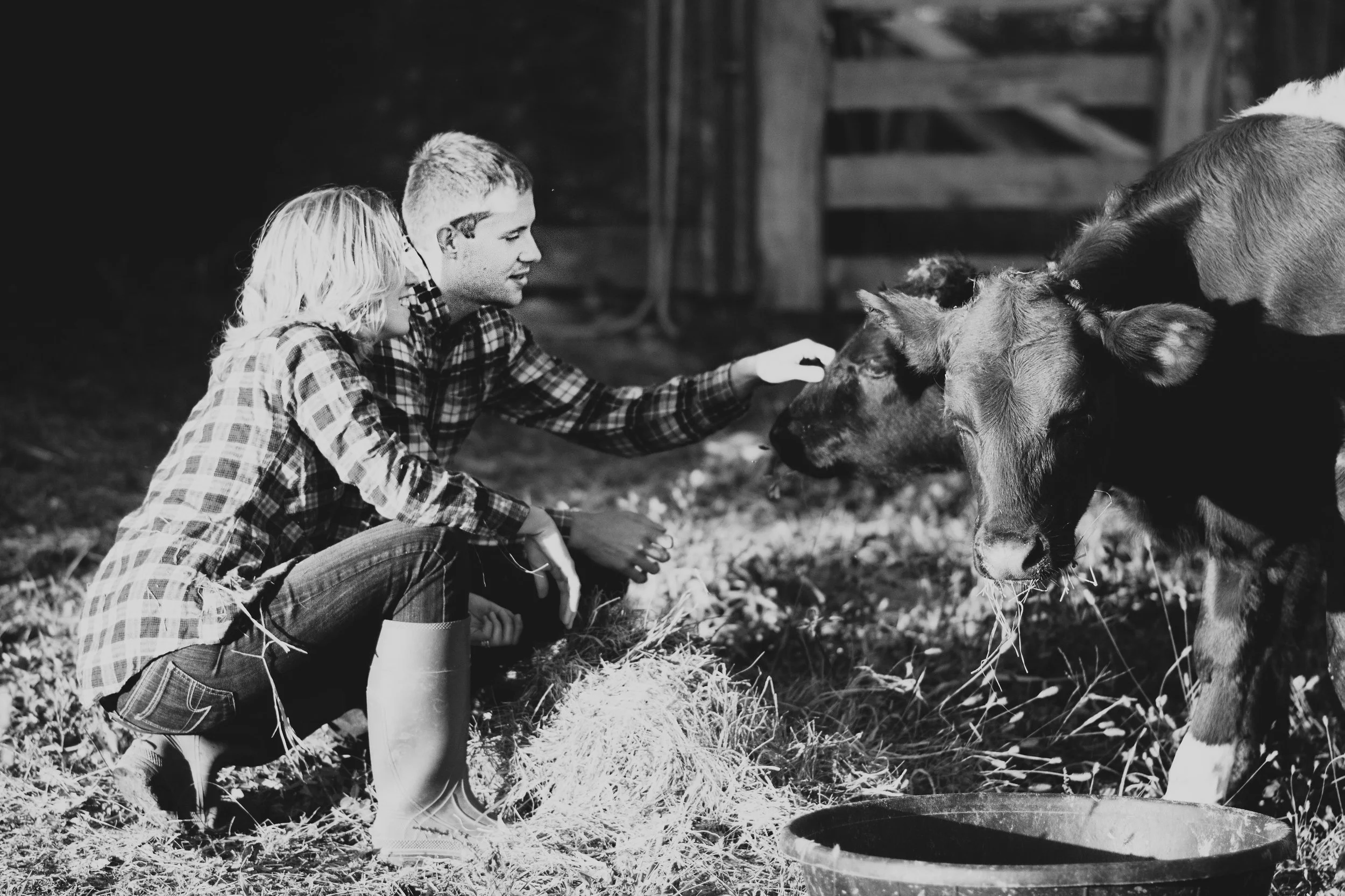
get to know your farmer
How do I do it? How do I raise an animal knowing in the end it is headed to someone's dinner plate? I get asked this all the time...
Well, I am going to be real honest with all of you, it is hard. I, the ‘cattle mama’, have a very hard time saying goodbye. Our cattle stay on the farm for upwards of two years. I see them every day, multiple times a day. They all have names and they all have their own cow-sonalities (Matt hates when I use personality when speaking about them). They follow me everywhere I go, and mooo as soon as they see my face. There is a very special bond that I create with them without even trying.
Yes, it is hard, and yes there are tears when they leave. I chose to raise them anyway because it is important to me to be a conscious consumer. This choice of being an educated meat consumer was made in college when I attended a class that pushed me to become mindful of my consumption choices. One of the topics was food consumption. I heard many people during that class say that they didn’t want to think of it as an animal on their plate, that it was just meat. I was challenged by this as I had grown up loving livestock, but myself included never really made the full connection. For me accepting that it is an animal on my plate became part of being a conscious consumer. I believe everyone should know where their meat comes from because steaks don’t just fall from the sky.
The second piece to this was not just knowing that it was raised on a 'farm'. I wanted to know who raised it, their methods to raising it, and their passion for raising it. It became a connection of more than knowing where it comes from, but also the kind of life the animal lived.
Since the very beginning of our farm venture my desire has been for you to KNOW me, the one raising your steak. So yes, I fall in love with each and every calf that comes to our farm, I can’t help it. So when you ask how I do it, I do it with love and tears. It is actually easier for me to know these animals live happy, healthy lives on our farm than not knowing anything at all. I also chose to do it so you can become a conscious consumer and know where your steak comes from.