
New Year, New Relationships
Each New Year I focus my energy to a single task in my business. As a multi-service entrepreneur, it is easy to put too many to-dos on my plate, so instead, I try to focus on one over-arching task each season

New Year, New Relationships
Each New Year I focus my energy to a single task in my business. As a multi-service entrepreneur, it is easy to put too many to-dos on my plate, so instead, I try to focus on one over-arching task each season.
Last year it was ‘learn how to raise cattle in 18 months versus 24 months’ and ‘grow my online portfolio’ in weddings.
At the end of last year, I’d completed both of these tasks but I felt more alone than ever. Now, I’m an introvert through and through, but this sense of being alone was deep, deeper than I ever thought and ever let myself recognize.
So, per usual I sat down at the end of the year, reconciled my books, looked through the data I’d collected on both the farm and weddings I’d designed for and said, ‘what’s next’. (ps. I love these ‘mundane’ tasks and usually find myself caught up in them). This year it wasn’t a black and white task that came to the forefront of my mind. It was this ‘feeling’ (which I’m not always good at recognizing) in place of a ‘learn this’ or ‘achieve this’ task.
It was the desire to form meaningful relationships.
Sure, it is easy to preach ‘know your farmer’ but I started to question what steps I’d actually taken to know people in my community. What steps had I taken to know the people who trust and buy from me? What did my stance on ‘know your farmer’ actually means to me, this introverted farmer who loves animals and gets anxious in crowds? I have fear, I lack confidence and ultimately it’s been what’s kept me from truly living what I so desperately wanted for my customers. For them to know me, their farmer.
The same became so drastically apparent in my wedding design as well. I’ve met vendors, had coffee with vendors and made some friends in the industry. I’ve serviced my brides, openly communicated with them and had a very happy experience with each of them over the course of the year. But, these people that I’ve met, had coffee with and serviced always seemed to be an arms distance away. Not because I’ve purposefully decided to keep a distance, but instead I chose to lean into what comes naturally to me as an introvert. But, ultimately as a person, I need relationships with more meaning.
I now see how vital relationships are for every person. Every introvert, every extrovert, every entrepreneur, every mother, father, sibling, and the list goes on. We all crave more meaningful relationships in our lives. I think it has become more apparent to me as an entrepreneur because so much of ‘marketing’ and ‘running a business’ seems to be done on the other side of a screen.
And while all that ‘screen time’ is necessary it’s time to practice what I preach and form relationships with you, with my readers, with my customers and clients and those who receive my weekly emails.
So, that is what 2020 is going to look like for me and this business. I’m focused on getting out of my comfort zone, getting to know all the special people that surround me and welcoming you into the pretty and not so pretty parts of running a farm and floral business. I hope to get to know you better and share more of myself with you this decade.
I’d love to meet you, and I’d like to formally welcome you to join me at an event this season. Let’s get to know each other better.

Farm | Our first season of grazing our EQUIP pasture
Our first day of grazing was June 2nd.
Reflecting on our first season of grazing our EQUIP-funded pasture

June 2nd, 2019
Our first day of grazing was June 2nd. I fell significantly behind this spring because I was heavily exhausted in my first trimester of pregnancy and I still had a water line to finish before I could get cattle moved. So, by June 2nd the alfalfa and grasses were significantly over-grown so most of our first grazing in each paddock was trampled vs. eaten.
Our rotation schedule
When I met with my mentor and EQUIP partner this spring she mentioned I would likely move cattle each day, to which I thought, ya I’m sure with how I’m feeling I’ll move them everyday… BUT sure enough I moved cattle each day until July 13th. We had LOADS of grass to be eaten with such a cool and wet start to our grazing season. The cattle trampled and ate and I moved them every day. July 13th things changed with a heat wave and I moved them every two days to keep my work lighter during this time. Of course with that decision I instead made my paddocks larger, which left more to be trampled in the process. But, we got through a few days of a heat index over 100 degrees and we went back to daily moves.
Our first ‘rest’ period was just shy of 30 days for our first rotation, due again to the cool and wet weather we had the grass was growing well. I had planned on continuing with a regulated rotation, however, when an adviser visited the farm he suggested I get my beef back on the best grass instead of being so rigid with my rotation and paddock one was at it’s prime; so I moved them back to that paddock shy of 30 days.
The rest of the summer I maintained a Paddock 1 - 30+ rotation. During the heat of the summer I moved every one to two days depending on my paddock size. I had a few paddocks that were weaker in vegetation so I moved through those quicker than areas with good vegetative stands. I’m dealing with some significantly sandy areas that didn’t seed well so they are thin, leaving very little to eat.
Once fall approached I continued to move every one to two days depending on the quality and quantity of my vegetation.
Thanks to a smaller herd we grazed until November 16th this year!
I made things as easy as possible
I decided before we moved cattle down to this field that with how I was feeling I was going to need to make this first season as easy as possible. So, in the spring I ordered a couple hundred step-in posts and three reels. I set up my entire field with the step-in posts so that with each rotation I was only moving wire. I have to say this was a life-saver for me, especially this season, the less walking laps the better.
Later in the summer my mother purchased a JD Gator for me to use, and that was an incredible help as my energy level diminished with my growing belly.
we made hay
We only grazed 13 head this summer, our capacity is about 30, so this early grazing season we decided to take first and second crop hay from one side of the acreage and the area we cut totaled about 8 acres. Since we had such a great growing season we felt that it would simply age-out if we didn’t cut it since we had very few mouths to feed.
We only cut the areas that were heavy alfalfa which happened to be a big swathe down the middle of our field, so it made some pretty great hay and bounced back for our third rotation of grazing quite nicely.
We ended up in the end taking first and second crop hay and stock piling to extend our grazing season as well as the additional mouths we added in the fall.
things i learned
The biggest thing I learned this season was to be flexible. I thought each paddock should be evenly spaced, that my rotation should go in a certain pattern, and that I should graze my entire field in the same manner. The fact is however, that our 20 acres are very different. Some areas have abundant alfalfa, some clover, some grass and some with heavy weeds which all graze differently and need different periods of rest. I also learned to be patient (aren’t I always learning this in farming). I started the grazing season frustrated with the ‘unevenness’ of growth, diversity and size of my paddocks. I like things even, similar and predictable, again when will I learn farming is NOT predictable.
Overall, I am thrilled with what the pastures produced this year, calves got fat and nothing was over-grazed. I look forward to continuing to see changes and developments with future years of grazing and management. We’ve come so far but there is still so much room to grow!

Our field after the east side was grazed and the west side was cropped.
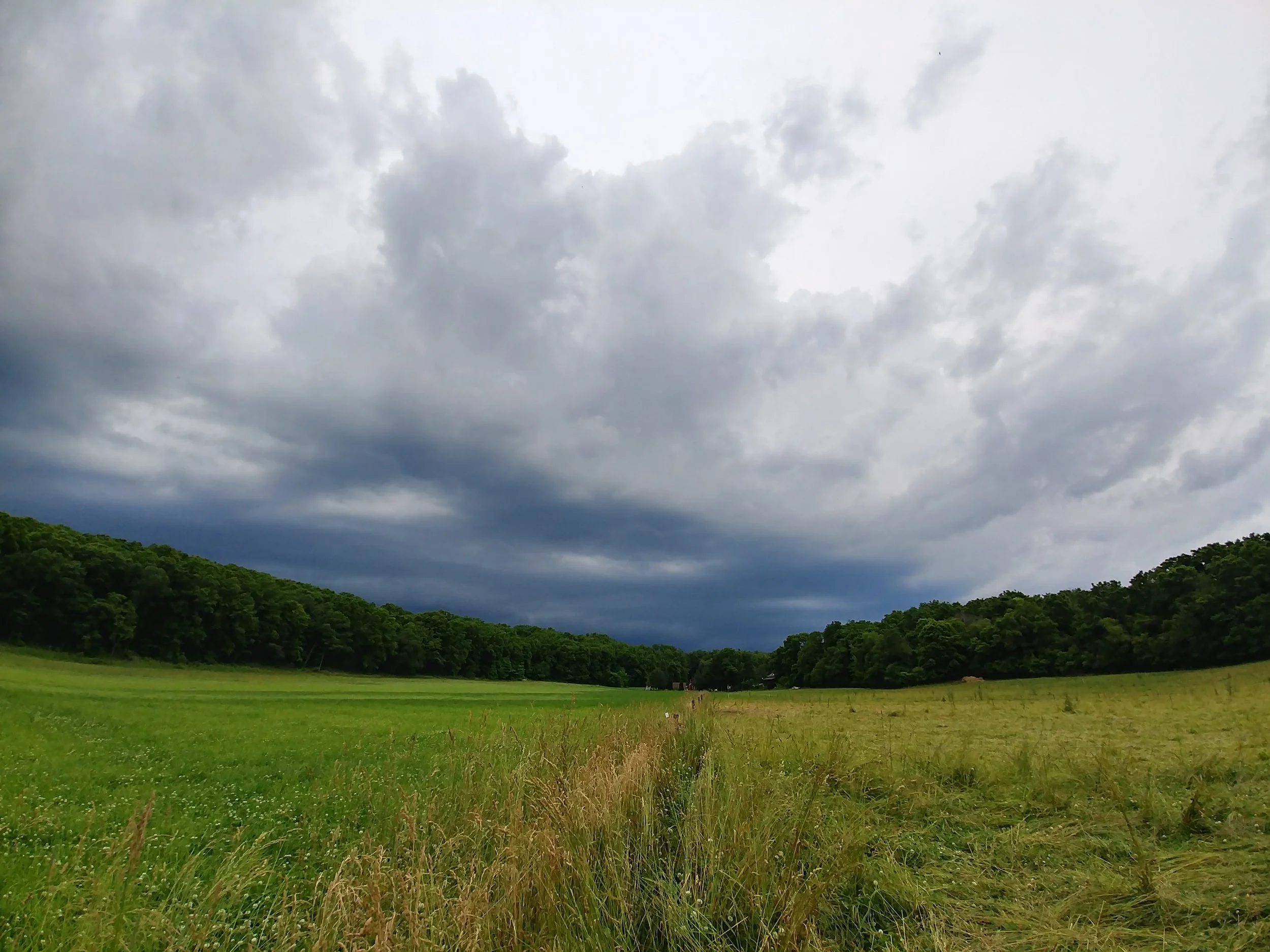
East side after first rotation, west side after first cropping, view from south

View of our cattle grazing the east side, two day moves, view from south.

Rotation #3, view from South


Farm | When Cheaper Isn't Better
What’s really on those grocery store shelves?

cheaper isn’t always better
If you’re like me you’re always after the best deal available for most items on the market. However, I’d venture to guess you’re also like me in the fact that you’ll spend your hard earned money on something you find valuable. It might not be diamond rings, it might not be ethical clothing, and it might not even be food.
But, you probably value something so highly the price wouldn’t matter a whole lot to you and you’d even go out of your way to get it.
My passion is to share with you more background on a topic that is very close to my heart. That is the $3 head of lettuce and the $3 beef at the grocery store.
Cheap food isn’t better, cheap food is killing us.
Disease
Did you know that 1 in 4 Americans have diabetes? Or that roughly 40% of Americans struggle with obesity, which can lead to heart disease, diabetes and some cancers?
The industrial food system has allowed food to get cheaper but only at the expense of our health, animal health and the health of the people that work to put food on our tables.
Much like the fashion industry, the food industry in America has been driven by lower costs. The only way to make things cheap is by cutting every corner possible, which in turn, has made American’s sick and those who work to keep food on our dinner table even sicker.
Food - Borne Illness
The CDC estimates that ‘48 million people get sick, 128,000 are hospitalized and 3,000 die each year from food borne illness in America’. Recalls on beef alone in 2018 totaled 31 independent recalls - totaling 13,185,563 pounds of beef. The numbers of people that died due to food borne illness is disastrous, our food shouldn’t be killing us. AND on the other end, which also breaks my heart as a farmer, these recalled pounds of beef are animals that are dying to feed us. We should be harvesting animals that make it to dinner plates to give us a nutritious meal, not meat that get’s pulled off grocery shelves because it could kill us.
To give you an idea of how many animals were harvested and pulled from grocery shelves in 2018, in just beef alone, I’m counting upwards of 33,000 animals. When I harvest a steer on my farm, I get back roughly 400 pounds of beef. If we divide 13,185,563 pounds of beef that was recalled last year alone, that is a total of nearly 33,000 animals that were thrown away for no purpose other than the desire to make beef cheap enough to sell a $1 hamburger at McDonalds. We’re not only looking at a in-excusable number of human lives lost, but of animals lives lost all in the name of cheap food.
And that’s just food borne illness.
The farmer’s share
I was baffled when I saw this chart for the first time, and I would guess you are too. No wonder we have a food problem. Have you ever driven through Nebraska or Wyoming and seen the miles and miles of feed lot beef? That’s what you get when you have to meet such a low cost demand. You can’t make a living on $1.95 per pound for beef, the economics just don’t work.

https://www.wisconsinfarmersunion.com/
Slavery in america
Do a little looking into the industrial food system and you’ll quickly realize that slavery is not truly gone in the agriculture industry. Meat packing workers, field workers and even farmer’s themselves have become slaves to the system.
For example, a single industrial food system chicken house costs upwards of $500,000 dollars, which the large companies ‘finance’ to their farmers. In order to be a competitive chicken farmer for large buyers a farmer would likely have several of these buildings. It’s been stated that even with multiple chicken houses a farmer is only likely to pull $20,000 annually in profits. Again, the price we pay for the chicken on the grocery shelf, is not what the farmer is getting paid when we buy from large suppliers. Working in such unsanitary chicken houses for $20,000 dollars, with a mountain of debt to the companies, is exactly the type of ‘slavery’ that these farmer’s face. There is no way out for many of them.
Meat packaging and field workers suffer from little pay, high-risk of injury jobs, unhealthy working conditions and abuse. Just imagine for a second being brought to this country with a promise of a ‘good job’ only to be abused and endure incredible suffering instead.
All in the name of cheap food.
Change is in your hands
We’ve all been consumers of cheap food. We’ve all been looking for the best deal at the grocery store. We’ve all looked at a head of lettuce, a package of ground beef, and our Thanksgiving turkey without questioning how it was raised, who processed it and how it got to our local grocery store. Most of us have looked at it through dollar signs.
I honestly understand that it’s a hard habit to break. I love a good deal and I love convenience, but when I looked at the industrial food system of America my heart broke, I was angry and I needed to change my thinking. I hope you feel the same.
Perhaps you’ve made steps to knowing your food better, if you have you’re already making a difference. If you are still a deal shopper at the local grocery I know where you’re at. But change needs to happen. We need to spend our dollars in a way that makes change happen. The industrial food system came out of our very own desires for cheaper food and if we desire something better - it will come. If you feel powerless, like the food problem is bigger than you, I want to firmly tell you it isn’t.
You can choose to ask questions, to get to know your local farmers and to know your food.
I Know it costs more
Going back to my very first argument, I GET IT. I understand the desire to consume a deal, to stop in at my local grocery for that $3 per pound hamburger BUT eating cheaper isn’t valuing my health and the health of all the people connected to the food chain. It is going to cost more now but it’s going to change our future for the better.
Practical Steps
One thing that has changed for us since eating more locally and knowing our food better (though we have much room for improvement yet) is that we eat differently. Meat is no longer making it onto our nightly dinner menu, we actually eat far less meat since we began farming than before we farmed. Meat raised and harvested right costs more than meat raised in manure lots that are stuffed to the gills with cattle; that are then processed in an assembly line that is bound to break every once in a while (contaminating that meat). We buy our own meat and since it comes at a higher cost we eat less of it, honestly we eat meat about 3 times a week.
Start with something small. Unhappy with inhumane treatment and harvest of animals, start by buying meat from a farmer you trust. Unhappy with slave labor in California wine making, buy local wine made from local grapes. Unhappy with eating Romaine lettuce that makes you sick right before the holidays, partner with a CSA.
Do the research. Information is at our finger tips, but we need to be willing to look and we need to be willing to be confronted with hard realities. Start by watching Food Inc. (available on Netflix) and research your questions from there.
If you have a family history of a particular disease, check to see if it’s linked to a food you’re eating. For example, a customer of mine buys grass-fed meats because a grain diet can be linked to Alzieimer’s, and her mother just passed from that.
Find a local farmer. If you’re in Wisconsin finding a farmer has never been easier. You can find a list of local farms on the Farm Fresh Atlas.
Perhaps a change in how you spend your dollar means a change in how you eat. BUT in exchange you’ll be part of a valuable movement to say no to unhealthy food, to big corporations and to change the way America eats for the better.
For a deeper look you can watch food inc. for free on netflix

Recipe | 30 minute Garlic Cilantro Lamb Shoulder Steaks
A 30 minute meal you’re going to love

30 minute garlic cilantro lamb shoulder steaks
Ingredient List
2 Homestead lamb shoulder steaks, serve 1 per person
4 tbsp olive oil
1 tbsp garlic salt
1 tsp red pepper flakes
4 tbsp fresh cilantro
How to Make This Deliciousness
Preheat a cast-iron/stainless steel pan over high heat. Drizzle the shoulder chops with the olive oil and generously season with garlic salt and red pepper on both sides. Place the shoulder chops in the hot pan then sear for 2 minutes per side, do not cook longer or your chops will be over-cooked. Flip the lamb chops onto the fat side and allow to sear for 1 minute, until the fat has started to render and caramelized. Remove from the pan and allow to rest for five minutes before serving.
Serve with roasted vegetables
Slice your favorite vegetables, drizzle with olive oil. Cook for 30 minutes at 375 degrees. Flip after 15 minutes.

Farm | Why Grass-fed?
This is a really simple question for us to answer.

Why raise grass-fed?
This is a really simple question for us to answer.
Cattle and sheep were created to graze.
It really is that simple for us. Grass-fed beef and lamb are healthy for you because the animals were raised on a diet that reflects nature.
Our philosophy from day one was: why feed a ruminant grain substitutes when they are so perfectly designed for grazing?

Recipe | Red Wine Roast
Roast season is coming to an end, but don't let this recipe sit on the shelf until fall!
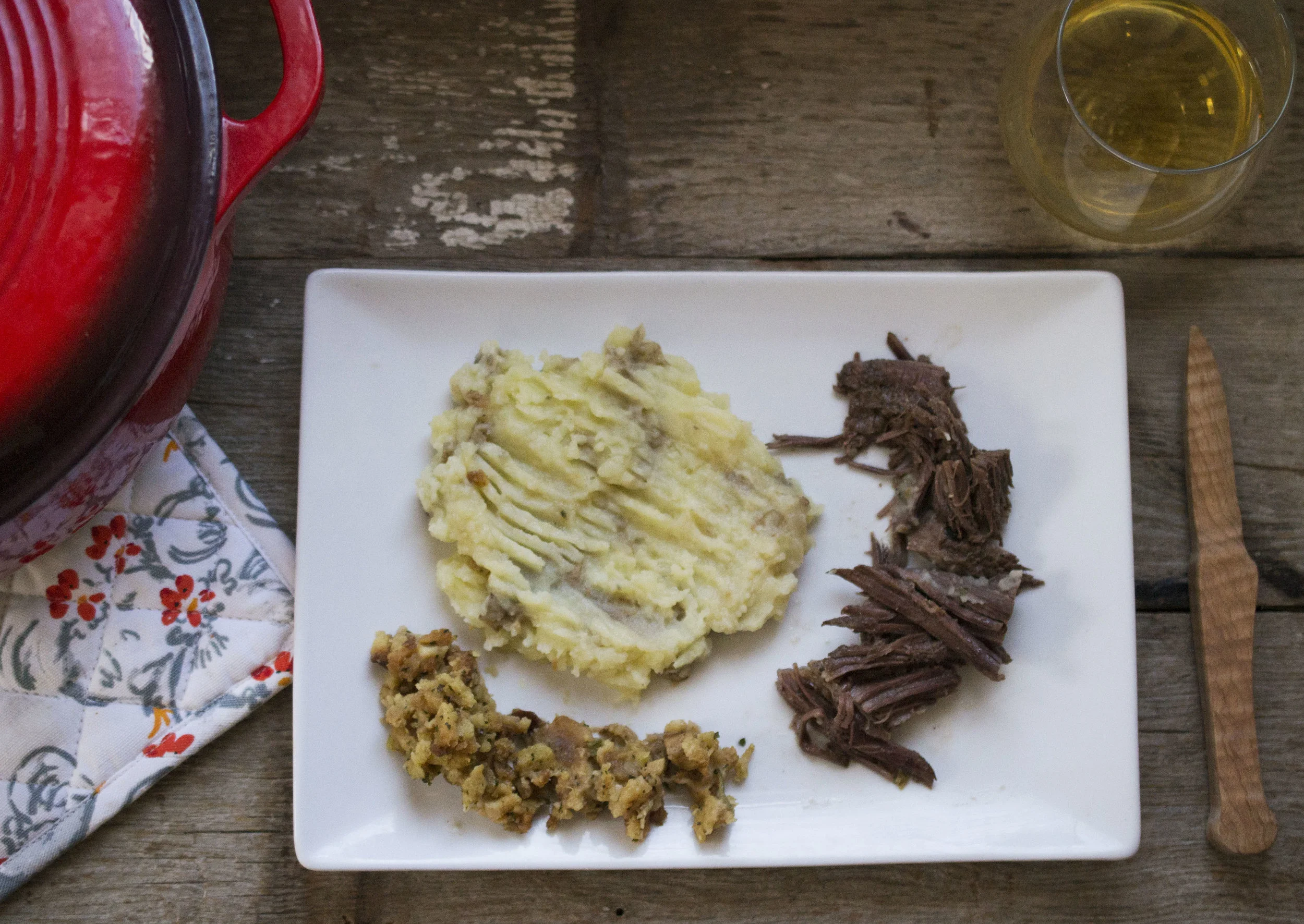
Red Wine Beef Roast
Roast season is coming to an end, but don't let this recipe sit on the shelf until fall!
Ingredient List
3 lb Homestead Roast (Chuck will be shred-able)
1 cup flour, for dredging
3 garlic cloves, chopped
1 large red onion, sliced thin
3-4 cups beef broth
1 cup red wine (Shiraz or Cabernet) *
2 Tablespoons Worcestershire sauce
1 teaspoon dried thyme
1 teaspoon sage
1 bay leaf
To Make This Deliciousness
Dredge your roast in flour then sear in olive oil. Once seared remove your roast add your garlic and onion to the pan and saute. Once your garlic and onion are soft add your white wine and bring to a boil for 3 minutes. Add your remaining ingredients and cook for 3 hours at 275 degrees.
Let sit for 20 minutes and serve with your favorite red wine.