
New Year, New Relationships
Each New Year I focus my energy to a single task in my business. As a multi-service entrepreneur, it is easy to put too many to-dos on my plate, so instead, I try to focus on one over-arching task each season

New Year, New Relationships
Each New Year I focus my energy to a single task in my business. As a multi-service entrepreneur, it is easy to put too many to-dos on my plate, so instead, I try to focus on one over-arching task each season.
Last year it was ‘learn how to raise cattle in 18 months versus 24 months’ and ‘grow my online portfolio’ in weddings.
At the end of last year, I’d completed both of these tasks but I felt more alone than ever. Now, I’m an introvert through and through, but this sense of being alone was deep, deeper than I ever thought and ever let myself recognize.
So, per usual I sat down at the end of the year, reconciled my books, looked through the data I’d collected on both the farm and weddings I’d designed for and said, ‘what’s next’. (ps. I love these ‘mundane’ tasks and usually find myself caught up in them). This year it wasn’t a black and white task that came to the forefront of my mind. It was this ‘feeling’ (which I’m not always good at recognizing) in place of a ‘learn this’ or ‘achieve this’ task.
It was the desire to form meaningful relationships.
Sure, it is easy to preach ‘know your farmer’ but I started to question what steps I’d actually taken to know people in my community. What steps had I taken to know the people who trust and buy from me? What did my stance on ‘know your farmer’ actually means to me, this introverted farmer who loves animals and gets anxious in crowds? I have fear, I lack confidence and ultimately it’s been what’s kept me from truly living what I so desperately wanted for my customers. For them to know me, their farmer.
The same became so drastically apparent in my wedding design as well. I’ve met vendors, had coffee with vendors and made some friends in the industry. I’ve serviced my brides, openly communicated with them and had a very happy experience with each of them over the course of the year. But, these people that I’ve met, had coffee with and serviced always seemed to be an arms distance away. Not because I’ve purposefully decided to keep a distance, but instead I chose to lean into what comes naturally to me as an introvert. But, ultimately as a person, I need relationships with more meaning.
I now see how vital relationships are for every person. Every introvert, every extrovert, every entrepreneur, every mother, father, sibling, and the list goes on. We all crave more meaningful relationships in our lives. I think it has become more apparent to me as an entrepreneur because so much of ‘marketing’ and ‘running a business’ seems to be done on the other side of a screen.
And while all that ‘screen time’ is necessary it’s time to practice what I preach and form relationships with you, with my readers, with my customers and clients and those who receive my weekly emails.
So, that is what 2020 is going to look like for me and this business. I’m focused on getting out of my comfort zone, getting to know all the special people that surround me and welcoming you into the pretty and not so pretty parts of running a farm and floral business. I hope to get to know you better and share more of myself with you this decade.
I’d love to meet you, and I’d like to formally welcome you to join me at an event this season. Let’s get to know each other better.

Farm | Our first season of grazing our EQUIP pasture
Our first day of grazing was June 2nd.
Reflecting on our first season of grazing our EQUIP-funded pasture

June 2nd, 2019
Our first day of grazing was June 2nd. I fell significantly behind this spring because I was heavily exhausted in my first trimester of pregnancy and I still had a water line to finish before I could get cattle moved. So, by June 2nd the alfalfa and grasses were significantly over-grown so most of our first grazing in each paddock was trampled vs. eaten.
Our rotation schedule
When I met with my mentor and EQUIP partner this spring she mentioned I would likely move cattle each day, to which I thought, ya I’m sure with how I’m feeling I’ll move them everyday… BUT sure enough I moved cattle each day until July 13th. We had LOADS of grass to be eaten with such a cool and wet start to our grazing season. The cattle trampled and ate and I moved them every day. July 13th things changed with a heat wave and I moved them every two days to keep my work lighter during this time. Of course with that decision I instead made my paddocks larger, which left more to be trampled in the process. But, we got through a few days of a heat index over 100 degrees and we went back to daily moves.
Our first ‘rest’ period was just shy of 30 days for our first rotation, due again to the cool and wet weather we had the grass was growing well. I had planned on continuing with a regulated rotation, however, when an adviser visited the farm he suggested I get my beef back on the best grass instead of being so rigid with my rotation and paddock one was at it’s prime; so I moved them back to that paddock shy of 30 days.
The rest of the summer I maintained a Paddock 1 - 30+ rotation. During the heat of the summer I moved every one to two days depending on my paddock size. I had a few paddocks that were weaker in vegetation so I moved through those quicker than areas with good vegetative stands. I’m dealing with some significantly sandy areas that didn’t seed well so they are thin, leaving very little to eat.
Once fall approached I continued to move every one to two days depending on the quality and quantity of my vegetation.
Thanks to a smaller herd we grazed until November 16th this year!
I made things as easy as possible
I decided before we moved cattle down to this field that with how I was feeling I was going to need to make this first season as easy as possible. So, in the spring I ordered a couple hundred step-in posts and three reels. I set up my entire field with the step-in posts so that with each rotation I was only moving wire. I have to say this was a life-saver for me, especially this season, the less walking laps the better.
Later in the summer my mother purchased a JD Gator for me to use, and that was an incredible help as my energy level diminished with my growing belly.
we made hay
We only grazed 13 head this summer, our capacity is about 30, so this early grazing season we decided to take first and second crop hay from one side of the acreage and the area we cut totaled about 8 acres. Since we had such a great growing season we felt that it would simply age-out if we didn’t cut it since we had very few mouths to feed.
We only cut the areas that were heavy alfalfa which happened to be a big swathe down the middle of our field, so it made some pretty great hay and bounced back for our third rotation of grazing quite nicely.
We ended up in the end taking first and second crop hay and stock piling to extend our grazing season as well as the additional mouths we added in the fall.
things i learned
The biggest thing I learned this season was to be flexible. I thought each paddock should be evenly spaced, that my rotation should go in a certain pattern, and that I should graze my entire field in the same manner. The fact is however, that our 20 acres are very different. Some areas have abundant alfalfa, some clover, some grass and some with heavy weeds which all graze differently and need different periods of rest. I also learned to be patient (aren’t I always learning this in farming). I started the grazing season frustrated with the ‘unevenness’ of growth, diversity and size of my paddocks. I like things even, similar and predictable, again when will I learn farming is NOT predictable.
Overall, I am thrilled with what the pastures produced this year, calves got fat and nothing was over-grazed. I look forward to continuing to see changes and developments with future years of grazing and management. We’ve come so far but there is still so much room to grow!

Our field after the east side was grazed and the west side was cropped.
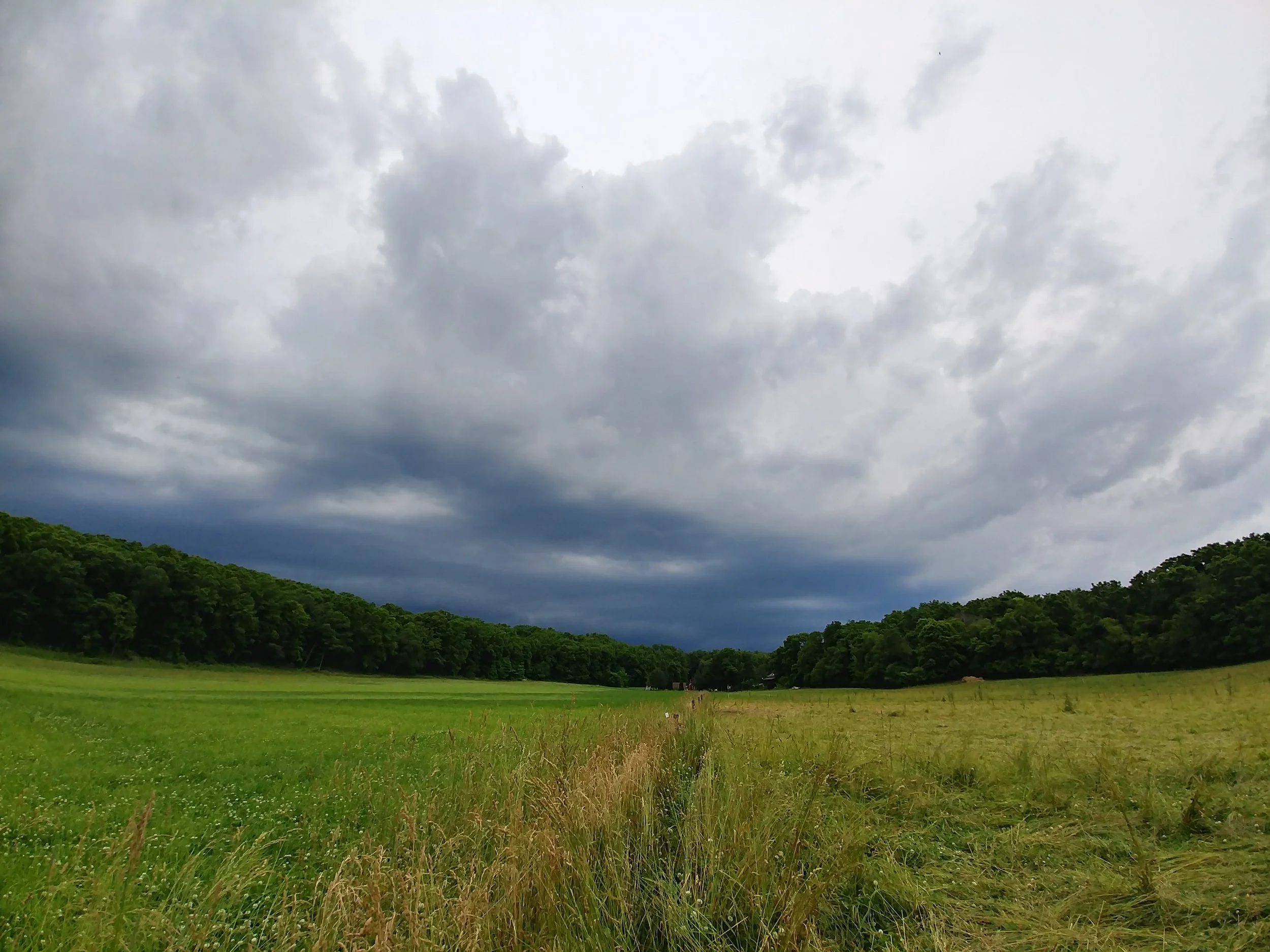
East side after first rotation, west side after first cropping, view from south

View of our cattle grazing the east side, two day moves, view from south.

Rotation #3, view from South


Events | My Farm-to-Table Baby Shower
Planning parties is something I just love to do, so when I found out we’d be welcoming a baby I almost immediately started planning my baby shower.
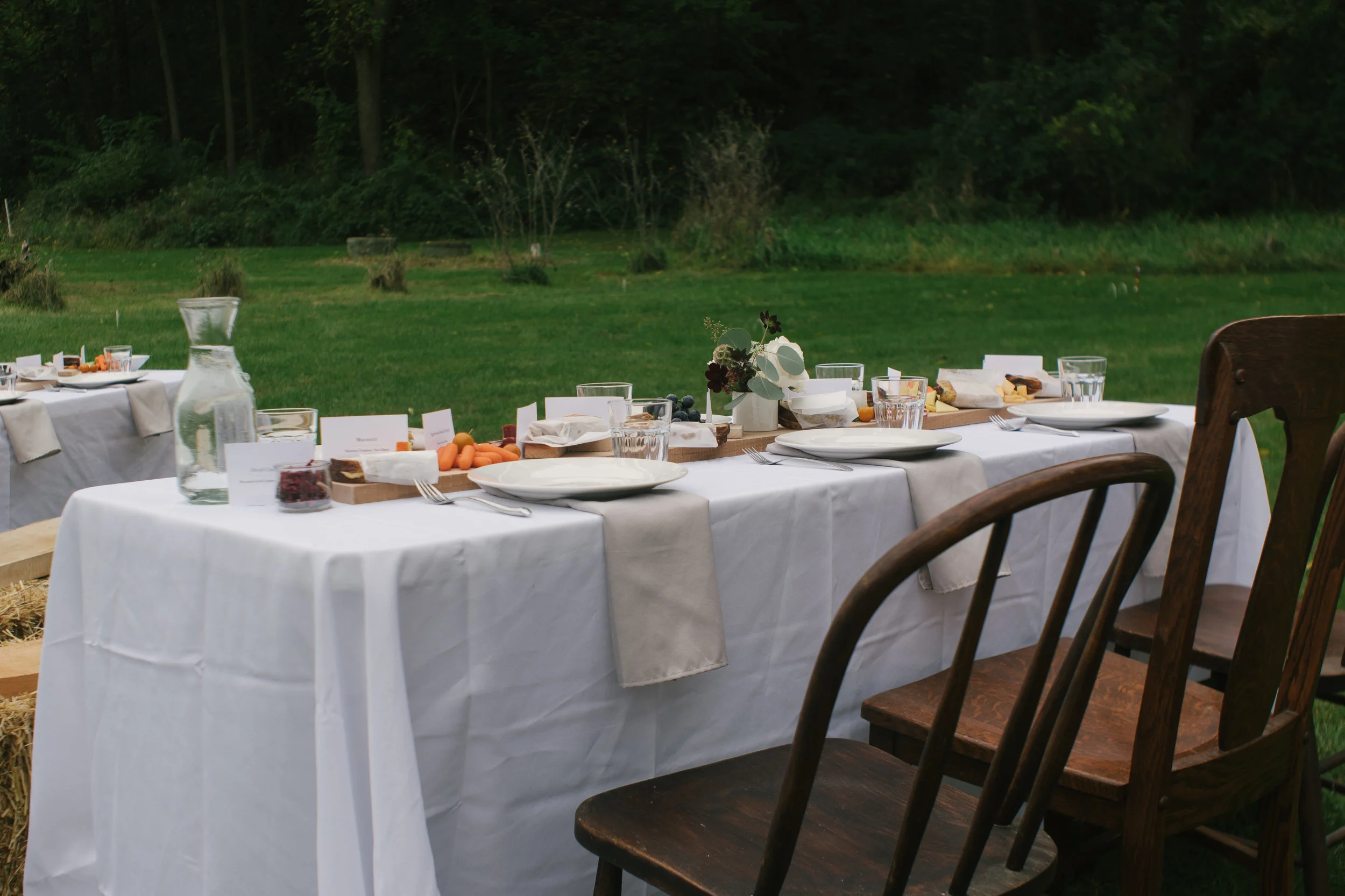
My Farm-to-Table Baby Shower
Planning parties is something I just love to do, so when I found out we’d be welcoming a baby I almost immediately started planning my baby shower. Now, my mother, friends and family would have LOVED to take care of all the planning for me, but I can’t help myself. Party planning is just too fun to give away!
As a farmer I wanted to plan a farm-to-table style party. Fresh, local foods from some of my favorite farmers and local vendors was the foundation of the shower. Traditional, of course not, reflective of my personality, absolutely.
I am so grateful for my family and friends for pulling all my ‘plans’ together into a beautiful afternoon celebrating baby McCoy. I have an incredible group of ladies who showed up to make me feel so special and to send me off into this new adventure in such a fun way.




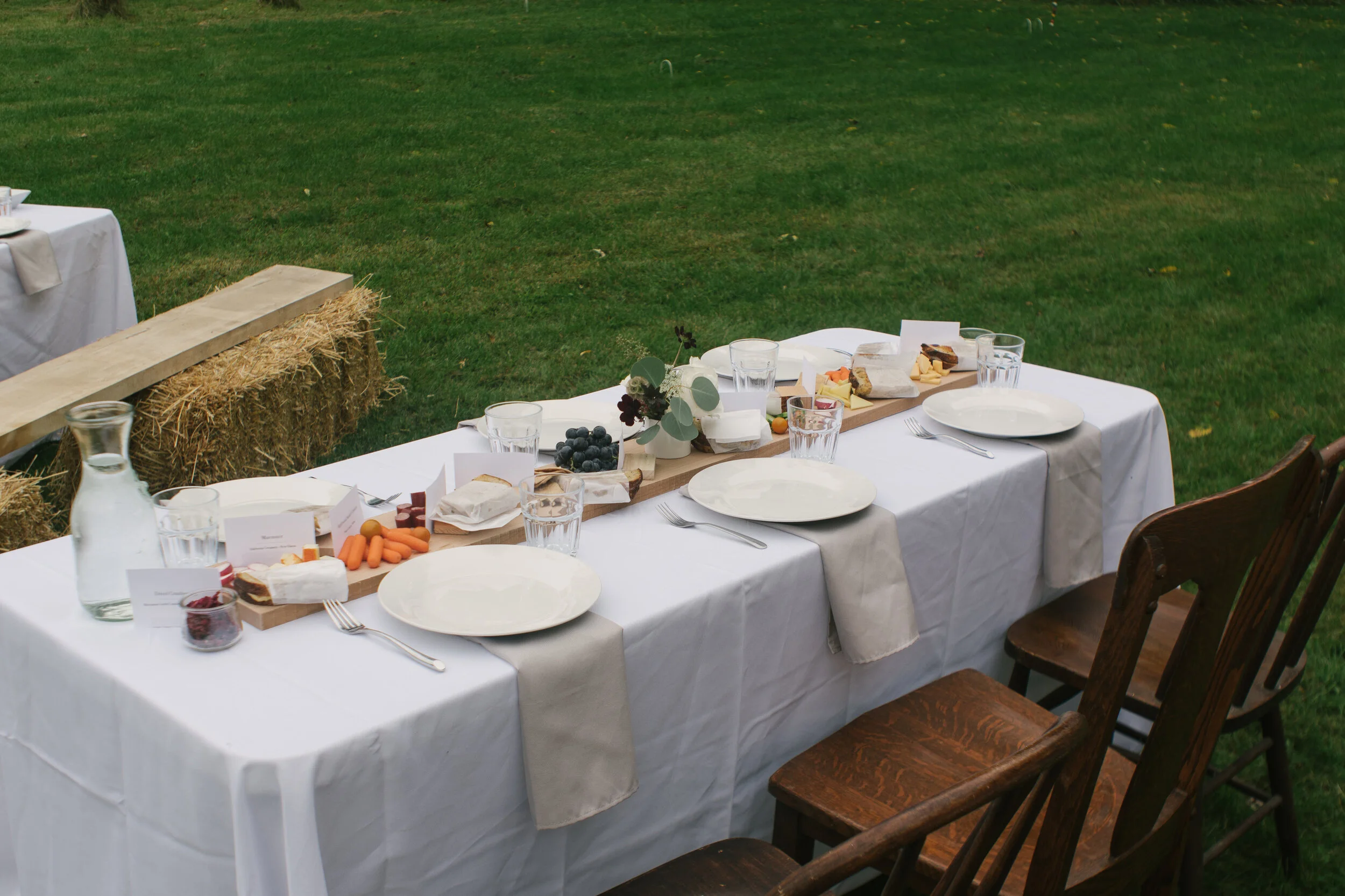
Featured Farms & Producers
Homestead Meats, LLC | Summer Sausage and Sausage Sticks
Meadowlark Organics | Flour for pastries
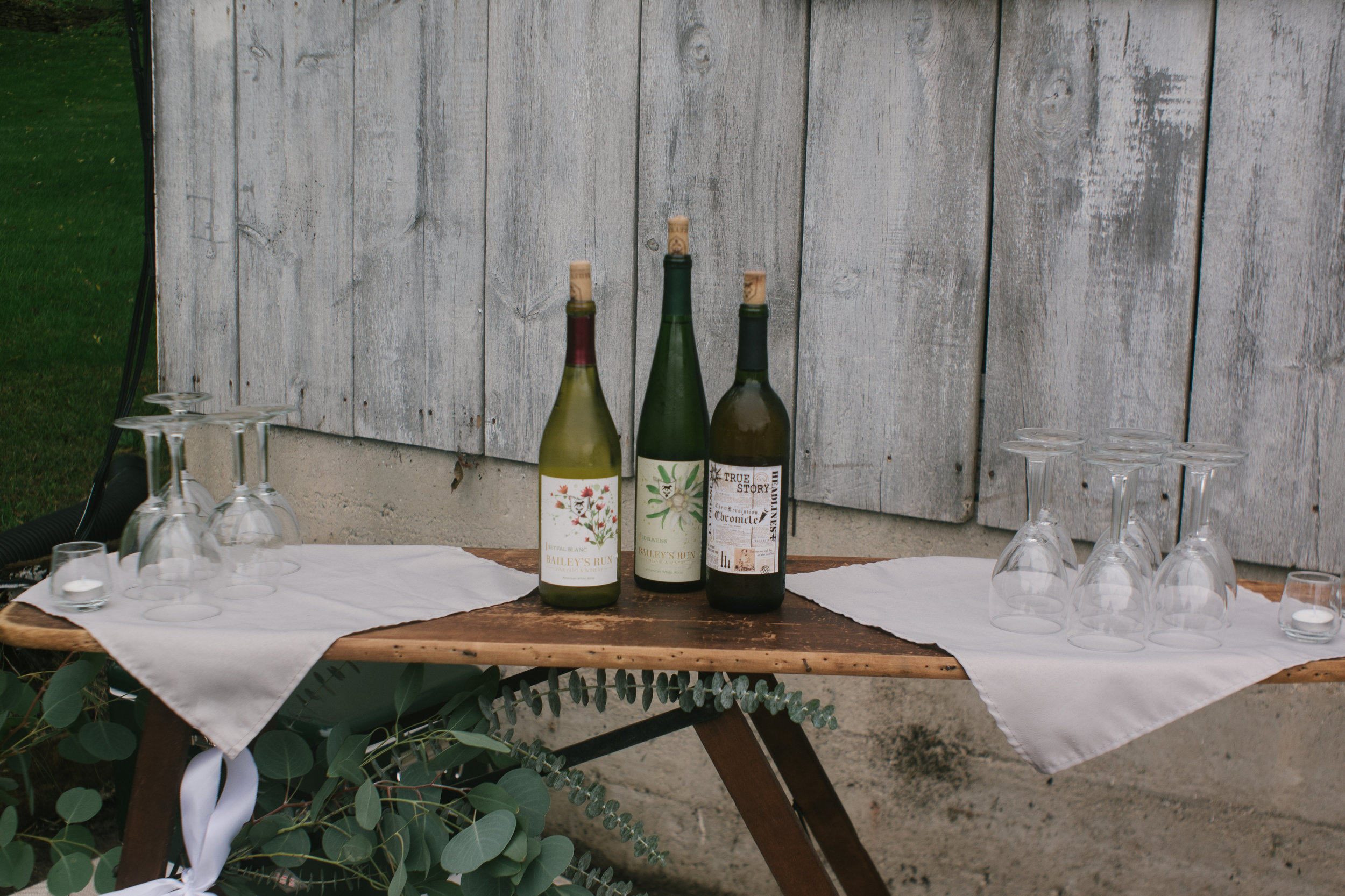
Bailey’s Run Winery and Vineyard | Wine
Munchkey Apples | Apples
Winterfell Acres | Veggies
Landmark Creamery | Cheese
Edelweiss Creamery | Cheese
Potter’s Cracker’s | Crackers
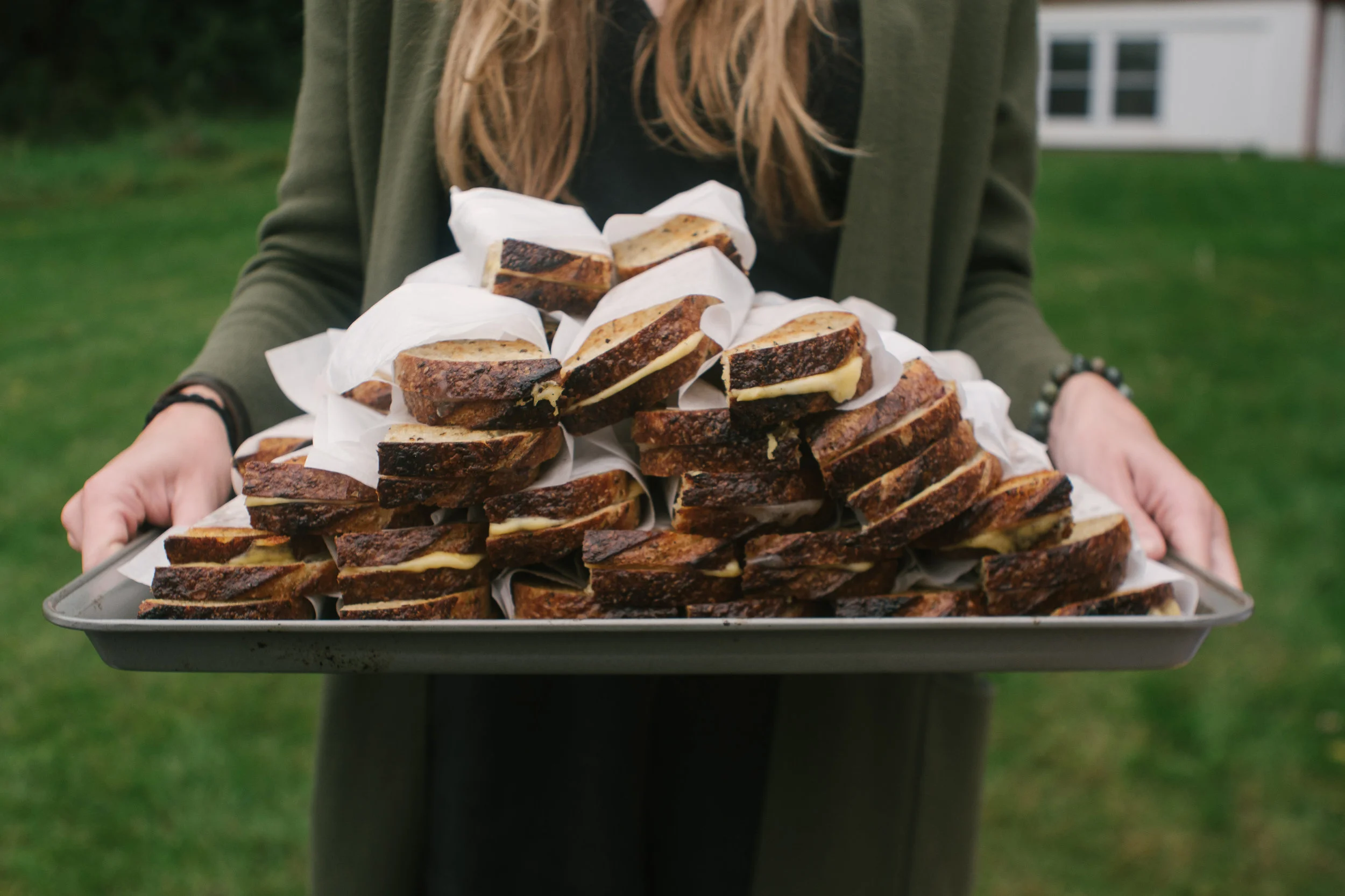
Madison Sourdough | Bread
Carandale Fruit Farm | Grapes
Floral
Stationary
Photography
Wood For Charcuterie Boards & Benches

Farm | Renovating Sheep Pastures
How we’re renovating our sheep pastures - from overgrown to lush and nutritious
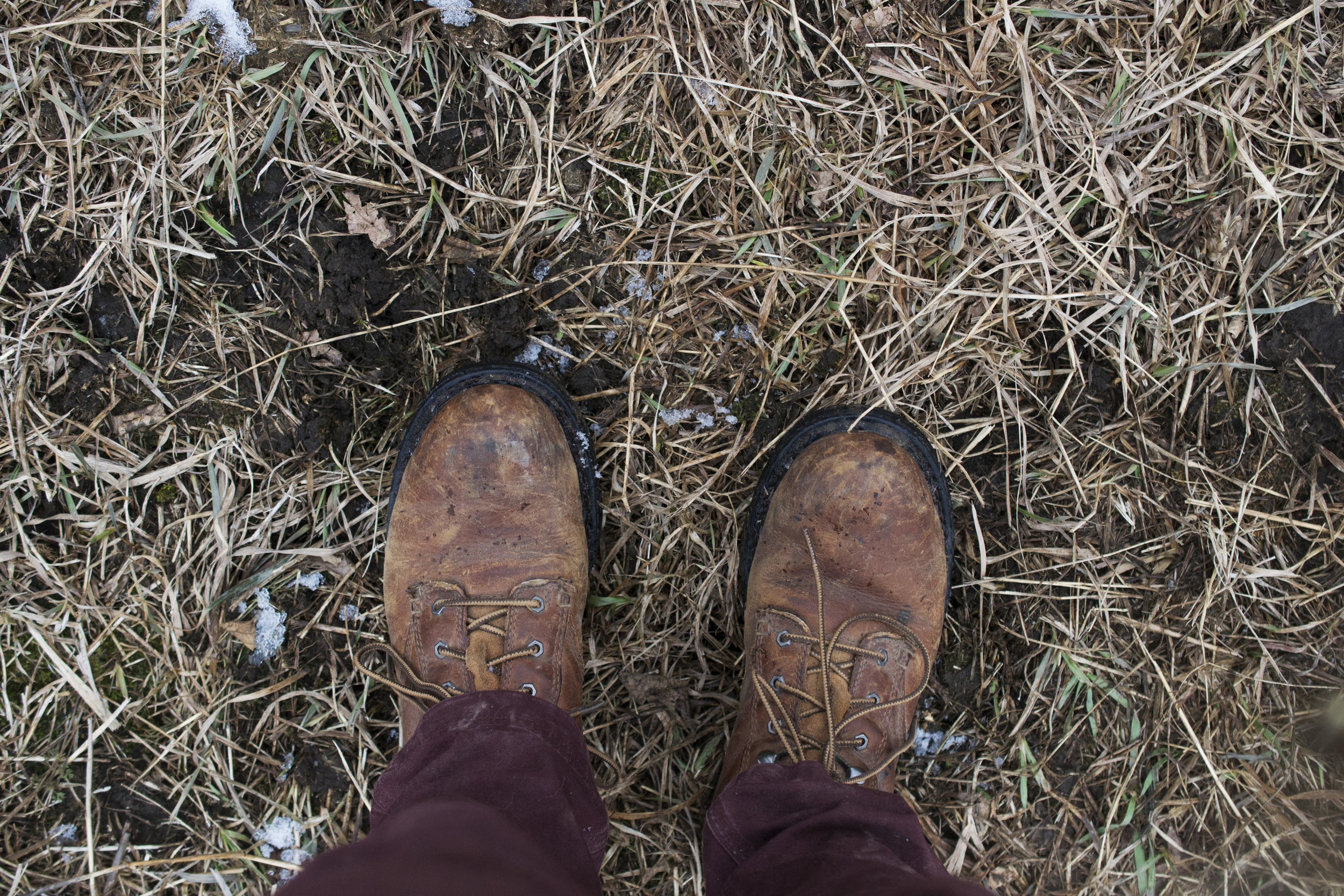
Renovating Our Sheep Pastures
This is a lengthy post… about nerdy stuff like grass and soil. I love documenting and this post is certainly a compilation of lots of documentation. So, if you like soil, grass and learning about how other farmer’s make decisions, this post might just be your cup of tea.
what we started with
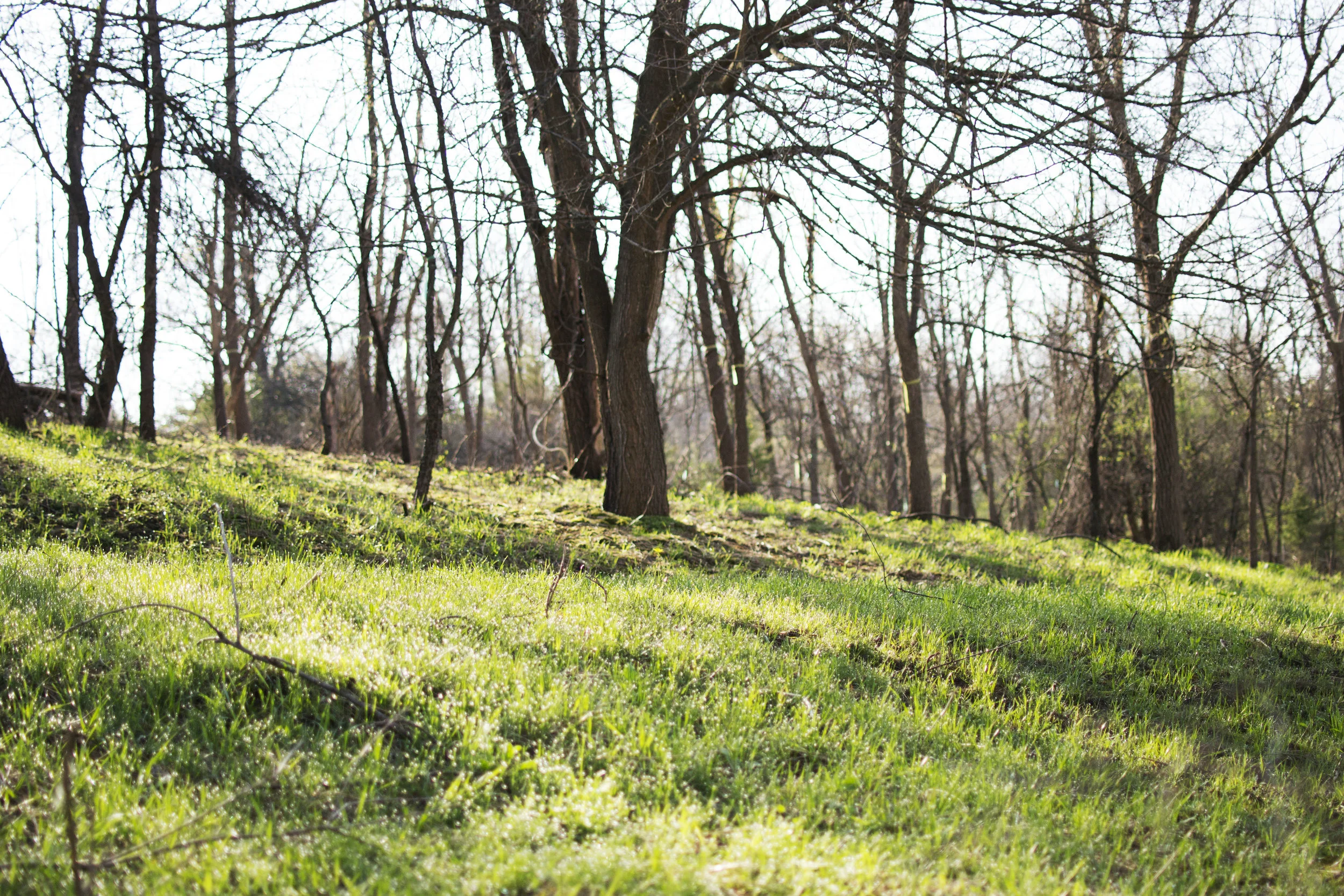
Our sheep pasture consists of seven acres, three of which are significantly sloped and heavily wooded. Two acres was an existing alfalfa and orchardgrass field with two acres that is mostly brome grass.
using web soil survey
I looked at what we have for soil and slopes in our pasture. You can find your soil map HERE
72% of our pasture is | Newglarus-Dunbarton silt loams, 12 to 20 percent slopes, moderately eroded
17% of our pasture is | Elkmound-Northfield complex, 30 to 60 percent slopes, very rocky
11% of our pasture is | Eleva sandy loam, 12 to 20 percent slopes, eroded
What we did in 2018
In spring 2018 we cleared about 2 acres of brush which included prickly ash, grey dogwood, sumac, plum, boxelder and mulberry. I over-seeded the ‘thicket’ areas with a mix of grasses and legumes, of which 30% was legume. Over the summer months I focused on keeping the woody species from coming back in, using mowing and herbicides. In the fall I heavily grazed a 1/2 acre area of brome grass and over-seeded with the following over-the-counter mix:
50% Gulf Annual Ryegrass
27% Intermediate Ryegrass
19% Orchardgrass
3% White Clover
1% Medium Red Clover
In October I took our cattle through a two acre area that was primarily brome grass and had them beat it up to expose soil.
what we did in spring 2019
In spring 2019 we worked on clearing additional brush in the most heavily sloped areas. These areas have significant timber including walnut, catalpa and cherry. We removed mulberry, elm, cedar, boxelder along with honeysuckle, grey dogwood and plum (plum is poisonous to sheep). This area still has significant cover and will need additional clearing, maybe next year.
In the late winter spring months I developed my knowledge on sheep pasture mixes, mixes that maximize gains, and our options for our drought-prone slopes. With my research I developed the following pasture mix.
Our pasture mix
Chicory - 40%
Ladino Clover - 15%
Alice White Clover - 15%
Alfalfa - 5%
Orchardgrass - 10%
Festolium - 15%
My research lead me to develop a mix with a high chicory content. Chicory is non-bloating, and local farm research showed significant gains on chicory based pastures. I also realized during my research that sheep prefer legumes over grasses, so I made sure to develop a mix that put more focus on the legumes than the grasses. Chicory, alfalfa and the grasses show better drought tolerance than the clovers; however, I wanted to try and get some clovers established on the less sloped areas that will get more water. I’m curious to see what my results are after this growing season.
our alfalfa and brome areas
The bromegrass areas I over-seeded with a Ladino and Alice White Clover mix. Over the coming years I anticipate continuing to replace alfalfa with clover, chicory and other legumes, and diversify the brome acerage with additional legumes and chicory.
Planting on slopes
Since three acres of our sheep pasture are in-accessible with a tractor, I broadcast seed by hand and put sheep hooves on it for a day, right before a good rainfall. This three acre pasture was broadcast with the chicory blend.
how i’ll manage grazing this year
I will be managing weeds and woody plants this season by rotationally grazing both the sheep pasture and the brome area. Sheep are fantastic gardeners and I can’t wait to see the progress made by using them for management this season.
What we did in 2021
This spring we finally hired a company to come and finish removing invasive species including Mulberry, Boxelder, Grey dogwood, Sumac and others. These removals exposed additional acreage and opened up the canopy allowing light to infiltrate. I seeded the newly open areas with a mix of meadow fescue and orchardgrass. I also fertilized most of the average after putting a heavy coat of manure over the land last fall. This season we will lightly graze it to allow for it to establish, control weeds and allow the land to come to life.
video documentation - 2018 fall pasture walks
Video has already been a great resource for me as I develop the grazing systems at our farm. It provides a really great reference to what was happening the following season, challenges and what I was looking at doing in the coming year. It is insightful to what I thought my plan was last season, to what I actually implemented this season. Video has proven to be a quick and effective way to manage our grazing here at the farm.
I look forward to documenting our pasture progress again this fall.
video documentation - June 2019 update

Farm | Sheep Pasture Renovation Update
Here’s an update on how our sheep pasture renovation is coming along!
how our pasture renovation is coming along
This spring we did a lot of brush clearing and some frost seeding of desirable grazing grasses and legumes. Now in early June I’m happy with our results so far. Now I’m going to be using sheep to keep the weeds and brush managed over the course of the grazing season, they are great little mowers.
Check out how it looks in the video below.