
Farm | Our first season of grazing our EQUIP pasture
Our first day of grazing was June 2nd.
Reflecting on our first season of grazing our EQUIP-funded pasture

June 2nd, 2019
Our first day of grazing was June 2nd. I fell significantly behind this spring because I was heavily exhausted in my first trimester of pregnancy and I still had a water line to finish before I could get cattle moved. So, by June 2nd the alfalfa and grasses were significantly over-grown so most of our first grazing in each paddock was trampled vs. eaten.
Our rotation schedule
When I met with my mentor and EQUIP partner this spring she mentioned I would likely move cattle each day, to which I thought, ya I’m sure with how I’m feeling I’ll move them everyday… BUT sure enough I moved cattle each day until July 13th. We had LOADS of grass to be eaten with such a cool and wet start to our grazing season. The cattle trampled and ate and I moved them every day. July 13th things changed with a heat wave and I moved them every two days to keep my work lighter during this time. Of course with that decision I instead made my paddocks larger, which left more to be trampled in the process. But, we got through a few days of a heat index over 100 degrees and we went back to daily moves.
Our first ‘rest’ period was just shy of 30 days for our first rotation, due again to the cool and wet weather we had the grass was growing well. I had planned on continuing with a regulated rotation, however, when an adviser visited the farm he suggested I get my beef back on the best grass instead of being so rigid with my rotation and paddock one was at it’s prime; so I moved them back to that paddock shy of 30 days.
The rest of the summer I maintained a Paddock 1 - 30+ rotation. During the heat of the summer I moved every one to two days depending on my paddock size. I had a few paddocks that were weaker in vegetation so I moved through those quicker than areas with good vegetative stands. I’m dealing with some significantly sandy areas that didn’t seed well so they are thin, leaving very little to eat.
Once fall approached I continued to move every one to two days depending on the quality and quantity of my vegetation.
Thanks to a smaller herd we grazed until November 16th this year!
I made things as easy as possible
I decided before we moved cattle down to this field that with how I was feeling I was going to need to make this first season as easy as possible. So, in the spring I ordered a couple hundred step-in posts and three reels. I set up my entire field with the step-in posts so that with each rotation I was only moving wire. I have to say this was a life-saver for me, especially this season, the less walking laps the better.
Later in the summer my mother purchased a JD Gator for me to use, and that was an incredible help as my energy level diminished with my growing belly.
we made hay
We only grazed 13 head this summer, our capacity is about 30, so this early grazing season we decided to take first and second crop hay from one side of the acreage and the area we cut totaled about 8 acres. Since we had such a great growing season we felt that it would simply age-out if we didn’t cut it since we had very few mouths to feed.
We only cut the areas that were heavy alfalfa which happened to be a big swathe down the middle of our field, so it made some pretty great hay and bounced back for our third rotation of grazing quite nicely.
We ended up in the end taking first and second crop hay and stock piling to extend our grazing season as well as the additional mouths we added in the fall.
things i learned
The biggest thing I learned this season was to be flexible. I thought each paddock should be evenly spaced, that my rotation should go in a certain pattern, and that I should graze my entire field in the same manner. The fact is however, that our 20 acres are very different. Some areas have abundant alfalfa, some clover, some grass and some with heavy weeds which all graze differently and need different periods of rest. I also learned to be patient (aren’t I always learning this in farming). I started the grazing season frustrated with the ‘unevenness’ of growth, diversity and size of my paddocks. I like things even, similar and predictable, again when will I learn farming is NOT predictable.
Overall, I am thrilled with what the pastures produced this year, calves got fat and nothing was over-grazed. I look forward to continuing to see changes and developments with future years of grazing and management. We’ve come so far but there is still so much room to grow!

Our field after the east side was grazed and the west side was cropped.
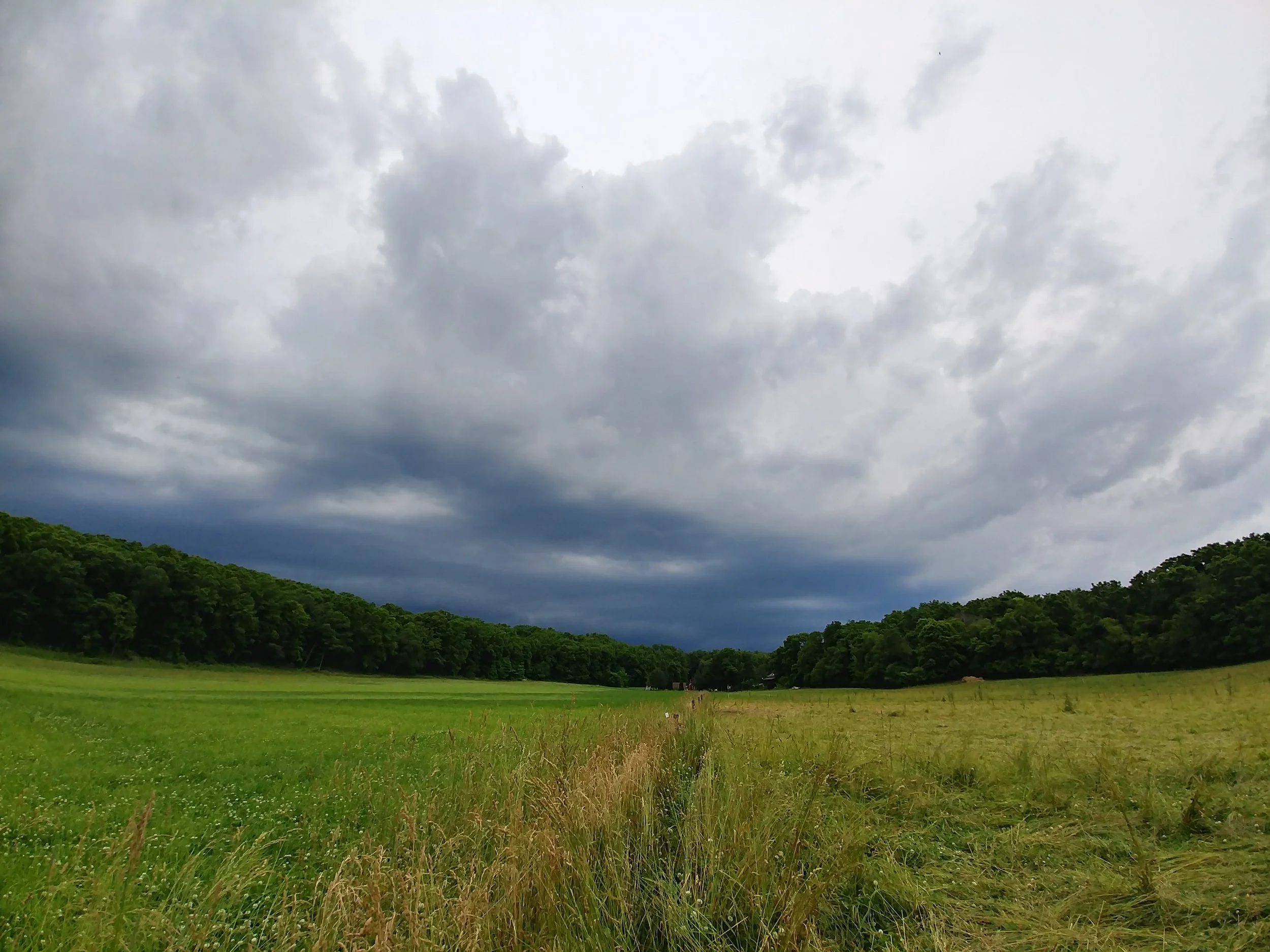
East side after first rotation, west side after first cropping, view from south

View of our cattle grazing the east side, two day moves, view from south.

Rotation #3, view from South


Farm | What Life Looks Like for a Small-Scale Grass-fed Farmer
One of my strengths as a person is being honest, one of my weaknesses as a person is being too honest. I’m not one to sugar-coat the reality.
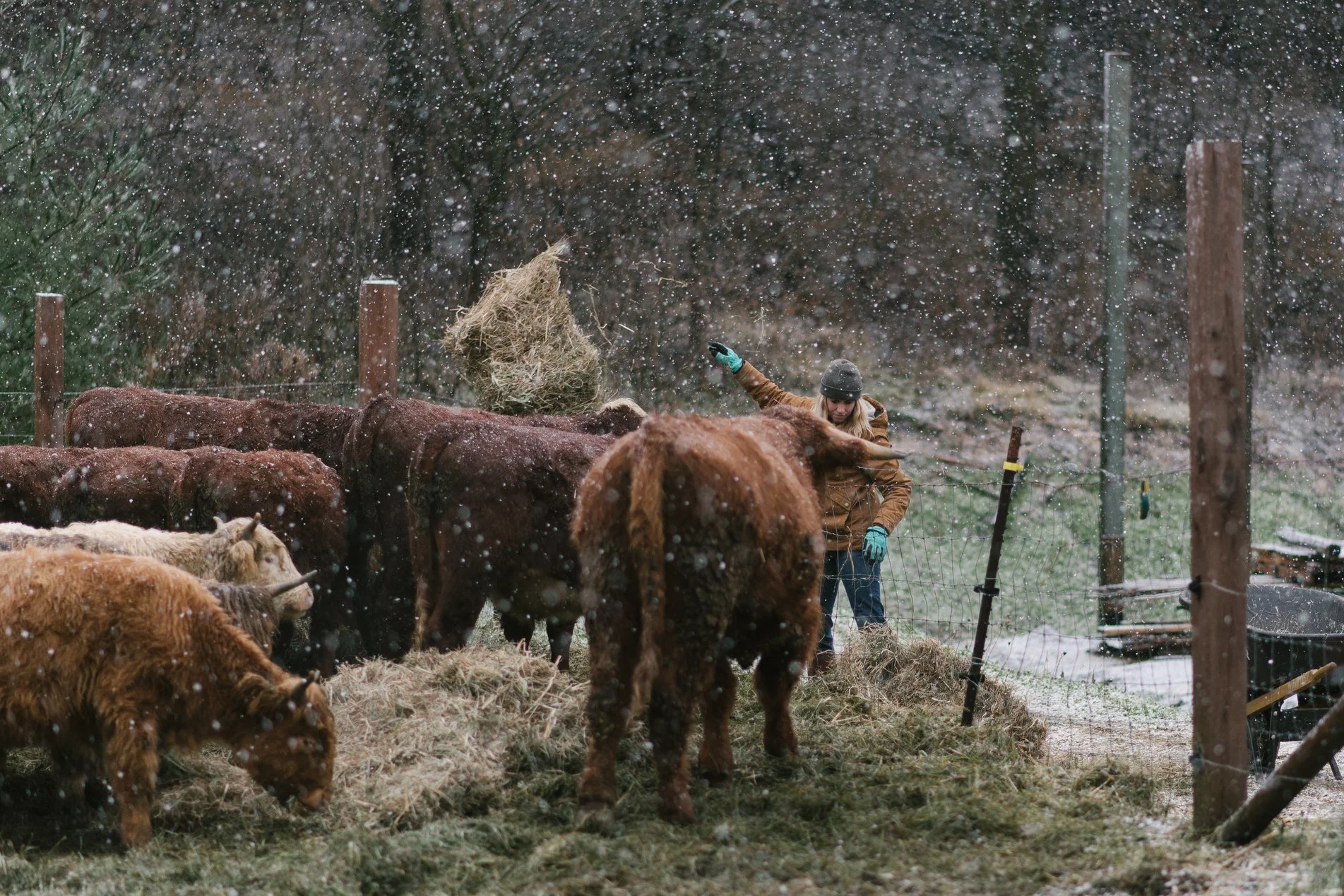
What Life Looks Like for A Small-scale Grass-fed Farmer
One of my strengths as a person is being honest, one of my weaknesses as a person is being too honest. I’m not one to sugar-coat the reality. I quickly evaluate risk and reward and look at the realities of things rather than the best-case-scenario.
So, I’d like to preface this post to say I never want to discourage someone from becoming a farmer, this life I live is beautiful, but I don’t think it’s for everyone AND I certainly don’t think it’s as romantic as Pinterest would have you believe. Farming comes with an incredible amount of sacrifice and there is beauty in it but it certainly isn’t a fit for everyone’s vision of living their ‘best life’.
In fact only 2% of the population are farm families (make a living on their farm), just think about that. It’s crazy isn’t it?
My farm background
Before I get into what it looks like to be a grass-fed farmer I want you to know some facts about my position coming into farming, because your position may make this all look a little different than it does for me.
I didn’t grow up on a farm. I quit my 9-5 design job four years ago. I’m a beginning farmer, meaning I’ve been farming less than ten years, as I write this I’ve officially been farming just short of four years. I’m in the process of scaling my farm to be a viable income and a partial career (floral design is my second career). I graze 26 acres and my current farm capacity is 30 steers and 100 sheep. So, I’m not by any means a large farm in fact I’m a very small-scale farm. I’m 27 and have been self-employed part-time and employed part-time off the farm for the past four years. I HATE loans, but I’ve had to learn to appreciate their use in balancing my cash flow.
So what does a year look like on the farm?
You’re going to be working 365 days a year
If you’re in a 9-5 and dying to get out like I was, just consider this for a second. There’s no PTO, no holidays and no sick days if you’re a farmer. This definitely shouldn’t stop you because ‘if you’re doing what you love you truly won’t work a day on the farm’ (see how I twisted that saying?) but it is something I didn’t fully grasp until I actually quit my 9-5.
However, if you’re lucky like I am, your birthday falls in the summer. Which means you can get your grazing rotation scheduled so as not to land on your birthday. If you’re really lucky you have automatic watering systems and you could take the day OFF but that isn’t always reality.
The thing about livestock is they LOVE to eat, funny I’m the same way. They need something from you on a daily basis even in some of the most well-designed systems. They don’t care if it’s snowing, raining, if it’s your birthday or it’s Christmas day, they still want you to be diligent in caring for them.
If this sounds like fun, or at least not the worst thing in the world, you may thrive as a farmer.
so if you'r still interested after knowing you’re giving your days off a wave goodbye
Let’s look at what the seasons look like for a small-scale grass-fed farmer.
the growing season on the grass-fed farm
Summer is one of the ‘easy’ times on my farm. I choose to rotate every one to three days, depending on how the grass is growing. It’s manageable for me at this point in my farm journey when I have other irons in the fire. Some grazers rotate multiple times per day, it’s just not workable in my current state of life.
So, my summer chore list looks something like this
Daily
Water livestock
Move and water cattle
Move sheep and set up tomorrow’s grazing strip
Every Three Days
Document rotations to track seasonal changes
Scrub stock tanks
Check and fill mineral supplies
Weekly
Set up new grazing rotation for cattle - I set this up a week at a time
Monthly
Check and clear perimeter fences - this is especially important for a new farm when things have been neglected. I often have to spot spray noxious weeds (honeysuckle, boxelder and grape vine) along my perimeters to keep the fences hot and the cattle on the right side of that fence. If you’re going organic this will look different for you.
Memorial Day, July 4th, August and if I’m lucky September
Harvest hay | hay crops tend to be ready for harvest about these dates here in southern Wisconsin. So for four days, four times a year, my time is spent on a tractor cutting, tedding, raking and baling hay
Take and submit hay samples
Seasonally
Manage meat inventory
Market and sell meat
Take and submit soil samples
Seed (this may not be every season depending on your farm)
Fertilize as needed
winter on the grass-fed farm
Daily
Feed hay
Fill stock tanks with fresh water
Weekly
Check and fill mineral supplies
Scrub water tanks
Monthly
Replace bedding (can be more if weather is poor)
what holidays and family time look like
Let’s be honest, nobody is going to do your chores on Christmas so that you can stay and play games all night with your family. Wouldn’t’ that be nice though? Matt and I drive separate cars to some Christmas gatherings so he can stay and enjoy a full day and I can get home to do chores. I’m hoping to move towards self-fed hay to give me a little more time to ‘play’ but those stock tanks will always need filling, and it’s likely something needs tending when I get home.
Hinging on my point above family time looks a little different for me now than my pre-farm life. While I do my best to go to all the gatherings throughout the year, I’m always the one leaving early. Water tanks must still be filled and if the grass isn’t growing the livestock are going to be calling for delivery service by 4pm. That’s just the reality of it.
vacation and little luxuries
This is going to look different for everyone. Perhaps your’s will look a lot like mine, or perhaps it’s quite different. I quit my 9-5 at the same time we brought home our first two steers. I started a landscape and floral design business and was working towards scaling the farm to be a profitable business all at the same time. Matt has worked his passionate 9-5 since we’ve been married but with my income, brand new business + a part-time position, things have been tight for us. So after prefacing our situation…
That vacation you had ‘planned’ this year, well you might need to replace the haybine instead. That cute pair of Ariat boots, that kitchen remodel… those may not be in the cards for you this year either because you only harvested two hay crops instead of four and you’re buying a lot of hay to feed livestock this winter.
If you’re strategic this is only a season (though I’d kind of doubt it), but if you’re looking to be a farmer and you’re starting from scratch it may look like this for a while.
which leads me to this, you might be ‘broke’ for a while
Things may look different for you if you have a full-time off-farm job, and it’s likely you’re going to have to carry some part-time work off the farm while you’re getting started.
This farm has been a big part of my 'weekly work hours’ and annual income, since we started. So while I’ve been making income (on farm, off farm, and through other businesses), starting a farm from scratch eats a lot of those pennies away. There is seed to buy, fences to install, hay to purchase, equipment to buy, barns to build and the list goes on… unless you’re lucky enough to get a farm that’s ready to rock-and-roll this may be what it looks like for you too.
Knowing your numbers is essential to mentally surviving this ‘stage’. Actually keeping the profits I make from the farm (and not reinvesting it back into the farm to scale) starts in year five, another year from now. If you’ve received your Bachelor’s degree just think for a moment about that timeline. Matt and I were in school for five years, it seemed like eternity then and waiting five years for a viable paycheck seems like an eternity now.
However, I did myself a favor and made projections before we started and by year five I projected good profits, profits that will make up a good portion of my desired income. It has helped me mentally through this stage… while your friends are advancing in their salaries you may be ‘getting by’ because grass-fed cattle don’t grow overnight.
it may look different for you
I understand that everyone comes into farming at different stages in life with different expectations. However, if there is one thing that stays the same no matter what stage you’re in is the commitment to working 365 days a year. This lifestyle is a beautiful one if you consciously decide it’s right for you. Get into farming because the beauty of the life out-ways the sacrifices you’ll certainly have to make.
pin it!


Farm | The Great Release
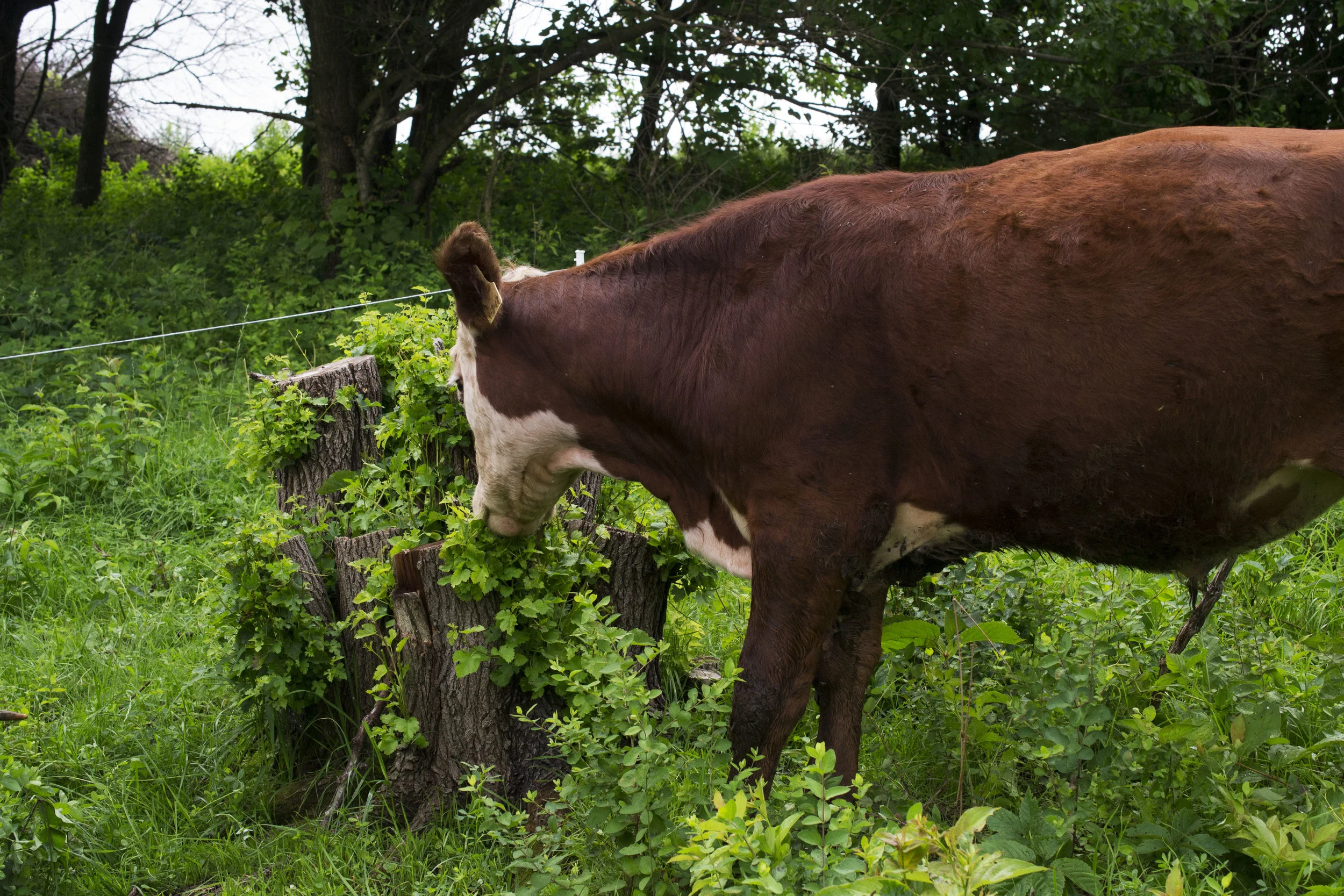
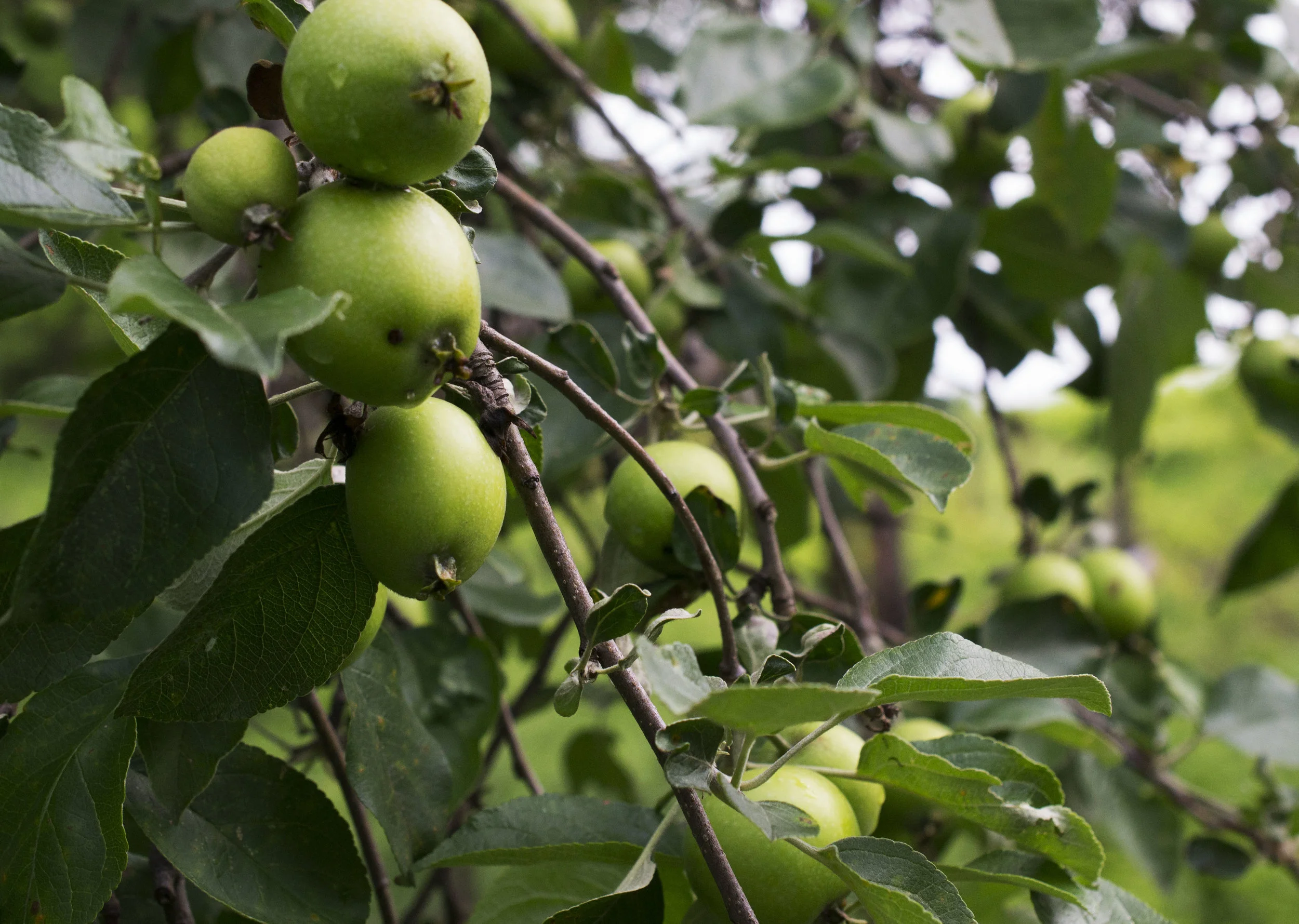
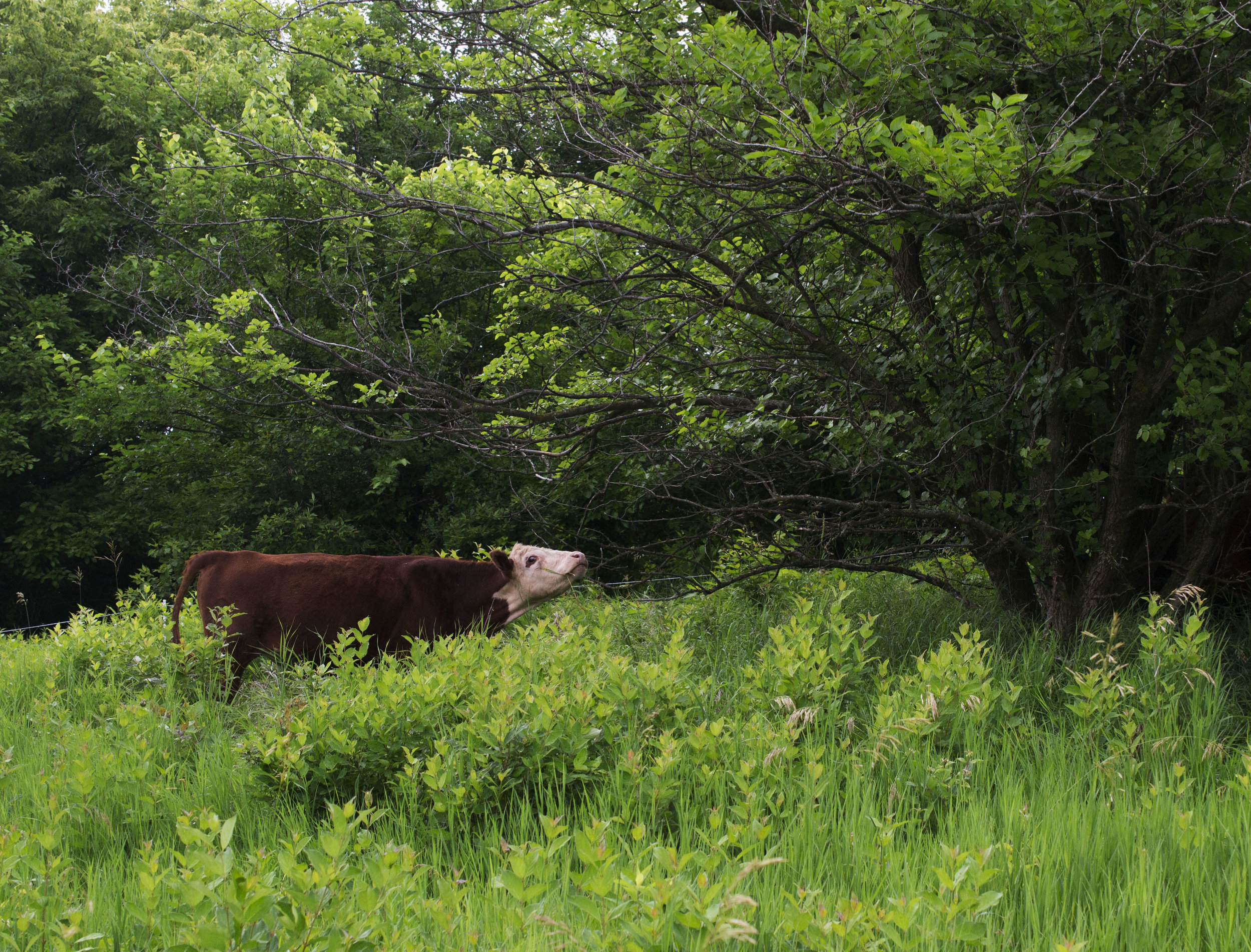
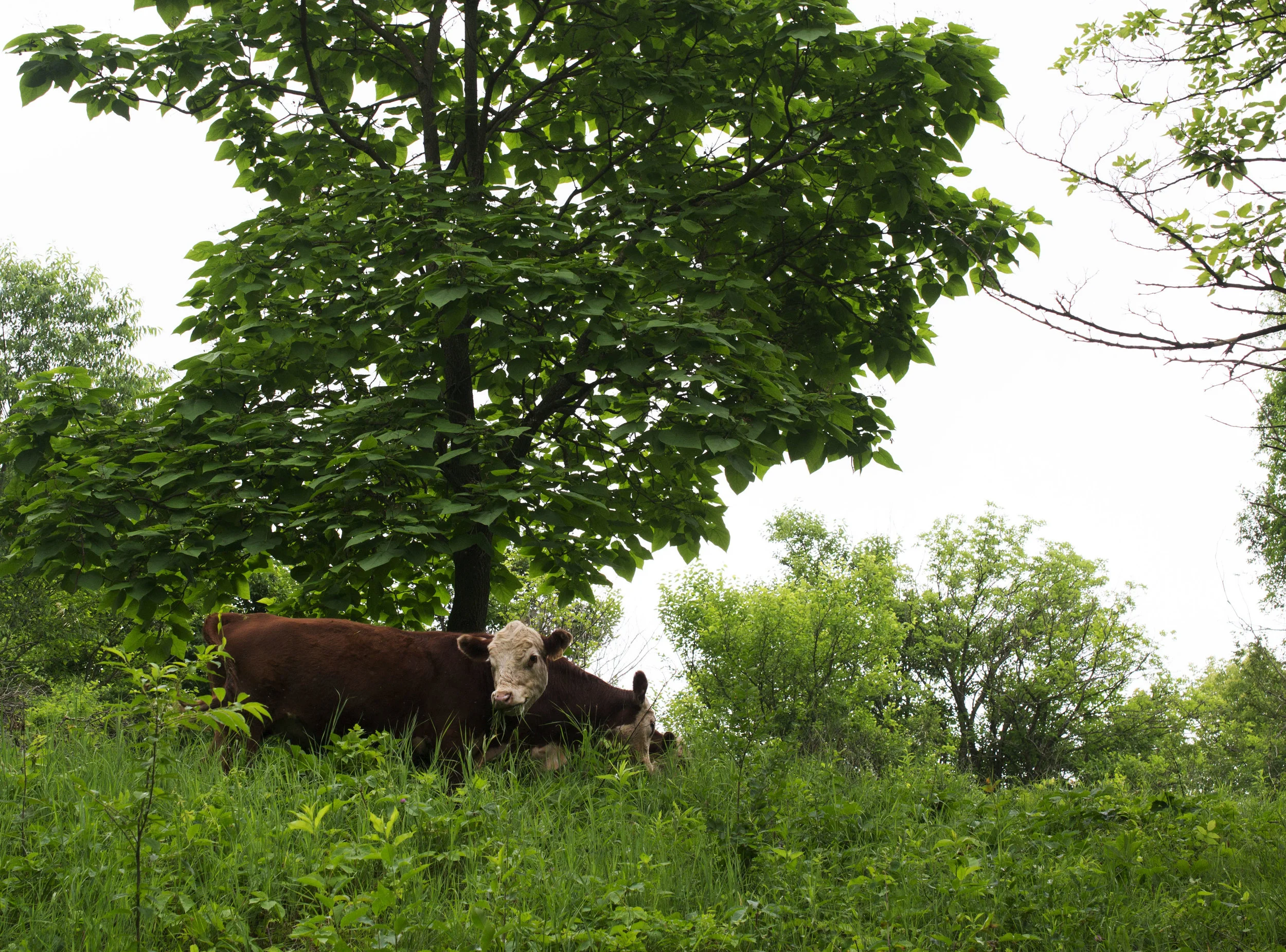
... the 'big boys', AKA anyone over 300 pounds, is out on pasture! Sure we've been working tirelessly since March on getting critters out on the green grass (no it wasn't green in March but we were anticipating the green-up!) but it always seems that when you look back on the work, you forget how much work it really was.
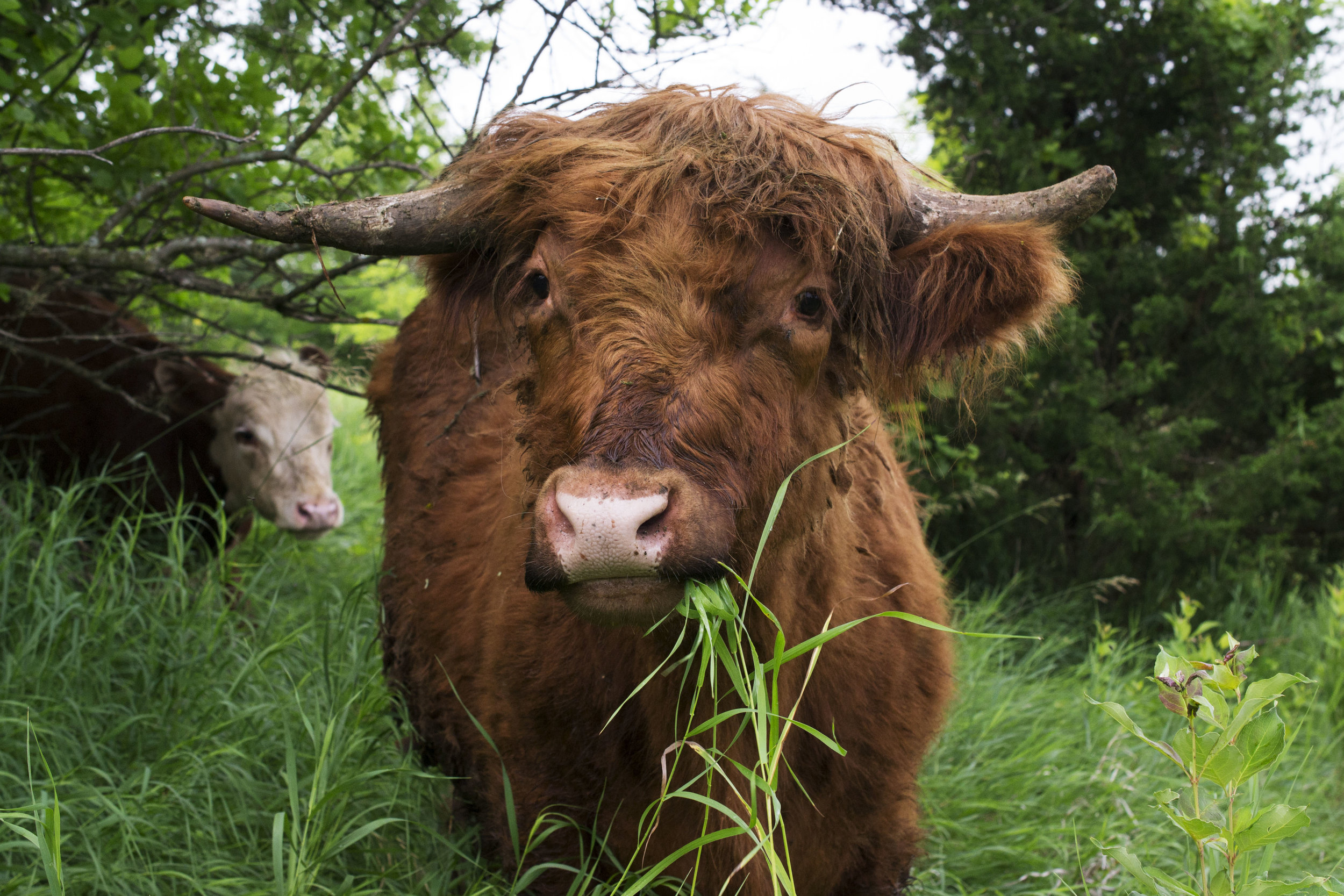
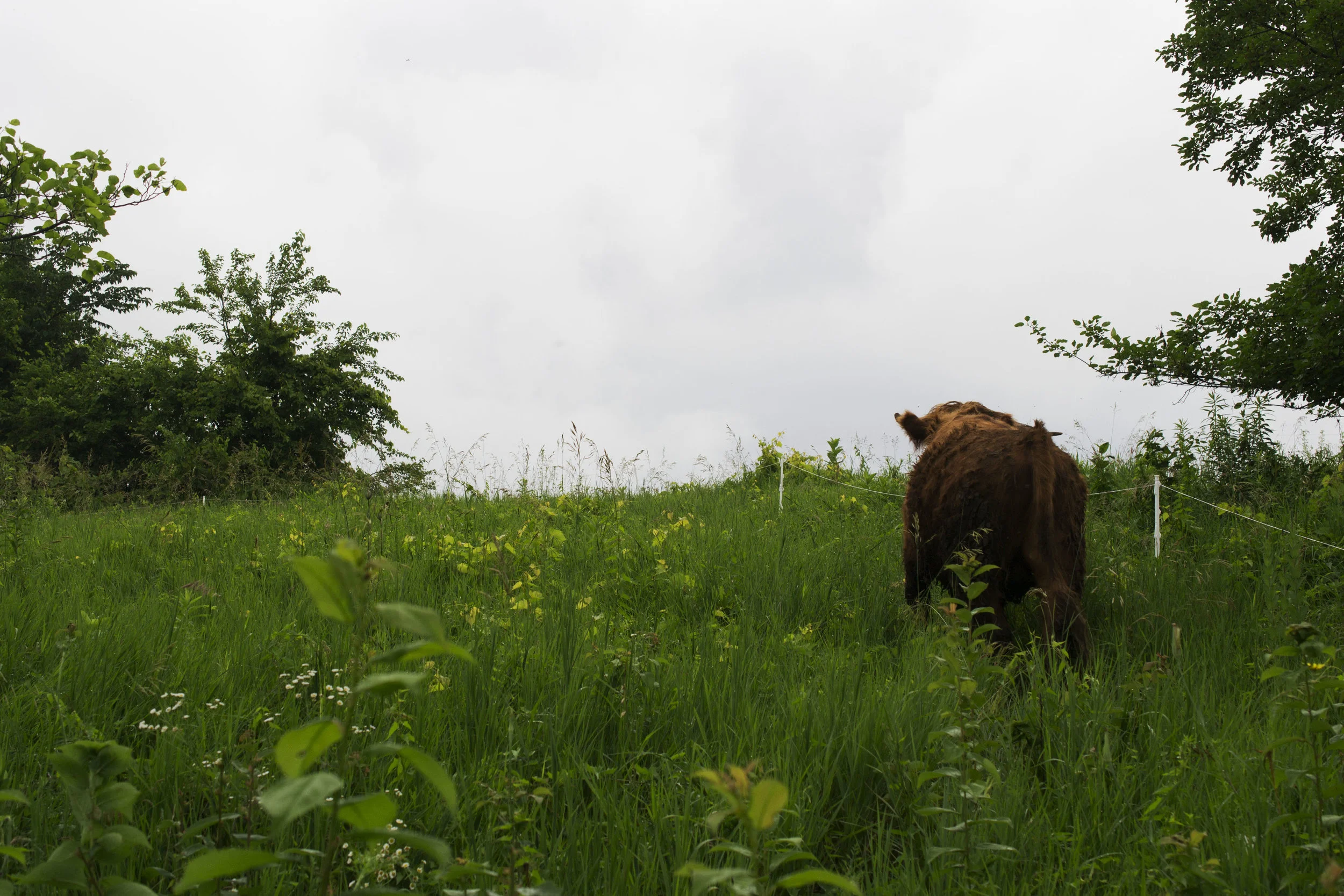
and just like that...
... the 'big boys', AKA anyone over 300 pounds, is out on pasture! Sure we've been working tirelessly since March on getting critters out on the green grass (no it wasn't green in March but we were anticipating the green-up!) but it always seems that when you look back on the work, you forget how much work it really was. I'm counting on forgetting the work it took to put in these pastures by September when round #2 comes along.
Today we released the first four including our biggest troublemaker Sampson (though our little ewe lamb Ellie is giving him a run for his money) out to graze. In an effort to keep everyone from over-eating we let them out on the lesser value grass as too much of a good thing too fast can cause some major issues. So when we transition each spring from hay to lush pasture we do it slowly, so no one has tummy problems, I can talk like that being a cattle mama too, right?
We're on schedule to get the littles out next week so that we can celebrate the fourth with no work. I'm also planning on getting back to making dinner, cleaning the house, wedding my garden and going on bike rides with Matthew.