
Farm | Why I Only Raise Sheep and Cattle
In the beginning I struggled with wanting to do ‘all’ the livestock. I wanted a diverse farm that would allow for multiple revenue streams and offer a more diverse lineup of meats to my customers.
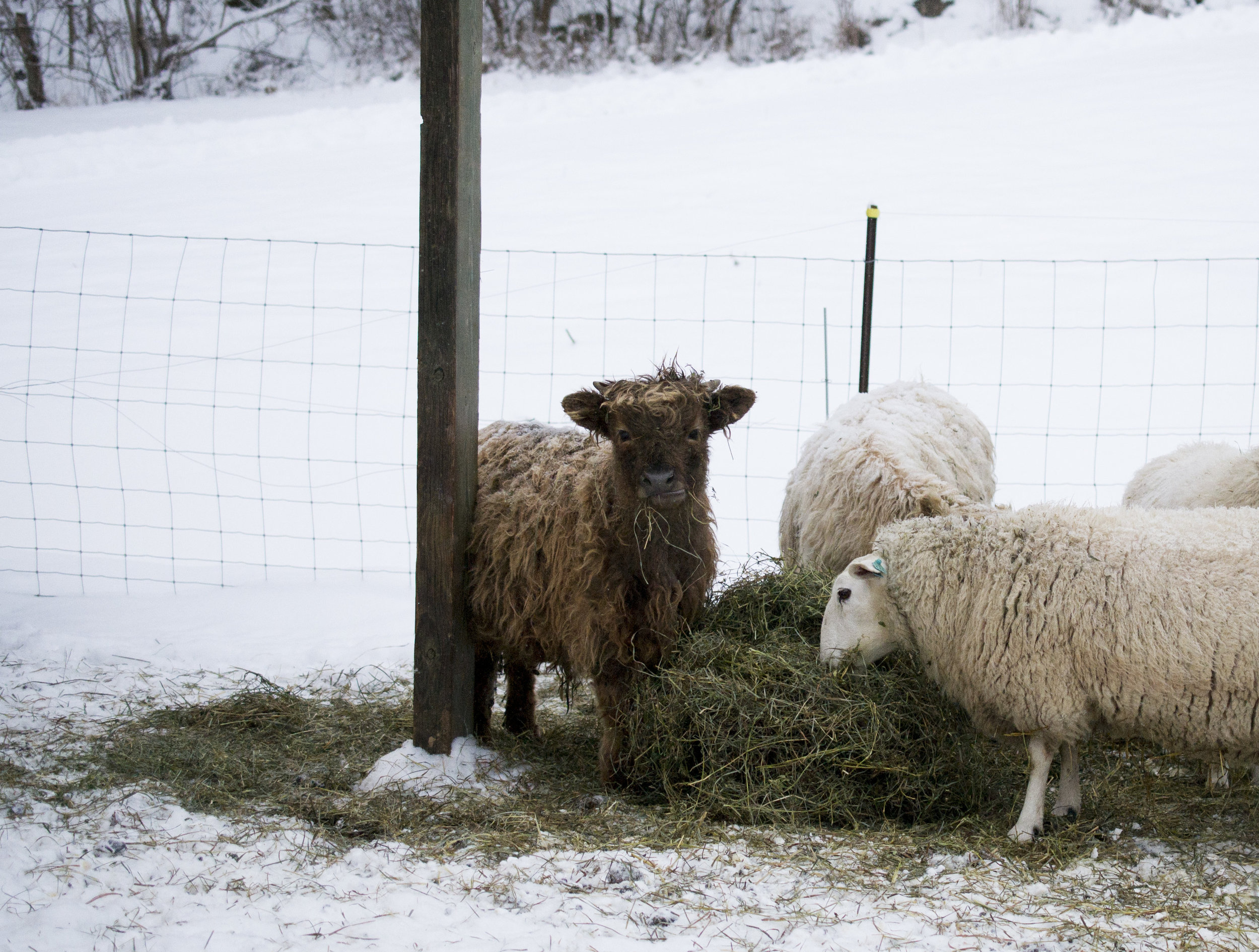
Why I only raise sheep and cattle
In the beginning I struggled with wanting to do ‘all’ the livestock. I wanted a diverse farm that would allow for multiple revenue streams and offer a more diverse lineup of meats to my customers. AND I honestly wanted pigs, ducks and horses just because I love them.
However, over the last year this mindset has done a complete 180. Now I’m committed to sticking with just sheep and cattle.
Why? Because, I can’t do ‘all the things’ and do them well AND Matt and I can’t live the life we want without keeping things simple.
I had to be Honest with Myself
This was the hard part, I had to get really honest with myself. I am the girl that loves ‘all the things’ when it comes to farm animals, I’m sure many of you can relate. So, I had to be honest with myself and what I can actually manage. I am a one woman operation, my husband Matt works off-farm with no plans for that to change. I also run other businesses that are completely un-related to my farming venture. So, the reality for me is I can only do so many things and do them well.
So, searching for livestock to add to my existing cattle operation was going to have to be ‘easy’ or I was going to have to say no. BTW ‘no’ is something I’ve had to become GREAT at over the last two years… if you’re not good at it here is your permission to say NO to adding more than you can joyfully handle. Farming is easier and more rewarding when you’re doing it from a place of ‘I’ve got this.’
Finding a way to diversify meant sticking within my existing system
My first love was cattle, they have been my passion from the beginning. While pigs, ducks and horses sound like a grand old time (notice I didn’t say chickens or goats ;)) these animals all require different facilities, feed and daily care than my cattle do. So, after getting honest with myself, I decided to start looking for livestock that would be compatible with the cattle I already had.
Back in high school I raised a couple market lambs and I really enjoyed their personalities. They’d follow me home after wandering away while I was at school, they were eager to engage me, and let’s be honest they were adorable. So, it was a slightly natural progression for me to look at sheep as a possible way to diversify.
Cattle and sheep are both ruminants
Like cattle, sheep are ruminants, meaning that they could both be raised 100% grass-fed. Awesome I thought, that made them similar enough to convince Matt to say yes to the addition, at least that’s what I thought.
After further research, when Matt needed more convincing, was that sheep and cattle tend to prefer DIFFERENT grasses. So, I thought this could help lessen the need for me to physically mow my pastures. Properly managed the sheep could do this for me. This was a huge BONUS for me, I have a lot of irons in the fire so reducing chores is something I look for in any situation.
Then I was down the rabbit hole and completely obsessive with finding all the ways they would be a good addition to the farm. I realized that the parasites in cattle and sheep are different, meaning I could co-graze them. Co-grazing, if successful, would eliminate my need for guardian dogs. Which I was hesitant to add to the farm because of our long-term goal of inviting swarms of people here.
So, what I’m trying to say through all this is that sheep were an easy addition to the farm. While we currently keep them in separate facilities the process of raising them for meat is the same. The sheep and cattle get rotated every three days, they both eat hay all winter, they don’t share the ‘nasty’ with each other, my pasture systems are the same and therefore I can focus my energy on growing great grass instead of adding to my chore list.
SIDE NOTE | Honestly, adding something as simple as barn cats (which I have) is yet another animal to feed and care for differently. For example I can’t keep cat food in the barn because we get coons. So, all my hay is in the barn but I have to go to the garage for cat food. It SEEMS insignificant but all those little differences make chores take longer.
Life off the Farm
Something else I had to consider was the lifestyle that Matt and I want to live. While Matt enjoys living ON the farm working IN the farm, especially with the livestock, is not his passion. So, I had to take a good look at what a practical ‘farm load’ was for us.
Matt and I enjoy travel, so designing a farm that would allow us to leave the farm was something I really had to consider. Keeping things simple for someone to step in while we’re gone is crucial to our ability to leave.
Since our sheep and cattle chore list is the same it’s much easier to have someone step in without too much effort or ‘know-how’.
A chore list for our farm looks something like:
Summer | move the animals to a new paddock in three days (which I can create ahead of our leave), give everyone water.
Winter | Throw x amount of bales and give everyone water.
OH, and feed the cats….
Pretty simple really and something that I can easily explain.
For a more diverse farm it could look something more like this (though I don’t have experience here so I could easily be missing things):
Summer | gather eggs, give grain - x amount to animal y and x amount to animal z, throw hay, give water
Winter | gather eggs, give grain - x amount to animal y and x amount to animal z, throw hay, give water
So, keeping things simple has really been the key to us being able to leave the farm. Perhaps you have more resources to get help, though I would be really honest about this. I have many local animal lovers who are always willing to step in but there is a line I’m sure where my eager help would be a much shorter list.
Keeping my farm focused allows me to support other small farms
The beauty I’ve found in keeping my own farm simple is that I can connect with other farmers who are doing different things really well. Instead of raising my own chickens I can support someone who’s passionate about raising meat chickens or eggs. Instead of raising the bacon I can ‘bring home the bacon’ from another local farm. Instead of raising my thanksgiving turkey I can purchase one from someone who loves raising those hideous creatures (sorry I have to keep things light and fun in such heart-felt posts).
What I’m getting at is by keeping your farm focused it allows you to form a beautiful community with other farmers around you. Do you have a customer looking for the best pork in the neighborhood? Now you can send them to someone passionate about raising their pigs to be delicious and I think that’s a beautiful thing.
My best advice
If you’re in this ‘alone’ and have limited resources (people, time and land) I’d highly suggest keeping things simple. From my experience (even as a do’er of ‘all the things’) keeping it simple on the farm has been the key to success for me. Maybe this looks like one type of livestock, maybe it means a couple, but being real with yourself will help you develop a farm you really love working in. For me focusing on doing one system really well keeps me sane and in the end keeps my product to the standard I desire.
Be really honest with yourself and I’m certain you’ll love your 365 days-a-year job.
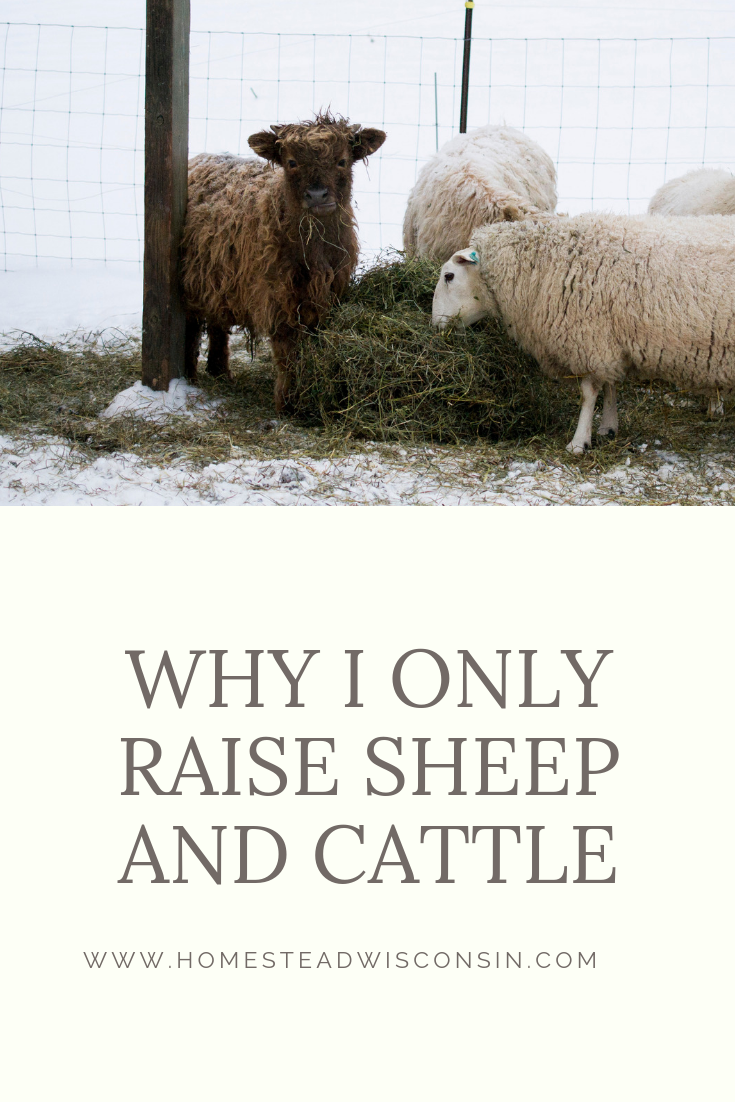
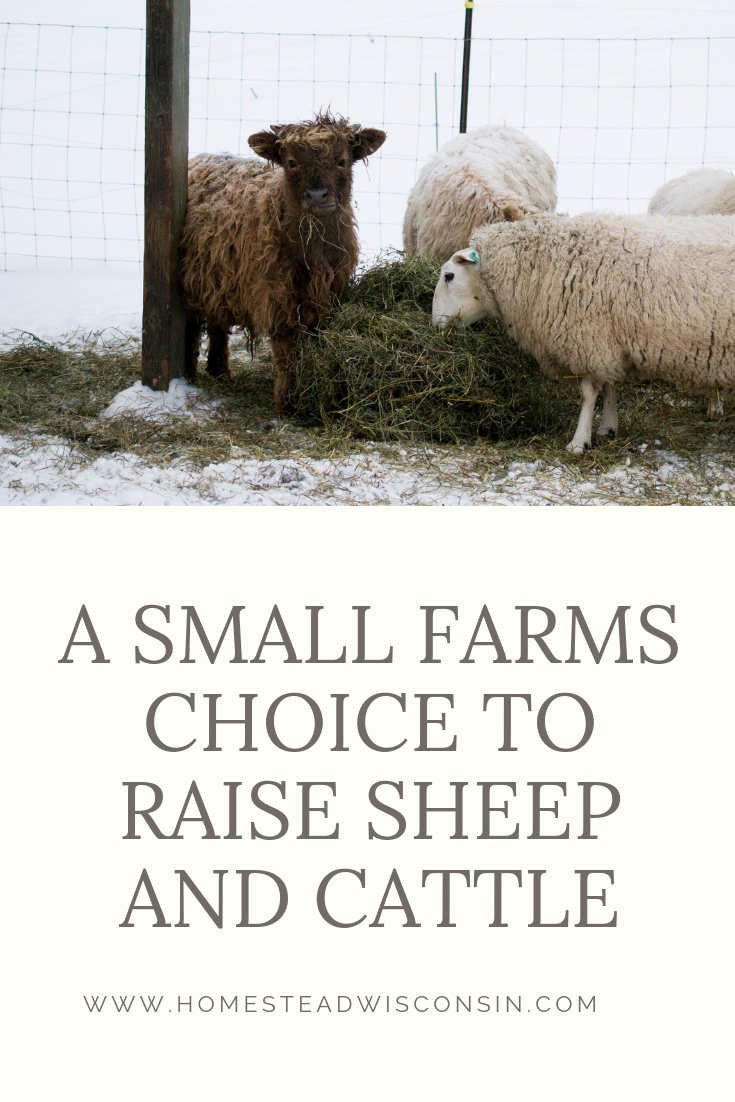
pin it!


Farm | Our Flerd

Our flerd
Well, it happened, we are now shepherds! It’s not too much of a surprise that we now have eight fluffy ewes, they’ve been on the farm radar for quite a while. After raising a couple lambs many years ago I knew it was a significant possibility that they would be added to our farm someday, because who would not want a lamb?!
So this weekend we brought home North Country Cheviot's, a dual purpose breed. We will be raising them here on the farm primarily for meat but I'm exploring ideas for using their wool as well. While the ‘cuteness’ factor was a heavy player in getting sheep for our farm (of course) they also come with some amazing farm benefits.
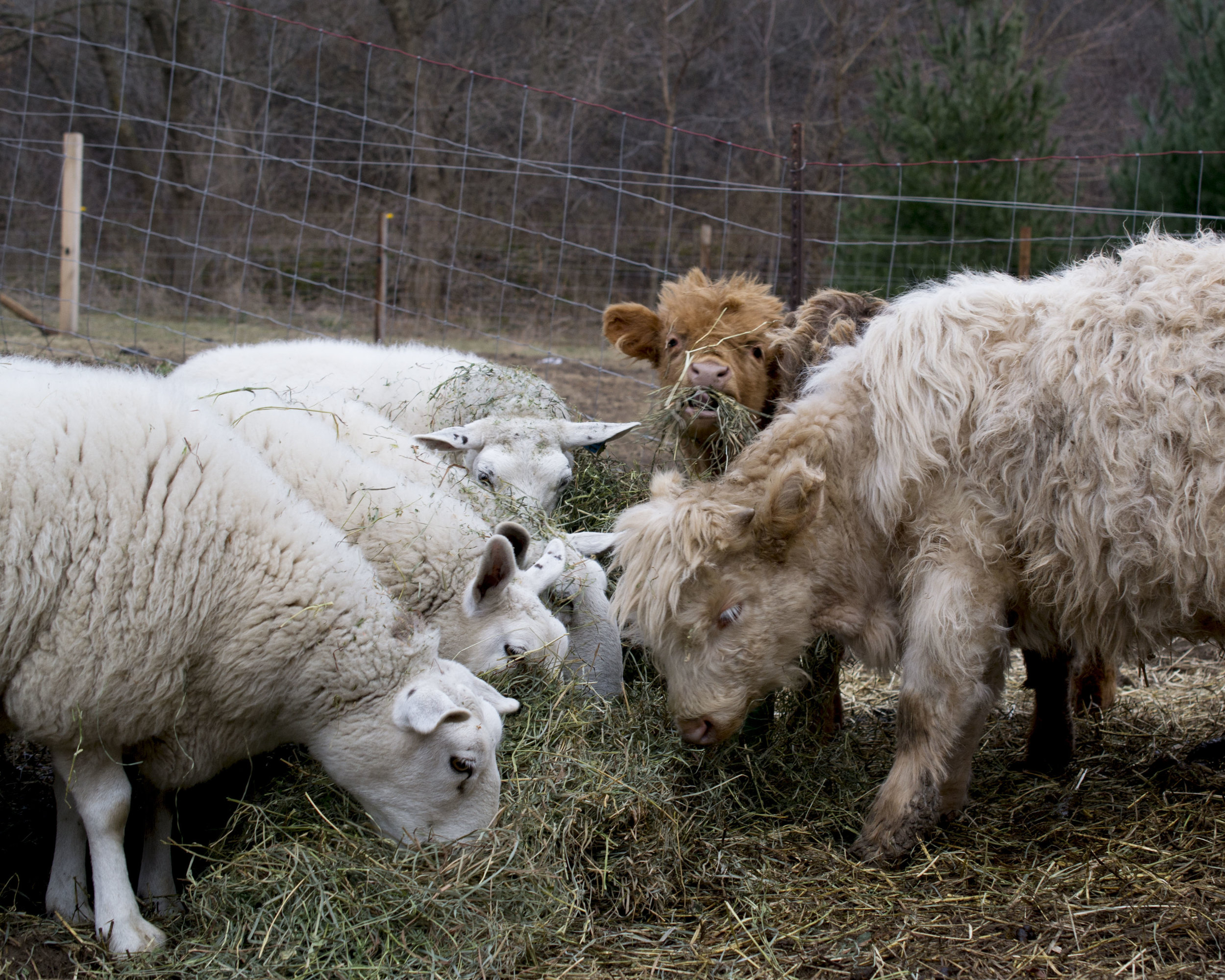
Sheep graze differently than cattle, so adding them to our pastures is super beneficial to the establishment, growth and maintenance of our new pastures. Sheep will graze what the cattle do not and are amazingly effective ‘mowers’. With the steep slopes on our farm they will be able to graze where we simply would not be able to mow with our tractor. Mowing is a crucial part of naturally keeping weeds in the pastures to a minimum, and is also essential to pasture regrowth; we are glad they will be taking the majority of this chore away from us.
Having sheep and cattle on the same pasture also allows us to better utilize our pounds per acre. Since both animals graze differently than each other we can get the most return for pound of meat to available grass.
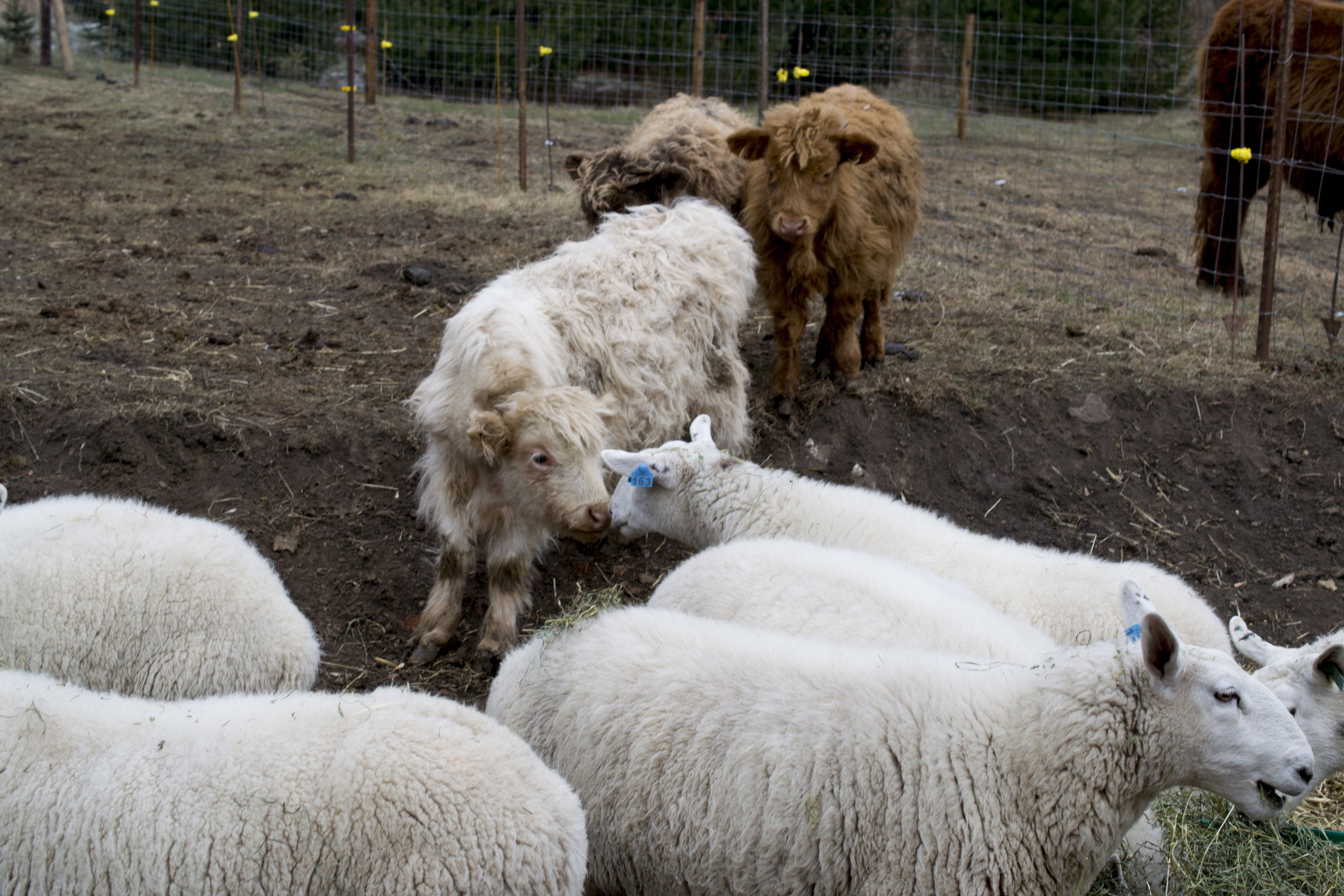
We are also very excited to offer a new product to YOU. Grass-fed lamb has amazing flavor if you haven’t tried it yet we highly recommend you do!
Now to give you background on my new favorite word, flerd. We will be running our sheep and cattle together as a ‘flerd’ (flock + herd). When the lambs are young we will attempt to bond them to cattle, that way when a coyote ventures into our pastures they will run to the safety of the cattle. We have a lot of coyotes lurking around and since neither Matt or I are too keen on a guardian dog we are going to try this approach to keep our new wooly friends safe from predators. There have been many studies in which ranches have had great success with 'flerding' and we hope the same is true on our farm. Wish us luck!
Our flock will play an important part in establishing the pastures on our farm this coming spring. We have a lot of work ahead of us to best utilize this new addition but we can’t wait to see how quickly they change our landscape. We look forward to our first lambing season in April 2018 and offering you Easter lambs in 2019.