
Farm | What Their Last Day Looks Like
This has always been a hard topic for me, the last day. Even-though I believe that cattle and sheep were created for us to eat, there is something very sad about that lingering date on my calendar, the date a life ends to give us health and well-being.

What their last day looks like
This has always been a hard topic for me, the last day. Even-though I believe that cattle and sheep were created for us to eat, there is something very sad about that lingering date on my calendar, the date a life ends to give us health and well-being. While it’s an extremely graphic topic, I know there are those of you like me that while it hurts to know, we have to know. I think it’s the most important part of being a responsible meat consumer and thank you for caring enough to learn the whole process of what it takes to get your favorite meat on the table.
So, if you’re with me, I’ll wipe away the tears that fall when I write this and share what the last day looks like for our livestock.
it starts like every other day
Thanks to a MSU (mobile slaughter unit) we’re able to harvest our animals here on the farm. Which means that their day starts out just like any other. If they’re on pasture, they’re grazing when the sun comes up and if their harvested during the winter in our dry lot they wake up to bales of hay being thrown in the feeder.
This is what’s so special to me. That their morning doesn’t start off with a trailer backing up, a small holding pen. It doesn’t start with them being forced to load into a trailer and leaving home for an unknown destination.
when the truck pulls in
They get curious. Any visitor to the farm does not go un-noticed. Our butcher, steps out, says hello and gets to work prepping for the harvest. He loads his gun, he starts up the generator to keep his truck cool, he puts on his boots and smock and then he asks ‘who’s going today’. THAT’S the hardest question to answer, not because I don’t know, but because I’m finally acknowledging the end. If it’s a steer I point them out and give him tag numbers so there is no guessing. If it’s lambs I have them corralled in the barn and again give him the tag numbers.
The inspector put’s on her (usually her) or his white gown and boots and is ready when he’s ready.
then it’s time
I whisper a little goodbye as I hand over those tag numbers and I shed a few tears. If it’s a steer (our male cattle) I walk the butcher and the inspector out to the field. Then we pause, because it really makes us all sad. The gun is loaded and then I look away and wait, for that one shot. The shot comes, a single shot that takes the animal down, it’s gone. There is a heavy sigh from all of us and our butcher cuts the throat to let the blood run out.
If it’s a lamb (fully mature) it happens a little differently. They are corralled in the barn. The butcher instead uses high-voltage to kill the animal. The lamb lies down quickly from the voltage, it’s gone. Again, the harvest is never without a sigh and the butcher cuts the throat to let the blood run out.
To be honest, I don’t watch my animals go down, I haven’t mustered the strength to watch. I just wait for that shot and walk them back to the gate, the lambs I watched once to understand the process and now I walk out of the barn.
It’s really, really hard for all of us. BUT, it’s fast and in their home, just like harvesting a deer in the wild and that’s what brings me some comfort.
the processing
After the steer or lamb is gone, it’s brought to the truck via a skid-steer or wheel barrow, and the butcher skins it, guts it and if it’s a steer quarters it all with the inspector there to watch. After the animal is clean he closes the door, takes off his smock, thanks the inspector and waves a tense goodbye.
The final carcass is brought to their processing facility where it is aged, cut and packaged for pickup
it isn’t easy for any of us
I’ve received some very harsh words when I share my heart on this subject. I’ve been called ‘psychotic’, ‘sick’ and I know there are those who will always feel that way. What they don’t know is how much each and every person involved in harvesting our animals DOES care. The butcher, the inspector and the I, the farmer, all want what’s best for these animals. We want it done humanely, without pain and quickly. No suffering is what we all care about. None of us are in this industry because it’s easy and none of us are immune to the sadness. That inspector has to watch hundreds of these a week and that butcher has to perform hundreds a week and they both admit it has a high emotional toll. As the farmer it’s hard to pick a date where you’ll be forced to say goodbye to something you’ve cared for for so long, something you’ve watched born and bottle fed as it’s mama.
We do it because we believe these animals deserve the best and you deserve meat that was actually cared for, meat that came with tears. So, never believe that the last day was met without a trio of heavy hearts. It isn’t easy and none of us feel to should EVER be easy.
Thanks for reading, for wanting to learn and for supporting those who care.

Recipe | Red Wine Roast
Roast season is coming to an end, but don't let this recipe sit on the shelf until fall!
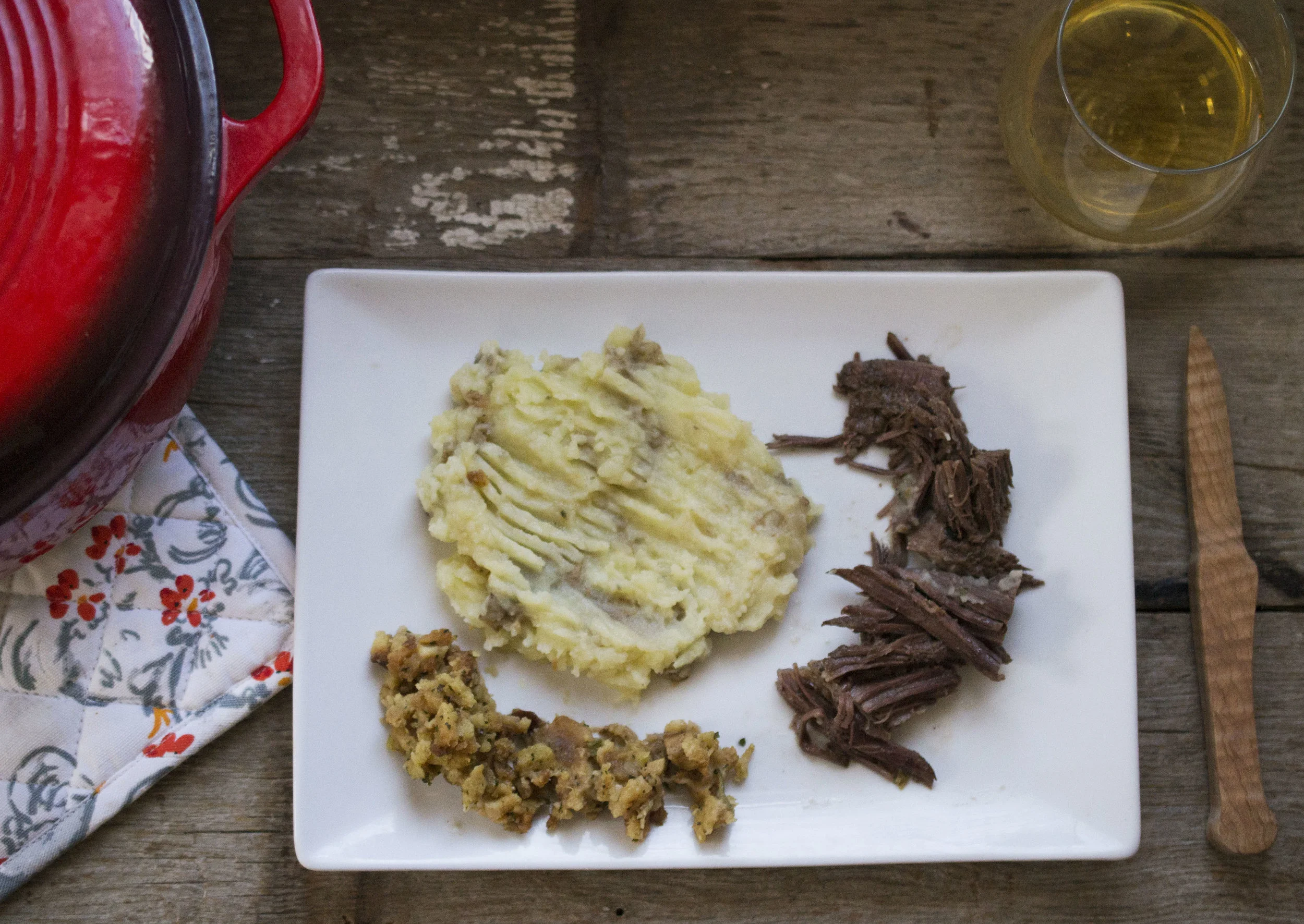
Red Wine Beef Roast
Roast season is coming to an end, but don't let this recipe sit on the shelf until fall!
Ingredient List
3 lb Homestead Roast (Chuck will be shred-able)
1 cup flour, for dredging
3 garlic cloves, chopped
1 large red onion, sliced thin
3-4 cups beef broth
1 cup red wine (Shiraz or Cabernet) *
2 Tablespoons Worcestershire sauce
1 teaspoon dried thyme
1 teaspoon sage
1 bay leaf
To Make This Deliciousness
Dredge your roast in flour then sear in olive oil. Once seared remove your roast add your garlic and onion to the pan and saute. Once your garlic and onion are soft add your white wine and bring to a boil for 3 minutes. Add your remaining ingredients and cook for 3 hours at 275 degrees.
Let sit for 20 minutes and serve with your favorite red wine.

Farm | The Story of Starting Our Farm
Since we first introduced Homestead Meats I have wanted to share with you the struggles and joy that have come with starting our farm. It has not been easy, and it isn’t done, but we are getting there and it brings a smile to my face to share our story with you!
Homestead Meats went from a dream to reality but not without blood, sweat and tears. We had talked about having livestock post-college after Matt met my first steer, Sir Loin. It was our plan to buy a farm and then start raising; however that changed when my parents offered up some of their acreage to get us started.
We started the planning process in December 2014. There were many hours of research of proper pasture management, feeding schedules, hay production and so many other things that go into starting a farm. Neither of us were raised on farms so there was a lot of information we needed to learn.
That winter we began clearing fencelines in order to make way for appropriate fences and secure additional pasture space. Wow was that a job! In fact we hate to admit this but we are still working on the last bit. Neither of us had any clue what we were getting into, how long could it possibly take to clear a few fencelines? We have found out… And the answer is long enough.
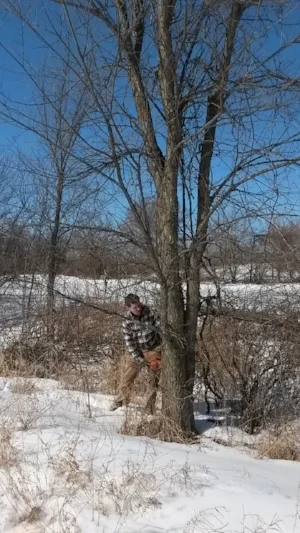
By spring 2015 we were tired and I was wanting to do something other than clearing fences. So I began ‘shopping’ for stock tanks, fencing materials and other necessary equipment. Thanks to several local farmers I was able to get a lot second hand which was a true blessing.
In May 2015 we hosted a ‘farm day’ which really meant come help us clear some brush… we had great attendance and the only casualty was the brush and my phone. We will see how the attendance is on our next ‘farm day’.
July 2015 we brought home our first steers and introduced them to their new home. They bonded quickly and made the months of work worth it.
This spring 2016 we expanded from 3 acres to 8 acres, meaning more fencelines needed to be cleared, more barbs strung and more blood, sweat and tears shed. We harvested our first crop of hay on our fields, and I had conveniently forgotten that hay day is always the hottest day of the summer.
This summer 2016 we brought home two sets of steer calves to the farm. With a total of 6 steers running our pastures we can finally say we have the beginnings of a ‘herd’.
We harvested 2 crops of hay off our fields in 2016 and are looking forward to better production next year.
As we are quickly approaching winter and our second anniversary to when it all began we are continuing to complete the first project list. The final barbwire fences and electric will be strung before November (I am determined to have this done), and we are hoping to start on our wooden corral before the ground freezes.
Like many experienced farmers have told us the work never ends, and they aren’t kidding. We are also learning that there are lots of lessons to be learned on the farm and not all of them are easy or fun to learn, but the joy of raising our own livestock makes up for it all. We have been so grateful for all of those who have helped bring this dream into reality. We owe a huge THANK YOU to all the brave souls who have helped us with many tasks along the way.
While our current location is not on our own homestead we look forward to starting an operation on our own land someday. Until then I will enjoy being ‘so close’ to finishing our current setup.
-Brit